






 Meet&Co
The office lobby is often the first space visitors see when they enter a company. Whether they are clients, business partners, or job candidates, they can form an initial impression of the workplace within just a few minutes. That means a good lobby should not only look professional but also feel comfortable, welcoming, and easy to navigate. The right lobby furniture can improve the layout, enhance the visitor experience, and create a more cohesive office design.
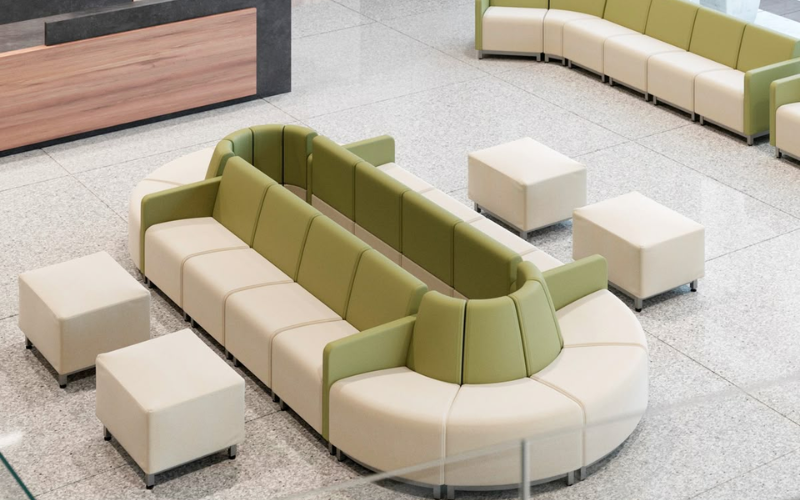 Source: https://www.pinterest.com/
The Three Zones of a Modern Hotel Lobby
Any functional lobby breaks down into three zones, each with different furniture requirements:
Zone 1 — Arrival and transition.
Clear sightlines from door to reception. The goal is orientation, not rest. A guest in transit should never have to navigate around a sofa to reach check-in. Furniture here is limited to console tables, floor lamps, and signage — elements that define the space without obstructing it.
Zone 2 — Social and lounge.
The heart of the lobby. Conversational seating groups arranged in 3-4 person clusters, each anchored by a coffee table. Lower furniture (seat heights 40-45 cm) signals leisure and invites settling in. Use a mix of sofas, lounge chairs, and armchairs — never a row of identical seating, which reads as an airport gate.
Zone 3 — Work and wait.
For business travellers and guests waiting briefly. Higher furniture (seat heights 45-48 cm) suited to short stays, with easy power access and firm back support. A single shared worktable with four chairs works better here than four separate desks.
The boundaries between zones should be suggested by furniture arrangement and rugs, not walls. A well-zoned lobby reads as one room that flows, not three rooms divided.
5 Lobby Furniture Ideas
1. create clearly defined zones
A well-designed lobby should make it easy for visitors to understand the purpose of each area. Instead of relying solely on fixed partitions, use lobby furniture to define different zones naturally. A reception desk can establish the entrance and reception area, while sofas and lounge chairs can form a dedicated waiting zone, with coffee tables or side tables helping define the seating area.Thoughtful furniture placement not only gives the space more structure but also keeps circulation paths clear, allowing visitors to move through the lobby comfortably and intuitively.
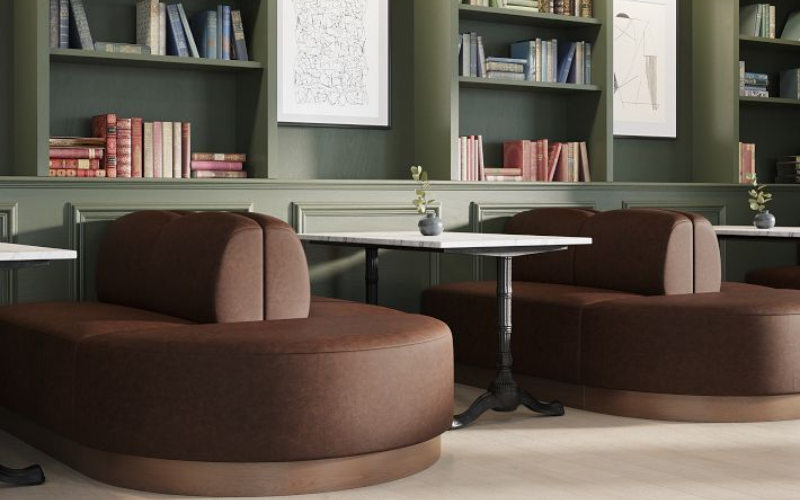 Source: https://www.pinterest.com/
2. add statement furniture as a focal point
A lobby does not need to be filled with decorative pieces to feel stylish. One or two statement furniture pieces with distinctive shapes, materials, or details can create a strong focal point. An eye-catching lounge chair, a curved sofa, or a uniquely designed display cabinet can all give an ordinary waiting area more personality.
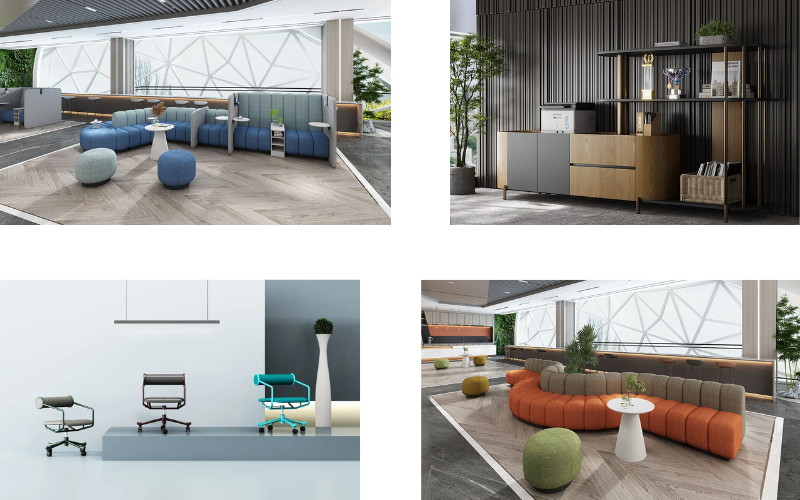
The key is to control the number of bold pieces and create a balanced visual hierarchy. If every piece of furniture has an elaborate shape, the space can quickly feel cluttered. Instead, choose one main statement piece and pair it with simpler furniture in more restrained colors and forms. This approach works especially well in smaller lobbies, where a strong design statement can be created without adding too many pieces.
3. mix sofas and lounge chairs
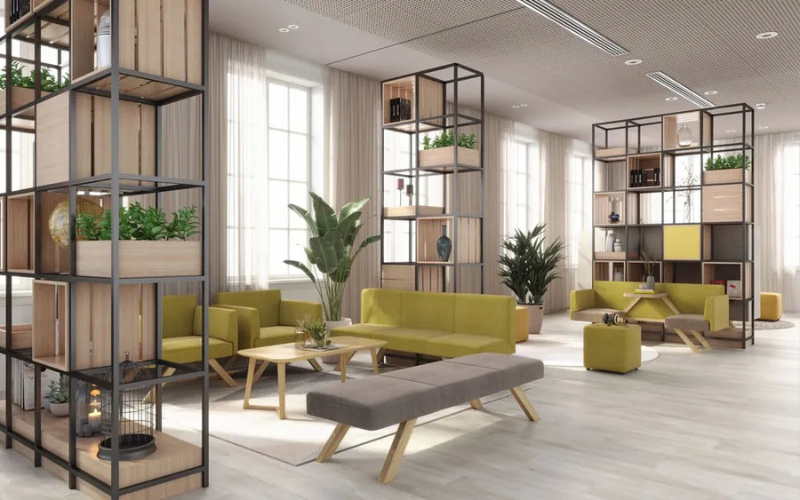
Using only one type of seating can make a lobby feel repetitive and may not accommodate different visitor needs. Combining sofas with lounge chairs provides both group seating and individual seating options. For example, a three-seat sofa can be paired with two lounge chairs and a coffee table to create a balanced seating arrangement. Mixing different furniture types also adds more visual variety to the space.
4. create semi-private seating
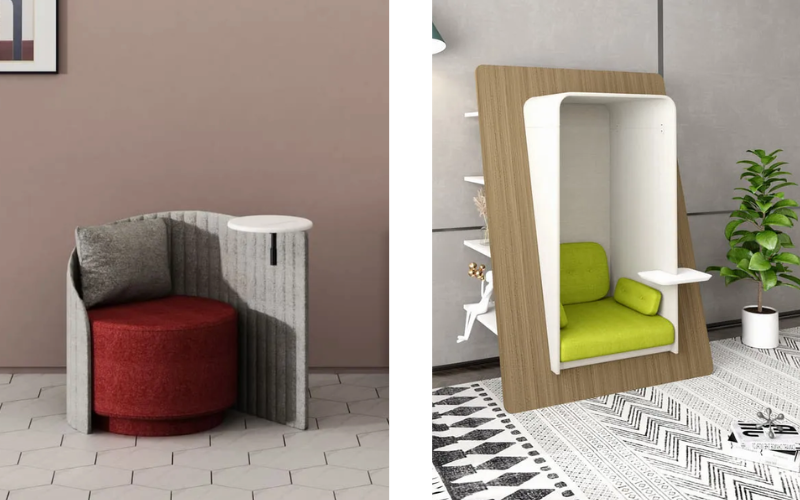
Not every visitor wants to wait in a completely open environment. Semi-private seating can create a more comfortable experience for people who need to make a phone call, review documents, or have a brief conversation. High-back lounge chairs, wingback chairs, and semi-enclosed seating can provide a greater sense of privacy without making the entire lobby feel closed off. This type of furniture can be particularly useful in healthcare, consulting, financial, and other settings where privacy matters.
5. enhance ambience with lighting and decor
Ambience plays a significant role in shaping the emotional tone of the lobby. Lighting, décor, and color scheme should work harmoniously to create a warm and inviting environment.
Lighting should highlight architectural features, guide guests naturally, and elevate the overall mood. But instead of relying on a single light source, layering your lighting is more effective for creating a balanced and inviting atmosphere.
Use a combination of:
- Overhead lighting
- Floor lamps
- Table lamps
- Wall sconces
- Accent lighting
Incorporate décor that complements your theme
Art, greenery, decorative objects, and textured elements add personality and depth. Choose décor that aligns with your brand—modern, rustic, coastal, or luxury—ensuring guests instantly recognize your style.
Use color strategically
Warm colors enhance comfort, cool colors evoke calmness, and neutral palettes offer timeless elegance. Your lobby’s color palette should be consistent with your interior design across the property.
How to Choose the Right Lobby Furniture
consider comfort first
Because visitors may need to wait for some time, comfort should be a basic requirement for lobby seating. Seat depth, backrest height, cushioning, and armrest design can all affect the user experience. Attractive furniture that is uncomfortable to sit in will do little to improve a visitor’s impression of the workplace.
consider size and proportion
When choosing lobby furniture, consider not only the dimensions of each piece but also how it relates to the overall space. An oversized sofa can narrow walkways and make a small lobby feel crowded, while undersized furniture can make a large space feel empty. Measuring the available area and planning the seating layout in advance can help businesses avoid costly sizing mistakes.
consider durability and maintenance
For lobbies that receive many visitors every day, furniture needs to withstand frequent use. Instead of focusing only on the initial price, businesses should also consider long-term performance. Durable upholstery, sturdy construction, and easy-to-clean surfaces can reduce maintenance demands and help the lobby remain presentable over time.
create a cohesive look
The style of lobby furniture should complement the overall office design and reflect the company’s brand identity. A modern technology company may prefer furniture with clean lines and streamlined forms, while a creative business can use bold colors, distinctive shapes, or mixed materials to express its personality. More traditional businesses, such as law firms or financial companies, may benefit from refined designs featuring wood, leather, or neutral tones. Beyond the appearance of individual pieces, consider how the sofa, lounge chairs, coffee tables, and reception desk work together in terms of color, materials, and form. A consistent design language can make the lobby feel more cohesive while giving visitors an immediate sense of the company’s identity.
How furniture height affects perceived luxury
A lesson most designers learn late: the height of your lounge seating tells guests how quickly they are expected to get up. Low lounge furniture (seat height 38-42 cm) signals leisure, relaxation, and premium positioning. Guests settle in, order a second drink, and stay longer. Standard dining-chair height (44-48 cm) signals efficiency and short stays — better for budget-tier hotels where you want throughput, not lingering.
Match furniture height to brand positioning, not aesthetic preference. A luxury hotel's lobby with dining-height lounge chairs will feel like a departure lounge no matter how expensive the upholstery is.
Small Lobby Example
For a small office lobby, the goal should not be to fit in as many seats as possible, but to maintain comfort while keeping the circulation area clear. For example, a compact lobby could include a two- or three-seat sofa, two lounge chairs, a small round coffee table, and a reception desk with appropriate proportions. The sofa can be positioned against a wall to free up the central walkway, while the lounge chairs can be placed around the coffee table to provide additional seating for individual visitors. In very limited spaces, nesting tables can replace a larger coffee table and provide extra surface area when needed. By choosing appropriately sized furniture, keeping walkways open, and coordinating finishes or colors, even a small lobby can balance functionality, comfort, and visual appeal.
Common mistakes to avoid
- Oversized feature pieces that block sightlines — a dramatic sectional sofa in the middle of the lobby forces guests to walk around it and breaks the zone flow. Scale the pieces to the room, not to the photo opportunity.
- Mismatched scales within a conversation group — a tall lounge chair next to a low sofa next to a standard coffee table reads as unintentional. Keep furniture heights within one grouping consistent.
- Ignoring acoustics — a lobby full of hard surfaces (stone floors, glass walls, wooden furniture) becomes an echo chamber at peak hours. Add upholstered pieces, rugs, and drapes to absorb sound.
- Forgetting power access — modern business travellers will camp in your lobby if there are outlets, and leave for a cafe if there are not. Built-in USB and power at each seating group is no longer optional.
- Row seating along walls — lines of chairs against the wall make the lobby look like a waiting room. Float seating groups into the space, not against the edge.
Conclusion
A successful office lobby does not need to be filled with expensive or complicated furniture. What matters most is how the furniture works together to improve comfort, functionality, and the overall atmosphere. With thoughtful lobby furniture planning, businesses can create an entrance that feels both professional and welcoming. As a furniture manufacturer with with 16 years’ experience, Meet&Co Furniture offers a range of office sofas, lounge chairs, tables, and other workplace furniture that can help businesses create cohesive and comfortable lobby spaces while reflecting their brand style. By choosing furniture that balances design, durability, and everyday usability, you can make your office entrance a more inviting experience for every visitor.


