







 Meet&Co
A leather office chair looks professional. It feels premium. It can transform your workspace from ordinary to executive. But not all leather chairs are the same. Some will last you a decade. Others will start peeling in two years.
So how do you choose the right one?
This guide walks you through everything you need to know. You will learn about different leather types, which ergonomic features actually matter, and how to match a chair to your body and budget. We will also recommend four great leather office chairs for different needs.
Let us find you a chair that looks good, feels comfortable, and lasts.
Why Choose a Leather Office Chair?
Leather office chairs remain popular for good reasons.
Professional appearance – A leather chair instantly elevates your office. It reads as executive, clean, and timeless. Whether you are on video calls or meeting clients in person, leather adds credibility.
Durability – Quality leather, properly maintained, can last for years. Some full-grain leather chairs last 15 years or more. Even good PU leather holds up well to daily use.
Easy to clean – Spills wipe right off. Dust and crumbs do not stick the way they do to fabric. A quick wipe keeps your chair looking new.
Comfort that improves with age – Genuine leather develops a rich patina over time. It becomes softer and more comfortable without losing support.
But leather chairs also have downsides. They can get warm in summer. They cost more than fabric or mesh chairs. And low-quality leather will crack and peel quickly.
The key is knowing what you are buying. Let us break down the leather types first.
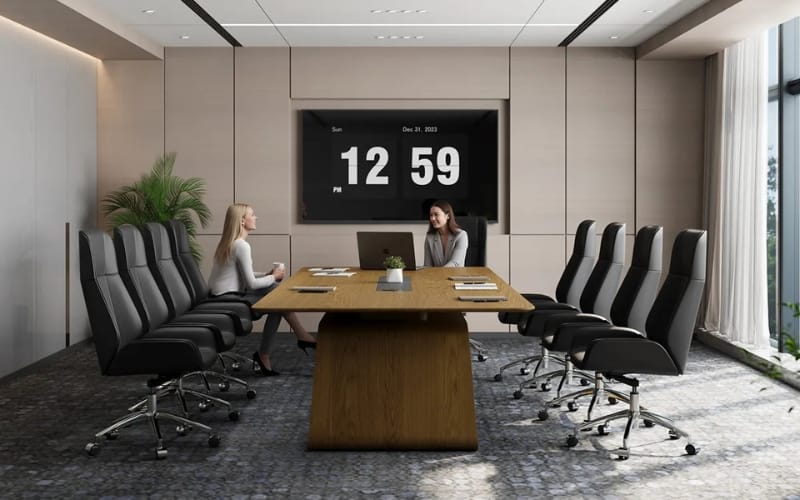
Types of Leather Used in Office Chairs
Leather is not just leather. The term covers materials ranging from premium natural hide to recycled scraps glued together. Understanding the difference will save you money and disappointment.
| Leather Type | What It Is | Durability | Breathability | Price | Best For |
|---|---|---|---|---|---|
| Full-Grain | Top layer of animal hide, natural grain intact | 15+ years | Excellent | Very high | Lifetime investment |
| Top-Grain | Full-grain sanded to remove imperfections | 10–15 years | Good | High | Long-term daily use |
| Genuine Leather | Mixed quality, multiple layers bonded | 3–6 years | Fair | Medium | Occasional use |
| PU Leather | Synthetic polyurethane, looks like leather | 2–5 years | Poor | Low | Budget-friendly, light use |
| Bonded Leather | Leather scraps + polyurethane, prone to peeling | 1–3 years | Very poor | Very low | Short-term or occasional use |
1. Full-Grain Leather – The Gold Standard
Full-grain leather comes from the top layer of the animal hide. It retains the natural grain, including all the pores and markings. No sanding or buffing is applied, so the hide‘s natural strength and breathability stay intact. This is the most durable and breathable natural leather available. It develops a beautiful patina over time. But it is expensive – you will rarely find it under $1,000.
Full-grain leather is best for: People who want a chair that lasts 15+ years and improves with age.
2. Top-Grain Leather – The Smart Premium Choice
Top-grain leather is full-grain that has been lightly sanded to remove surface imperfections. It is slightly thinner and more uniform in appearance, but still excellent quality. Most high-end office chairs in the $500–$1,000 range use top-grain leather. It lasts 10–15 years with proper care.
Top-grain leather is best for: Daily office use where you want quality without the absolute highest price.
3. Genuine Leather – A Confusing Term
“Genuine leather” sounds high-quality, but it actually refers to the lowest grade of real leather. It is made from multiple layers of hide bonded together. Quality varies wildly. Some genuine leather is acceptable for occasional use, but it typically lasts only 3–6 years before visible deterioration begins.
Genuine leather is best for: Light-use chairs in guest offices or conference rooms.
4. PU Leather – The Budget-Friendly Synthetic
PU (polyurethane) leather is a synthetic material designed to look and feel like real leather. Modern PU can be surprisingly convincing. It is affordable, easy to clean, and water-resistant. However, it is less breathable than genuine leather and more likely to peel, especially in warm or humid environments. Quality varies greatly – some PU lasts 5 years, while cheaper versions crack within 12 months.
PU leather is best for: Home offices on a budget, light to moderate daily use.
5. Bonded Leather – The Short-Term Option
Bonded leather is made from leather scraps ground up and mixed with polyurethane, then stamped to look like real hide. It is the cheapest option and looks decent at first. But daily friction from sitting causes peeling and cracking in as little as two years. The seat and armrests are usually the first to go.
Bonded leather is best for: Short-term use or chairs that will not be sat in every day.
What Key Ergonomic Features to Look For?
Leather looks great, but a beautiful chair that hurts your back is useless. Look for these ergonomic features.
Adjustable Lumbar Support
Your lower back needs support. Fixed lumbar pillows do not work for everyone because everyone‘s spine curve is different. Look for height‑adjustable lumbar support or a self‑adaptive system that moves with you. Some high-end chairs offer independent left/right adjustment – useful if you have scoliosis or uneven back issues.
Seat Height and Depth Adjustment
Your feet should rest flat on the floor with your thighs parallel to the ground. Seat depth adjustment lets you slide the seat forward or back so you have 2–3 fingers of space between the back of your knee and the seat edge. This prevents pressure behind your knees.
Adjustable Armrests
Leather executive chairs often have fixed armrests, which look elegant but limit comfort. If you type for hours, look for 4D or 5D armrests that adjust up/down, in/out, forward/back, and pivot. Adjustable armrests help relieve shoulder and neck strain.
Tilt Mechanism and Lock
You should be able to lean back and lock the angle. Some chairs also offer forward tilt, which helps when you lean in to focus on detailed work. Avoid chairs where the back does not move independently – you want to tilt your back, not the entire seat.
Headrest (Optional but Helpful)
If you are tall or like to lean back during calls, an adjustable headrest adds neck support. Look for height and angle adjustment, not just a fixed pad.
Padding Quality
High-density foam holds its shape longer than soft foam. Memory foam offers excellent comfort but may compress over time. Look for chairs with at least 3 inches of foam in the seat cushion.
Leather vs. Mesh: Which One Is Right for You?
Many people ask whether leather or mesh is better. The answer depends on your priorities.
| Feature | Leather | Mesh |
|---|---|---|
| Appearance | Executive, professional, warm | Modern, casual, technical |
| Breathability | Poor (especially PU and bonded) | Excellent |
| Initial comfort | Plush, luxurious | Firmer, requires adjustment |
| Long-term comfort | Can get warm in summer | Stays cool year-round |
| Durability | High for quality leather | 5–10 years, may sag |
| Maintenance | Wipe clean, condition occasionally | Vacuum, spot clean |
| Best climate | Cool or air-conditioned spaces | Warm or humid environments |
Here is the honest truth: For pure ergonomics and breathability, high-quality mesh chairs have a clear advantage over most leather chairs. Their dynamic lumbar support and resistance to deformation make them better suited for sustained spinal health. But mesh chairs do not look executive. They do not feel plush. And they do not make the same statement.
If you prioritize back health above all else and live in a warm climate, choose mesh. If you want a professional appearance, a luxurious feel, and do not mind paying for quality, choose leather – but invest in a well-ventilated room or air conditioning.
Check this guide for more tips: Mesh vs. Fabric vs. Leather: Which Office Chair Material Wins?
4 Best Leather Office Chairs in 2026
Here are four excellent leather office chairs at different price points. Each one balances quality, comfort, and value.
1. Meet&Co High Back Leather Chair
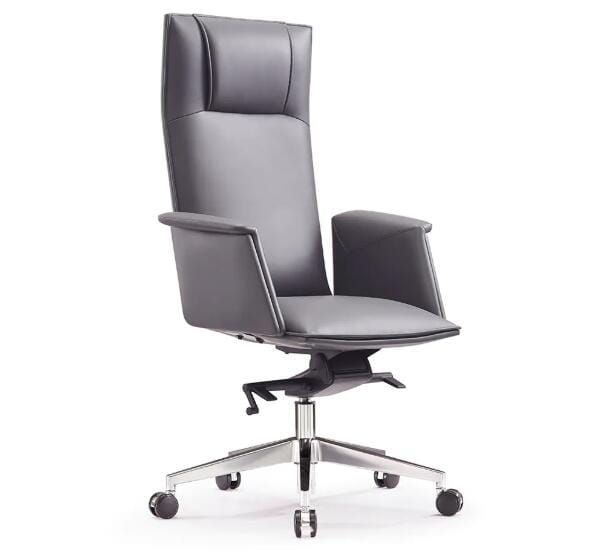
The Meet&Co High Back Leather Chair is designed for professionals who want the executive look without the executive price tag. It combines genuine leather upholstery with essential ergonomic adjustments.
Key features:
-
Premium material – High-quality leather upholstery with a sleek, sophisticated appearance
-
High back design – Provides full support for your spine from lumbar to upper back
-
Adjustable features – Height adjustment and tilt mechanism for personalized comfort
-
Padded armrests – Fixed but well-cushioned for basic support
-
Sturdy construction – Built for daily use in home or corporate offices
-
Executive aesthetic – Clean lines and polished finish that elevate any workspace
Who this chair is for: Home office professionals, executives, and anyone who wants a genuine leather chair with a classic look. The Meet&Co offers real leather at a price point where most competitors use PU or bonded materials.
Price range: Budget to mid-range (direct from manufacturer)
Why it made the list: You get genuine leather and a high-back ergonomic design without overspending. For the price, the material quality is hard to beat.
2. Furmax Leather Office Chair
https://www.amazon.co.jp/-/en/Furmax-Executive-Adjustable-Administrative-Rotating/dp/B07T291QPJ
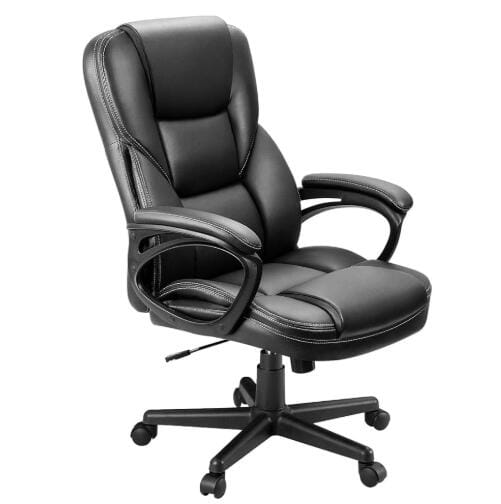
The Furmax is a bestseller for a reason. It offers impressive quality at an entry-level price, making it one of the most popular budget leather chairs on the market.
Key features:
-
High-quality PU leather – Waterproof, wear-resistant, and does not fade over time
-
High-back design – Cushioned back for maximum support
-
Large thick seat pad – Provides excellent lumbar support
-
Alloy steel base – 360-degree swivel, sturdy enough for heavy weights
-
Pneumatic controls – Easy height adjustment and rocking motion
-
Neutral color options – Black, brown, and white available
Pros: Very affordable, easy to clean, surprisingly durable for the price. The alloy steel base provides stability you do not always get at this price point.
Cons: PU leather is less breathable than genuine leather. Fixed armrests (not adjustable). May show wear after 2–3 years of heavy daily use.
Who this chair is for: Budget-conscious buyers who want the leather look without the leather price. Great for home offices and light to moderate daily use.
Price range: ~$100
3. Serta Bonded Leather Executive Chair

Image source: https://www.amazon.com/Serta-Health-Wellness-Executive-Office/dp/B00EUU5G82/
Serta is famous for mattresses, and they bring that same cushioning expertise to office chairs. This bonded leather chair focuses on plush comfort above all else.
Key features:
-
Bonded leather upholstery – Soft to the touch, executive appearance
-
Serta cushioning technology – Layers of foam designed for all-day comfort
-
High-back design – Full back support with extra padding
-
Padded armrests – Fixed but generously cushioned
-
Tilt mechanism – Entire seat and back tilt as a unit with tension control
Pros: Extremely comfortable seat cushion. Plush padding throughout. The bonded leather looks and feels premium for the first few years.
Cons: Bonded leather will eventually peel, typically after 2–3 years of daily use. The back does not recline independently – the whole chair tilts. Not ideal for hot climates.
Who this chair is for: People who prioritize immediate comfort and do not mind replacing the chair in 2–3 years. Great for guest offices or lighter use.
Price range: $150–$250
4. HON Ignition 2.0 Mid-Back Chair
https://www.hon.com/chairs/ignition-series
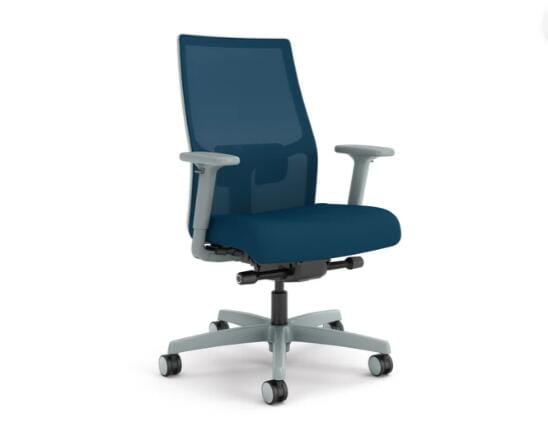
HON is known for durable, no-nonsense office furniture. The Ignition 2.0 is their leather-trimmed ergonomic chair. It focuses on adjustability and build quality rather than plush luxury.
Key features:
-
Leather trim with mesh back – Breathable mesh back keeps you cool, leather seat adds style
-
Adjustable lumbar support – Height-adjustable to fit your spine curve
-
4-way adjustable armrests – Move up/down, in/out, forward/back
-
Seat depth adjustment – Customize the seat to your leg length
-
Tilt lock and tension control – Multiple recline angles
-
BIFMA certified – Meets industry standards for durability and safety
Pros: Excellent ergonomic adjustability at a mid-range price. The mesh back solves the breathability problem of full-leather chairs. Adjustable armrests are rare at this price. HON‘s reputation for durability means this chair will last.
Cons: Not a full-leather chair – only the seat and trim are leather. The mid-back design offers less upper back support than high-back options.
Who this chair is for: People who want leather style but cannot give up ergonomic adjustability and breathability. The best choice if you work long hours in a warm office.
Price range: $400–$500
Quick Comparison Table
| Chair | Leather Type | Back Height | Armrests | Lumbar Support | Breathability | Best For |
|---|---|---|---|---|---|---|
| Meet&Co High Back | Genuine leather | High | Fixed padded | Basic | Fair | Executive look on a budget |
| Furmax Executive | PU leather | High | Fixed | Built-in | Poor | Budget buyers |
| Serta Executive | Bonded leather | High | Fixed padded | Built-in | Poor | Plush comfort |
| HON Ignition 2.0 | Leather trim + mesh | Mid | 4‑way adjustable | Adjustable | Excellent | Ergonomics + breathability |
How to Care for Your Leather Office Chair
A leather chair is an investment. Proper care keeps it looking good and lasting long.
Do this every week:
-
Wipe the chair with a dry microfiber cloth to remove dust.
-
Vacuum crevices where crumbs collect.
Do this every month:
-
Clean with a leather cleaner or mild soap and damp cloth. Avoid harsh chemicals.
-
Dry thoroughly with a soft cloth. Do not let water soak into seams.
Do this every 6–12 months:
-
Apply a leather conditioner to genuine leather. This prevents cracking and keeps the material supple.
-
For PU and bonded leather, use a gentle cleaner only – conditioners may damage the surface.
Never do these things:
-
Do not place the chair in direct sunlight – UV rays dry out and crack leather.
-
Do not use alcohol-based cleaners, bleach, or ammonia.
-
Do not let spills sit – wipe immediately.
-
Do not use silicone-based products – they create a film that traps dirt.
A quality genuine leather chair can last 10–15 years with proper maintenance. Bonded leather, even with perfect care, will typically start peeling within 3–5 years. That is simply the nature of the material.
Also see: How to Maintain and Extend the Life of Your Leather Chair
Frequently Asked Questions (FAQ)
1. Is PU leather better than bonded leather?
Yes, generally. PU leather is a synthetic material made from polyurethane. It is durable, water-resistant, and easy to clean. Bonded leather is made from leather scraps mixed with polyurethane – it looks good at first but is prone to cracking and peeling much faster. For the same price, choose PU over bonded. For a small budget increase, choose genuine leather over both. A genuine leather chair will typically last 3–6 years before visible deterioration, while full-grain can last 15+ years.
2. How long should a leather office chair last?
It depends entirely on the leather type and how you use it. Full-grain and top-grain leather chairs can last 10–15 years or more with proper care. Genuine leather typically lasts 3–6 years. PU leather lasts 2–5 years depending on quality and usage frequency. Bonded leather often starts peeling within 1–3 years, especially on the seat and armrests where friction is highest. If you want a chair that lasts, avoid bonded leather and invest in at least top-grain genuine leather.
3. Can a leather office chair be comfortable for 8 hours a day?
Yes, but you need the right features. A leather chair with adjustable lumbar support, seat depth adjustment, and proper cushioning can be comfortable all day. However, leather – especially PU and bonded – does not breathe well. In warm weather or non-air-conditioned rooms, you may get sweaty. For full-day comfort in hot climates, consider a leather chair with a mesh back, like the HON Ignition 2.0, or a hybrid design that combines leather seating surfaces with breathable mesh backs.
Final Thoughts
A leather office chair is a statement piece. It says you care about quality, appearance, and comfort. But not all leather chairs deliver on that promise.
Here is the simple truth: You get what you pay for.
-
Under $150 – You are getting PU or bonded leather. It will look good for a year or two, then likely start peeling. Fine for light use or guest chairs.
-
$150–$400 – You may find genuine leather trim or decent PU. Look for the HON Ignition 2.0 if ergonomics matter.
-
$400–$800 – Genuine leather becomes realistic. The Meet&Co High Back Chair offers genuine leather and high-back support at a competitive price.
-
$800+ – You enter top-grain and full-grain territory. Expect 10+ years of use if you maintain the chair properly.
Your final decision comes down to three questions:
-
What is your budget? Be honest. Do not buy bonded leather expecting it to last.
-
How many hours do you sit each day? For 8-hour days, invest in genuine leather with good ergonomic adjustments.
-
Is your office air-conditioned? If yes, full leather works fine. If no, choose a hybrid with a mesh back.
A great leather office chair is not cheap. But a cheap leather office chair will cost you more in the long run – in replacement costs and in back pain. Spend what you can afford, but spend it wisely.
Your back and your office deserve the best seat in the house.

_5.webp)
