





 Meet&Co
To eliminate couch mites effectively, you must utilize high-heat steam cleaning (above 60°C) to kill live organisms and use a HEPA-filter vacuum to remove their allergenic waste.
Additionally, keeping indoor humidity below 50% is the most effective long-term biological control method to prevent them from returning.
Introduction
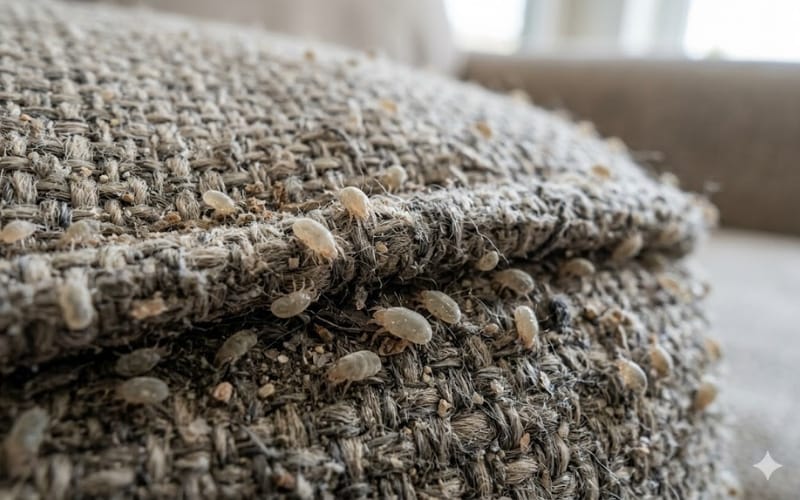
The living room is the heart of the home, but for many, it hides an invisible irritant that can compromise respiratory health and skin comfort.
If you find yourself sneezing or itching every time you sit down, you are likely asking: How do I get rid of couch mites?
These microscopic arachnids, commonly known as house dust mites, thrive in the soft, warm environments provided by upholstered furniture.
While they are nearly universal in human dwellings, their concentration can reach levels that trigger severe allergies or asthma.
For owners of a fabric sofa, the challenge is unique because the porous weave of the textile allows skin cells—the mites’ primary food source—to sift deep into the cushions, creating a self-sustaining ecosystem.
Whether you are a parent protecting a child with sensitivities or simply someone who values a pristine living environment, this guide provides the professional-grade strategies you need.
Experts at Meet&Co emphasize that a clean home starts with understanding the materials of your furniture and the biology of the pests that inhabit them.
Summary: Getting rid of couch mites requires a systematic approach of high-temperature sterilization and particulate filtration to remove both the pests and the proteins they leave behind.
Understanding Couch Mites
To defeat an enemy, you must first understand its biology and habits.
Couch mites are not “bugs” in the traditional sense like bedbugs or ants; they are microscopic scavengers that do not bite or transmit blood-borne diseases.
Instead, their danger lies in the potent enzymes they produce to digest skin cells, which remain in their waste and become airborne.
What are Couch Mites?
The most common species found in homes are Dermatophagoides pteronyssinus and Dermatophagoides farinae.
They are roughly 200–300 microns long, making them invisible to the naked eye. In a typical sectional sofa, there could be anywhere from 100,000 to 10 million mites depending on the age of the piece and the local climate.
They lack eyes and respiratory systems, instead absorbing oxygen and moisture directly through their shells.
Health Impacts and Symptoms
The World Health Organization (WHO) identifies dust mite allergens as one of the leading causes of indoor asthma.
When the mite waste (fecal pellets) is disturbed by someone sitting on the couch, it enters the air. Inhaling these particles leads to:
Allergic Rhinitis: Congestion, sneezing, and itchy throats.
Atopic Dermatitis: Flare-ups of eczema or red, itchy welts on the skin.
Sleep Disruption: Persistent coughing or wheezing that worsens at night or during relaxation.
The Ideal Breeding Ground
Mites are 75% water by weight. They cannot survive in dry air. They thrive best when temperatures are between 20°C and 25°C and relative humidity is above 60%.
Because the foam inside a couch acts as an insulator, it traps the body heat and perspiration of anyone sitting on it, creating a perfect humid micro-niche.
Summary: Couch mites are microscopic scavengers that cause significant health issues through their allergenic waste, thriving specifically in warm, high-humidity environments.
Preparation Before Cleaning
Effective removal is not about a single spray; it is about a deep-cleaning operation.
Before you begin the physical cleaning process, you must gather the correct tools and ensure your safety.
The Essential Toolkit
Using standard cleaning tools often fails because they simply move the mites around. To get professional results, you need:
HEPA-Certified Vacuum: Standard filters allow microscopic allergens to pass right through and back into the air. A HEPA (High-Efficiency Particulate Air) filter captures 99.97% of particles as small as 0.3 microns.
Commercial-Grade Steamer: You need a machine that can sustain a high temperature to ensure the heat penetrates at least 2 inches into the cushion.
Microfiber Cloths: These are superior for wiping down non-fabric parts of the frame, as the fibers “grab” dust rather than pushing it.
Acaricide or Essential Oils: Specialized sprays that kill mites on contact.
Safety Measures
If you are cleaning a sofa for living room use specifically to address allergies, you must protect yourself during the process.
The act of cleaning will temporarily spike the allergen levels in the room.
Wear a mask (N95 or better) and consider running an air purifier on its highest setting in the room for 2 hours after you finish.
Testing the Infestation
If you are unsure if mites are the problem, you can use a “Mite Allergen Test Kit.”
These kits use a small dust sample from your couch and a chemical reagent to show the concentration of Der p 1 (the primary mite allergen).
This provides a baseline so you can measure the success of your cleaning later.
Summary: Professional-grade tools, particularly HEPA vacuums and high-heat steamers, are essential for removing mites without worsening the indoor air quality.
Step-by-Step Removal Methods
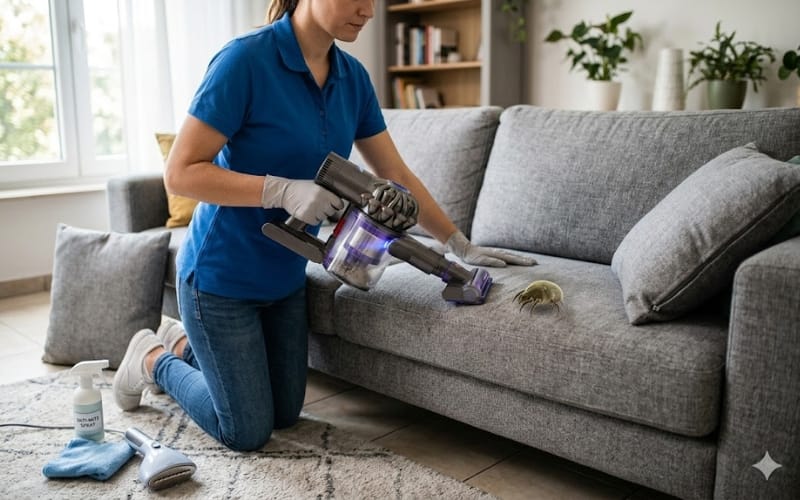
Now that you are prepared, follow these five steps to deep-clean your furniture and eradicate the mite population.
1. High-Suction HEPA Vacuuming
Start by removing all cushions. Vacuum the base, the back, and every crevice. Use the “crevice tool” attachment for the seams.
Research shows that slow vacuuming is more effective; spend at least 2-3 minutes on each seating section. This removes the “food” (skin cells) and a large portion of the live population.
2. Steam Treatment
This is the “kill” phase. Move the steam wand slowly over the surface of the quality sofa fabric.
The goal is to raise the internal temperature of the fabric and the top layer of foam to at least 60°C.
Pro Tip: Do not over-saturate. You want “dry” steam. If the couch stays damp for more than 24 hours, you risk growing mold, which is just as bad for allergies as mites.
3. Washing Removable Components
If your couch has removable covers, throw them in the washing machine.
Temperature: Set the water to 60°C (140°F). Cold water kills less than 10% of mites.
Drying: Use a high-heat dryer cycle for at least 20 minutes. The combination of detergent, hot water, and hot air is 99% effective at removing allergens.
4. Application of Acaricides or Natural Sprays
Once the couch is dry, apply a mite-killing spray. If you prefer a natural route, studies have shown that a 5% concentration of tea tree oil or eucalyptus oil can kill dust mites.
Mix the oil with distilled water and a drop of dish soap (to emulsify) and mist the fabric lightly.
5. UV Exposure
If your couch is small enough or the cushions are removable, take them outside into direct sunlight. Ultraviolet C (UVC) rays from the sun are a powerful disinfectant.
Four to six hours of direct sunlight can significantly reduce the microbial load and help “air out” any lingering odors.
Summary: A combination of slow HEPA vacuuming, 60°C heat treatment, and targeted acaricide application provides a comprehensive kill-and-remove strategy.
Long-Term Prevention Strategies
Cleaning gets rid of the current population, but mites will return if the environment remains hospitable.
Environmental Engineering
The single most effective long-term strategy is humidity control. If your home stays below 50% humidity, mites cannot survive; they literally dry out and die.
Invest in a high-quality dehumidifier for your living room, especially during the summer months.
Protective Barriers
For a modern sofa, consider using an “allergen-impermeable” cover. These are high-thread-count covers that go under your decorative pillows.
The weave is so tight that mites cannot crawl through them to reach the foam, and skin cells cannot get in to feed existing mites.
Cleaning Schedule
Consistency is your best friend. Refer to this recommended maintenance schedule:
| Task | Frequency | Purpose |
|---|---|---|
| Surface Vacuum | Weekly | Remove skin cells and dust. |
| HEPA Deep Vacuum | Bi-Weekly | Remove deep-seated allergens. |
| Steam Clean | Every 6 Months | Kill deep-dwelling mites. |
| Professional Service | Annually | Complete restorative cleaning. |
Summary: Maintaining household humidity below 50% and using physical barriers are the most sustainable methods for permanent mite prevention.
Common Mistakes to Avoid
Many people try to get rid of mites but fail because of these common errors:
Using a standard vacuum: As mentioned, this just blows the tiny fecal particles into the air where you breathe them in.
Ignoring the pillows: People clean the couch but leave the throw pillows, which are often the most infested parts.
Using cold water: Cold water does not kill mites. It only washes away some of the dust.
Neglecting the floor: Mites live in the carpet under the couch. If you don’t clean the surrounding area, they will just migrate back to the furniture.
Summary: Successful mite eradication must include the surrounding environment and the use of high-heat cleaning methods to be effective.
Conclusion
Learning how do I get rid of couch mites is a vital step toward a healthier, more comfortable home.
By combining the power of heat, the precision of HEPA filtration, and the long-term control of humidity, you can transform your living room from an allergen trap into a safe haven.
It takes effort, but the result—clearer breathing and healthier skin—is well worth the investment.
When choosing furniture, opting for high-quality designs from Meet&Co Furniture can also make a difference, as well-constructed pieces often feature materials that are easier to maintain and clean.
Establish your cleaning routine today, and don’t let invisible pests dictate the comfort of your home.
Final Summary: Proactive cleaning, using the right technology, and controlling your home’s climate are the keys to a mite-free living space and improved long-term health.

_4.webp)