






 Meet&Co
Finding the right sofa for a small office can feel like solving a puzzle.
Too big, and it overwhelms the room; too small, and it sacrifices comfort and style.
In this guide, Meet&Co will explore how do I choose the right size sofa for a small office space, covering measurement tips, sofa types, comfort, materials, layouts, and product recommendations to help you create a functional and welcoming office environment.
Measure Your Space Accurately
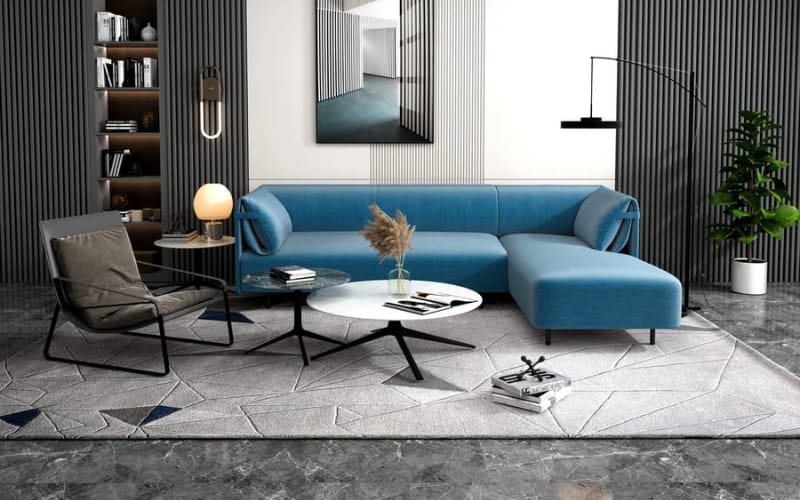
Before selecting any sofa, accurate measurement of your office space is crucial. Start by measuring the length, width, and height of your room.
Don’t forget to account for doors, windows, and walking paths.
A common mistake is ignoring clearance space; aim for at least 60–80 cm (24–32 inches) of open space around the sofa to ensure easy movement.
Pro Tip: Use a floor plan or masking tape to mark the sofa’s footprint on the floor.
This visual guide helps you understand how much space the sofa will actually occupy.
Quick Formula for Maximum Sofa Length:
Room length × 0.6 = maximum sofa length (approximate, leaving room for movement and other furniture)
Illustrations showing small office layouts with sofa footprints can help visualize options.
Best Sofa Types for Small Offices
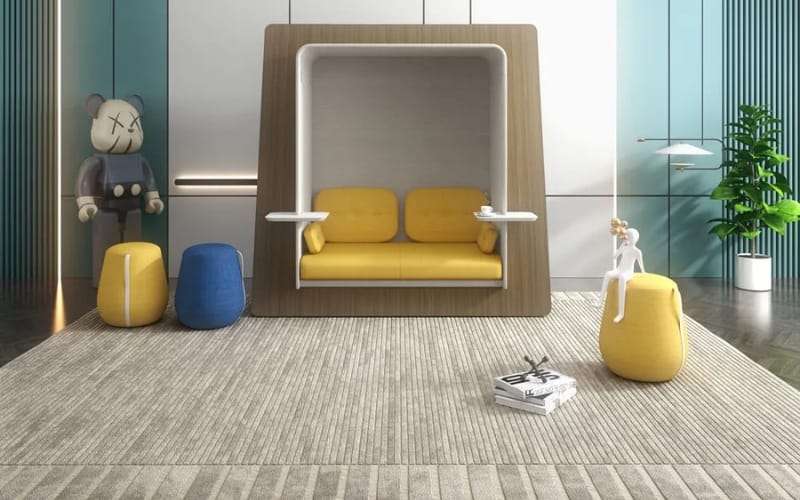
Choosing the right type of sofa is as important as choosing the right size. For small offices, consider these options:
Compact Two-Seater Sofas: Ideal for spaces with limited floor area, they offer comfort without dominating the room.
Modular Sectionals: Flexible and space-efficient, modular sofas can adapt to your office layout and are easy to rearrange.
Meet&Co Caterpillar Modular Sectional Sofa: This modular sofa is perfect for small offices, offering customizable seating arrangements while maintaining a clean and modern look.
Leather Sectionals: Sleek and professional, leather sofas add elegance to small office spaces.
Meet&Co Mandis Leather Sectional Sofa: Its premium leather finish and compact sectional design make it both stylish and functional for small offices.
Foldable or Storage Sofas: Ideal for multi-functional spaces, these sofas provide seating and storage without cluttering the room.
Pro Tip: When evaluating sofa types, always compare actual occupied floor area to ensure it won’t crowd the office.
Comfort & Ergonomics
Even in a small office, comfort should not be sacrificed. Key factors to consider:
Seat Depth: For office use, 45–50 cm (18–20 inches) seat depth provides comfortable support without taking excessive space.
Seat Height: Standard office sofa height is 40–45 cm (16–18 inches).
Backrest & Armrest: Adjustable or moderate-height backs and slim armrests help maximize seating comfort without overwhelming the room.
Pro Tip: Consider how often employees or clients will use the sofa.
If it’s for short breaks or casual meetings, a compact but supportive sofa is better than a plush oversized model.
Material & Color Considerations
Material and color influence both aesthetics and spatial perception:
Fabric vs Leather: Fabric is cozy and versatile, while leather is professional and easier to clean.
Light Colors: Cream, beige, or soft gray make small spaces feel larger.
Dark Colors: Suitable for high-traffic offices, but can visually shrink a small room.
Maintenance Tip: For fabric sofas, opt for removable, washable covers to keep the sofa clean without hassle.
Layout & Space Planning Tips
Optimizing layout is key in small office spaces:
Placement: Push the sofa against a wall or into a corner to free up central space. Avoid blocking doors or pathways.
Complementary Furniture: Small coffee tables or nesting tables reduce clutter and maintain open flow.
Multi-Functional Design: Consider a sofa with storage underneath or a modular configuration that doubles as a meeting area.
Visual Tip: Use scaled floor plans or 3D planning tools to experiment with placement before purchase.
Budget & Cost Considerations
Small office sofas come in various price ranges. Key tips:
Entry-Level: $200–$500 for compact fabric sofas
Mid-Range: $500–$1,200 for modular or leather sofas
High-End: $1,200+ for premium leather, designer, or custom modular pieces
Meet&Co Recommendation: Both Caterpillar Modular and Mandis Leather Sectionals offer excellent value for mid-range budgets, balancing comfort, durability, and professional aesthetics.
Common Mistakes to Avoid
Oversized Sofas: They overwhelm space and reduce mobility.
Ignoring Clearance: Lack of walkways can create a cramped feel.
Wrong Material: Choosing a material that’s hard to maintain can increase long-term costs.
Neglecting Ergonomics: Poor seat depth or height can lead to discomfort for employees and guests.
Conclusion
Choosing the right sofa for a small office involves careful measurement, understanding of layout, and consideration of comfort, materials, and aesthetics.
With proper planning and the right product choices—like Caterpillar Modular Sectional Sofa or Mandis Leather Sectional Sofa—you can create a professional, stylish, and comfortable small office environment.
Frequently Asked Questions (FAQ)
Typically, a compact 3-seater may fit, but ensure at least 60 cm of clearance around it for movement.
Yes, modular or small sectionals are flexible and can optimize corner areas without crowding the room.
Consider storage sofas or ottomans that double as seats. Modular options also allow hidden compartments.

_4.webp)