





 Meet&Co
Apartments often require furniture to work harder, especially when living, dining, working, and sleeping areas share limited space. Instead of filling a room with separate pieces for every purpose, multifunctional furniture can help you make better use of the space you already have.
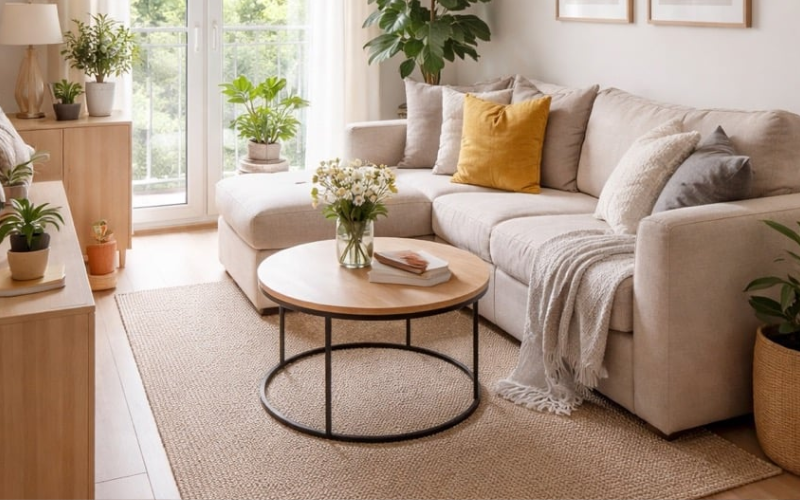
What Is Multifunctional Furniture?
Multifunctional furniture refers to pieces that serve two or more purposes or can adapt to different uses. A dining table can also function as a workspace, an ottoman can provide seating while offering storage, and a loft bed can combine a sleeping area with a desk underneath.
For apartment living, this type of furniture can reduce the number of separate pieces needed while making the space more flexible. The goal is not simply to choose furniture with multiple features, but to find pieces that fit naturally into the way the apartment is used.
How to Choose Multifunctional Furniture
Choosing multifunctional furniture is not simply about finding a piece with as many functions as possible. The right choice should fit your apartment, support your daily routines, and make better use of the available space. Consider the following factors before choosing a piece of furniture for apartments.
1. Consider Your Daily Needs
Start by considering how you actually use your apartment each day. Think about whether you need a dining area that can also work as a home office, extra seating for guests, or additional storage for everyday items. Choosing furniture based on your routine helps ensure that its multiple functions are useful rather than simply adding features you rarely need.
2. Measure the Available Space
Multifunctional furniture still needs to fit comfortably within the available space. Measure the room, doorways, and main walkways before buying, and consider how much space the furniture needs when all of its functions are in use. A table that expands, a chair that folds out, or a sofa with a movable configuration may require more room than it does in its everyday position.
3. Choose Lightweight, Flexible Pieces
Furniture that is easy to move or rearrange can be especially useful in an apartment. Lightweight chairs, nesting tables, and modular furniture can be repositioned when you need to change the layout or create more open floor space. This flexibility allows the same room to support different activities without requiring permanent furniture arrangements.
4. Look for Practical Function Combinations
Not every combination of functions is equally useful. Look for furniture where the functions naturally complement each other and are likely to be used regularly. A dining table that can serve as a workspace or a storage ottoman that provides extra seating combines functions that can easily fit into everyday apartment living.
5. Prioritize Built-In Storage
Storage is often one of the most useful secondary functions in apartment furniture. Pieces with drawers, shelves, or concealed compartments can provide additional storage without requiring another cabinet or shelving unit. When choosing storage furniture, consider what you plan to keep inside and whether the storage is easy to access.
6. Consider Furniture That Can Adapt Over Time
An apartment's needs can change as your lifestyle changes. Furniture that can be reconfigured, folded, extended, or used in different ways can remain useful when your needs or room layout change. This can be particularly helpful for renters or anyone who expects to move between apartments with different floor plans.
7. Balance Function and Comfort
A piece of furniture should not sacrifice everyday comfort simply because it offers multiple functions. Check whether it provides adequate support, usable dimensions, and a comfortable experience for its primary purpose. Multifunctionality is most valuable when the furniture performs each function without making the space or the user experience unnecessarily complicated.
8 Multifunctional Furniture Ideas
● Bookshelves to Separate Living and Sleeping Areas
In a studio or open-plan apartment, a bookshelf can do more than hold books and decorative items. Positioned between a living area and sleeping area, it can create a visual separation without completely closing off the room.
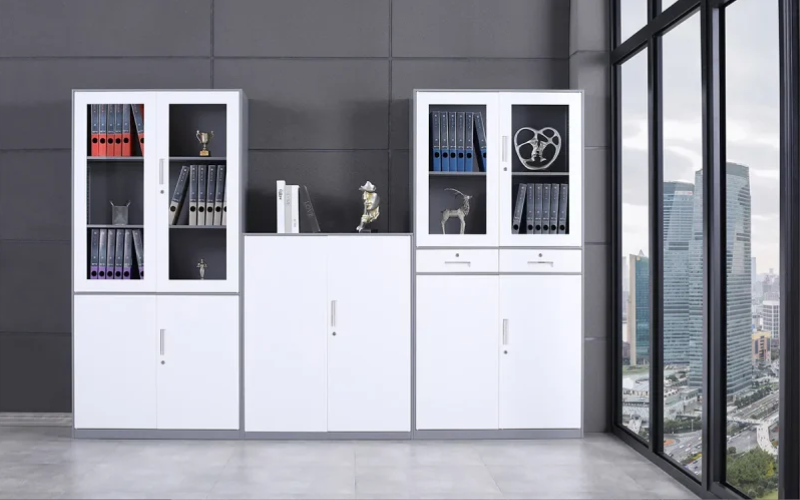
Open shelving is particularly useful when you want to maintain light and visibility between the two areas. It also combines storage with space division, allowing one piece of furniture to perform two functions.
● Storage Ottomans That Double as Seating or Tables
A storage ottoman is a compact option for apartments where every piece of furniture needs to be useful. It can provide an extra seat when guests arrive, serve as a footrest, or work as a small surface for everyday items.
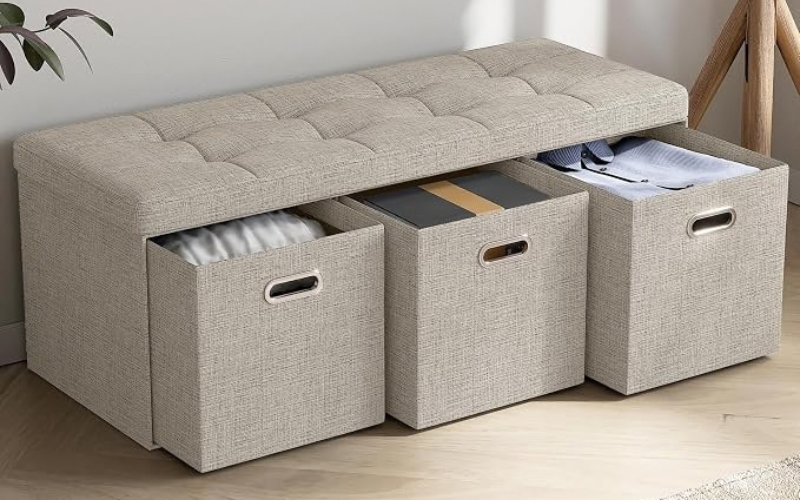
The storage compartment adds another function, giving you a place to keep blankets, cushions, magazines, or other small items. Because ottomans are generally easy to move, they can also be repositioned as your needs change.
● Nesting Tables That Tuck Away When Not Needed
Nesting tables consist of multiple tables designed to fit together when they are not in use. You can keep them together to save floor space and separate them when you need additional surfaces.
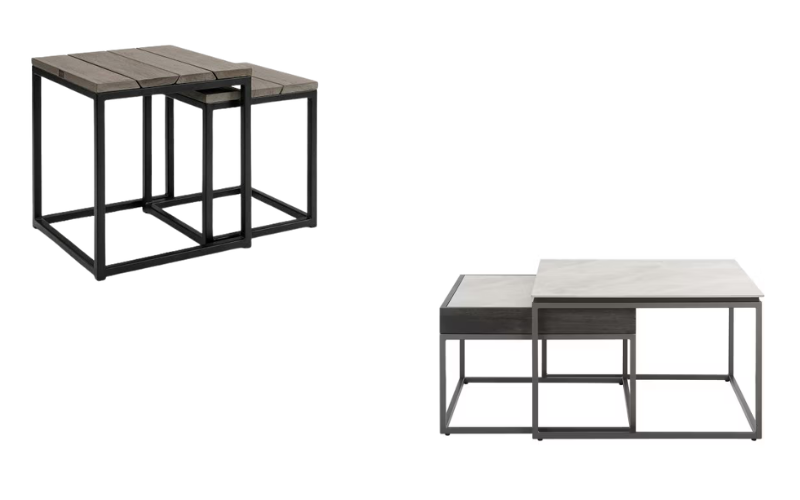
This makes them useful in apartments where a large coffee table may take up too much room. They can provide extra surfaces for drinks, snacks, or personal items when needed and be grouped together afterward.
● Loft Beds with Built-In Desks
A loft bed with a built-in desk combines a sleeping area with a workspace. By using the vertical space of the room, it leaves the floor underneath available for a desk and other activities.
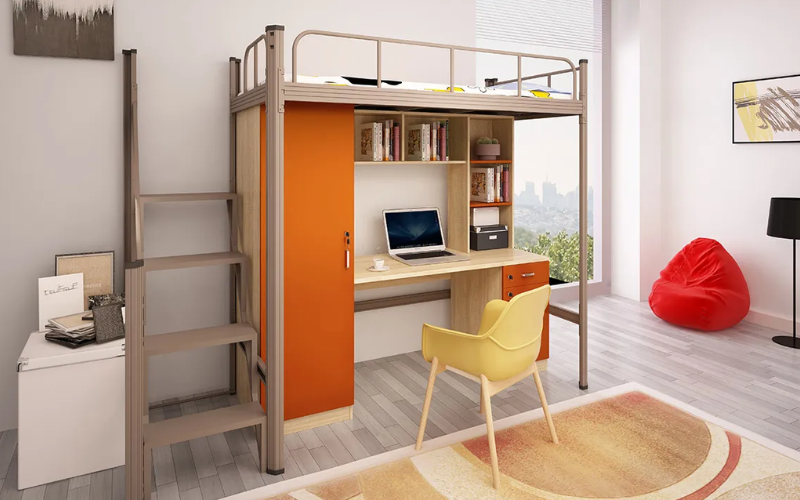
This arrangement can be particularly useful in small bedrooms, studio apartments, or apartments where there is no separate home office. Some designs may also include shelving or additional storage, further combining several functions within one compact footprint.
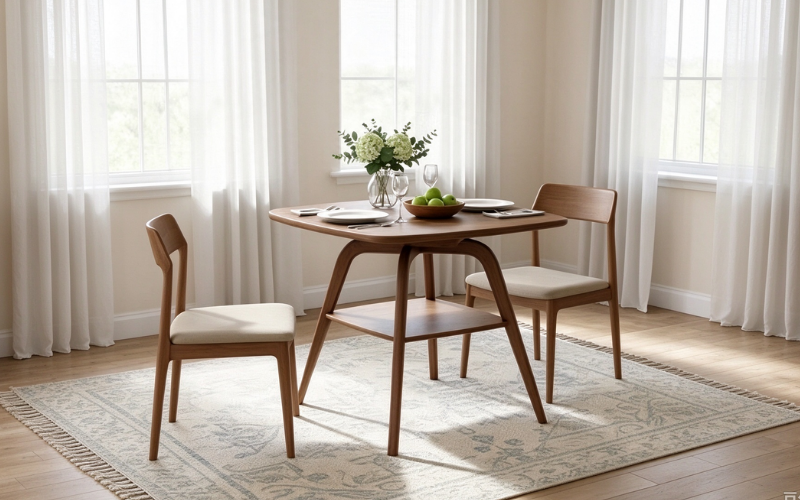
● Dining Tables That Double as Workspaces
In an apartment without a dedicated home office, a dining table can serve as both a place to eat and a temporary workspace. Choosing a table with a practical size and a comfortable height can make it easier to switch between the two uses without adding another desk to the room.
● Coffee Tables with Storage
A coffee table with built-in storage provides a convenient place for everyday items while serving as the central surface in a living area. Depending on the design, storage may be provided through drawers, shelves, or a lift-top surface.
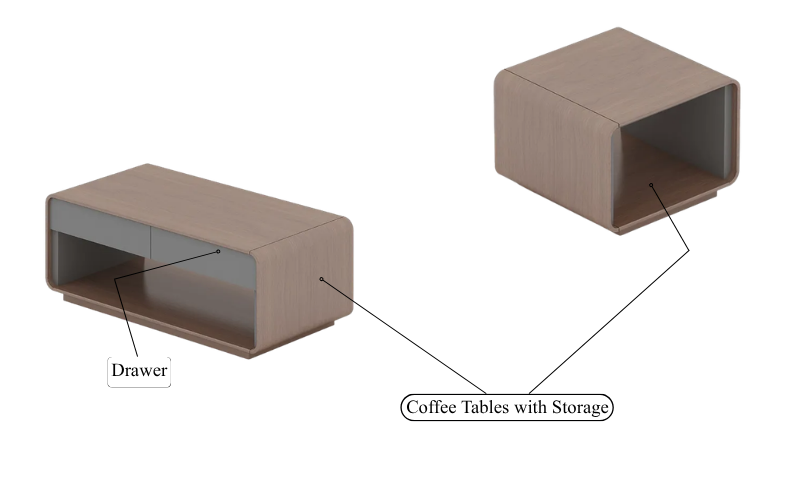
This can be useful in apartments where there is limited space for additional cabinets or shelving. Instead of adding a separate storage unit, you can use the space within or underneath the coffee table.
● Folding Dining Chairs
Folding dining chairs can provide everyday seating without permanently occupying the same amount of floor space. When additional chairs are not needed, they can be folded and stored away.
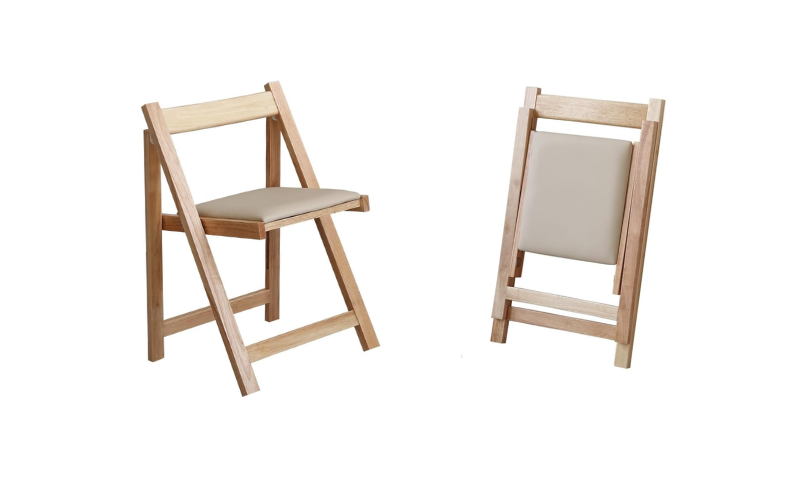
They can be useful for apartments where the dining area also serves another purpose, such as a workspace or living area. When guests arrive, the chairs can be brought out without requiring a larger dining setup all the time.
● Modular Sofas
A modular sofa consists of separate sections that can be arranged in different configurations. This gives apartment residents more flexibility when the layout or needs of the space change.
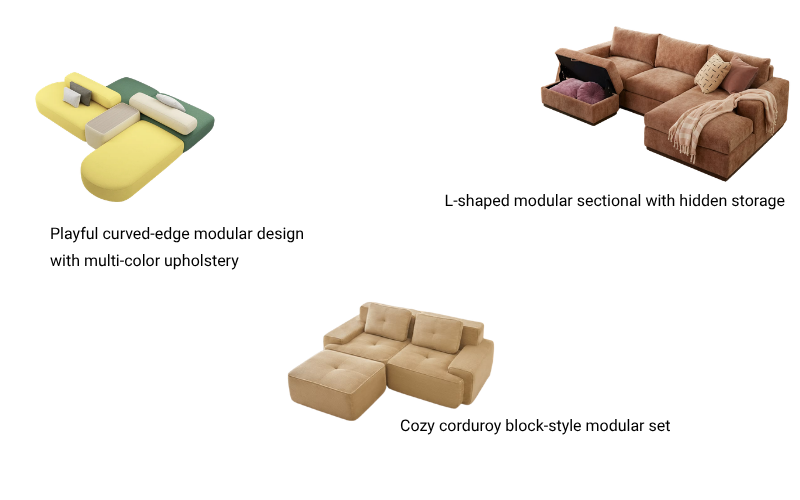
For example, the same modules can be arranged as a conventional sofa, a larger sectional, or separate seating depending on the room layout. This adaptability can make modular sofas a practical option for apartments where furniture needs to work with changing spaces.
Conclusion
A well-furnished apartment does not have to be filled with furniture to feel complete. The right pieces can help you create a dining area that doubles as a workspace, add storage without taking up another corner, or adapt the living area as your needs change. When every piece has a clear purpose, even a compact apartment can feel more organized and functional.
At Meet&Co, we offer a range of office and living furniture designed with practical use, flexibility, and everyday comfort in mind. From modular sofas and lounge seating to tables and storage solutions, our furniture can work across different spaces and needs. Explore Meet&Co's furniture solution to find pieces that make more of your apartment space.
FAQ
What Furniture Is Best for a Small Apartment?
Furniture that combines functions or can be easily stored is often useful in a small apartment. Examples include storage ottomans, nesting tables, modular sofas, folding chairs, and loft beds with built-in desks.
What Is the Most Versatile Furniture for an Apartment?
There is no single piece that works best for every apartment. The most versatile option depends on the available space and how the room is used. Modular sofas, storage furniture, and flexible tables can be useful because they can adapt to different needs.
How Can Furniture Divide an Apartment Without Walls?
Bookshelves, open shelving, storage cabinets, and some modular furniture can help define different areas without building permanent walls. For example, a bookshelf can separate a sleeping area from a living area while still providing storage.
What Should I Consider When Buying Multifunctional Furniture?
Consider the furniture's dimensions, primary and secondary functions, storage capacity, flexibility, and how often each function will actually be used. It should solve a practical space problem rather than simply offer extra features.