





 Meet&Co
Walk into a classroom today, and you might see something remarkable. A group of students huddled around a low table, whiteboarding ideas for a group project. A few others working independently at standing desks near the window. The teacher circulating with a laptop, checking in with small clusters. Across the room, another cluster of students sits on floor cushions, reading silently.
Twenty years ago, this scene would have looked chaotic. Today, it’s the hallmark of a flexible classroom—a space designed to support multiple teaching methods within a single lesson, or even simultaneously.
The traditional classroom, with its rigid rows of identical desks bolted to the floor, was built for one mode: direct instruction from the front. But education has evolved. Teachers now blend lectures with group work, independent study, peer collaboration, and whole-class discussions—often within the same class period. Furniture that can’t adapt becomes a barrier to learning.
Why Teaching Methods Demand Flexible Furniture
Today’s classrooms are not single-purpose spaces. A single lesson might include:
| Phase | Teaching Method | Furniture Needs |
| Opener | Whole-class instruction | Students facing teacher, clear sightlines |
| Mini-lesson | Direct instruction | Flexible seating that can be repositioned |
| Group work | Collaborative learning | Tables that cluster, shared workspace |
| Independent practice | Self-directed study | Individual work surfaces, quiet zones |
| Share-out | Presentations | Audience facing speaker, mobile whiteboard |
| Assessment | Individual testing | Separation between students, flat writing surface |
A classroom that supports all these modes isn’t a single configuration—it’s a system that can transform quickly. Research from the University of Salford found that classroom design accounts for up to 16% of variation in student learning progress, with flexibility being one of the most influential factors.
What are the Core Principles for Flexible Classroom Furniture
1. Mobility Is Essential
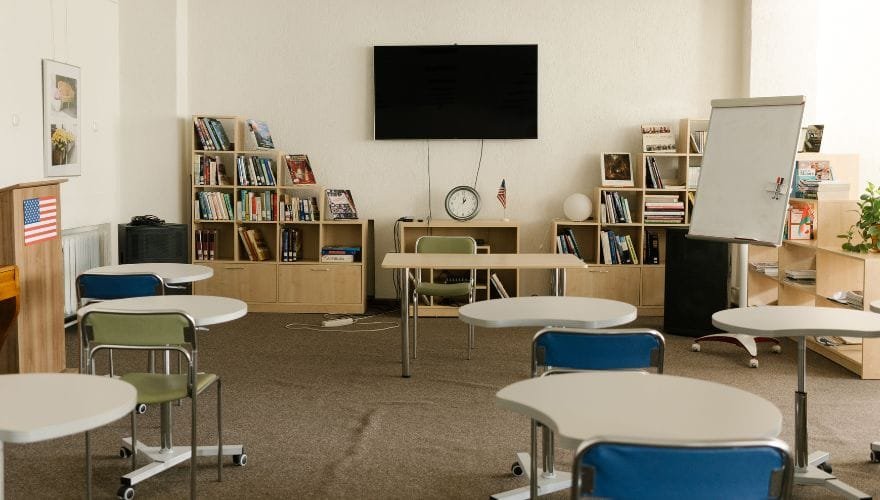
Furniture that doesn’t move traps classrooms in a single configuration. The most flexible classrooms use pieces that can be repositioned in seconds.
| Feature | Why It Matters | What to Look For |
| Casters on tables and desks | Teachers and students can reconfigure layouts without heavy lifting | Lockable casters for stability when in use |
| Lightweight chairs | Students can move their own seating without noise or disruption | Chairs under 15 pounds; stackable designs |
| Folding or nesting furniture | Frees floor space when not in use | Tables that nest together; chairs that stack |
2. Variety Supports Diverse Learners
One seating type doesn’t work for all students—or all activities. Flexible classrooms offer a mix of options so students can choose what supports their focus.
| Seating Type | Best For | Considerations |
| Traditional chairs | Direct instruction, testing | Ergonomic support for longer sits |
| Stools | Quick transitions, standing-height work | May be less comfortable for extended periods |
| Floor cushions | Reading, informal collaboration | Requires floor space; easier with rugs |
| Wobble stools | Students who need movement to focus | Active seating; not for all students |
| Standing desks | Active learners, quick tasks | Adjustable height for different students |
| Soft seating | Reading nooks, independent work | Takes more space; signals relaxation |
Also see: What Are the Different Types of School Desks? Classroom Desk Guide
3. Surfaces Should Support Multiple Functions
Tables and desks aren’t just for writing anymore. In flexible classrooms, surfaces serve multiple purposes.
| Surface Feature | How It Supports Teaching |
| Whiteboard surfaces | Students brainstorm directly on desks; teacher uses tables for demonstrations |
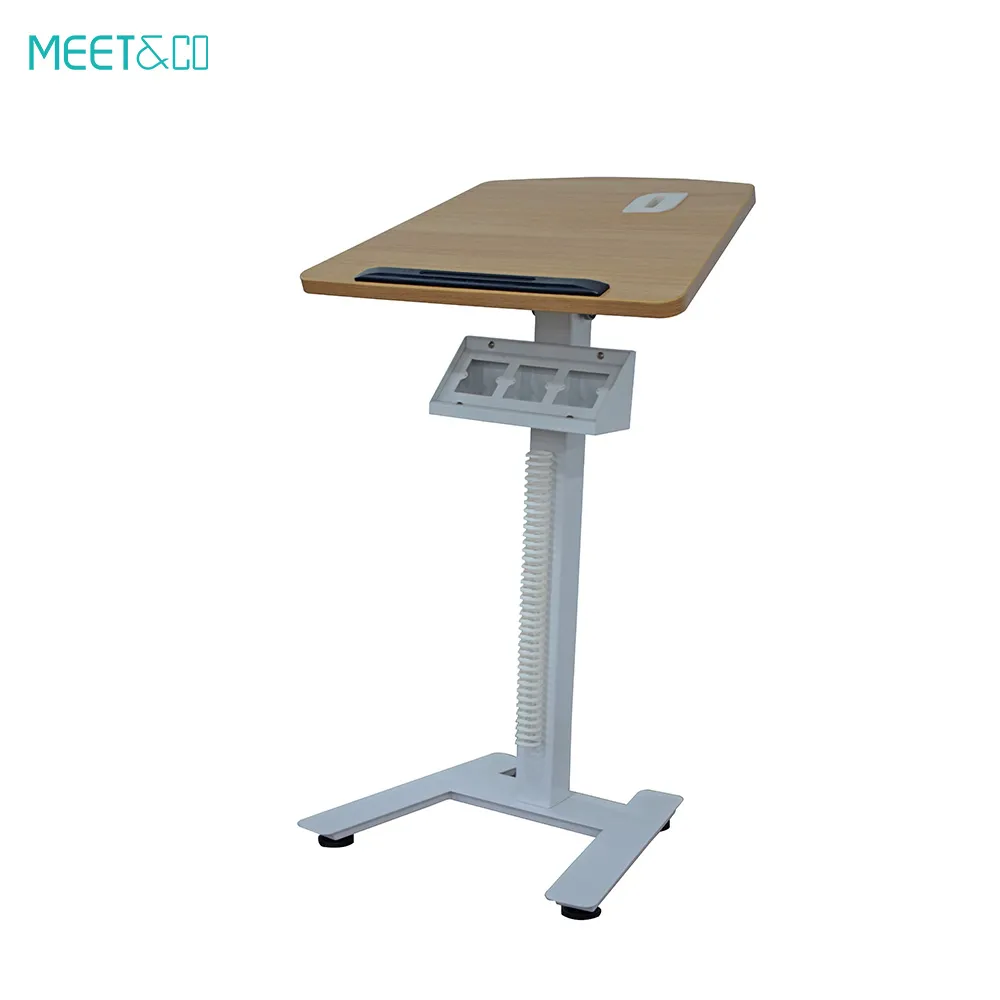
| Tilt-top desks | Supports reading, art, or laptop use at optimal angles |
| Writable laminate | Easy-clean surfaces for markers, spills, and daily use |
| Integrated technology | Power ports, USB charging for devices |
4. Storage Must Be Accessible and Flexible
Flexible classrooms require materials to be accessible without creating clutter.
| Storage Type | Best For |
| Mobile storage units | Materials that move with groups; supplies for different activities |
| Open shelving | Easy access for students; visual inventory |
| Cubbies and bins | Individual student materials |
| Wall-mounted systems | Saves floor space; keeps materials visible |
Furniture Types That Support Multiple Teaching Methods

1. Modular Desks and Tables
These are the workhorses of the flexible classroom. Lightweight, often on casters, and designed to connect in multiple configurations.
Common shapes:
- Rectangular: Classic shape, connects end-to-end for rows or side-by-side for pods
- Trapezoidal: Creates curved or angled configurations; good for small groups
- Kidney-shaped: Ideal for teacher-led small groups; fits around instructor
- Round or oval: Encourages discussion; all students face each other
What to look for:
- Height-adjustable options for different ages and activities
- Durable, easy-clean surfaces
- Connectors that lock tables together securely
- Casters on at least one leg for mobility
2. Mobile Whiteboards
Whiteboards on wheels are among the most versatile tools in a flexible classroom.
Uses:
- Brainstorming stations for groups
- Room dividers for creating quiet zones
- Presentation surfaces for student share-outs
- Temporary privacy screens during assessments
What to look for:
- Double-sided boards for more surface area
- Magnetic surfaces for displaying materials
- Locking casters for stability
- Sturdy frame that won’t wobble during use
3. Flexible Seating Options
| Seating Type | Mobility | Comfort Level | Best Activities |
| Stackable chairs | High | Moderate | All-purpose; easy to reconfigure |
| Stools (various heights) | High | Low-moderate | Quick transitions, standing desks |
| Floor cushions | High | Moderate | Reading, circle time, informal groups |
| Rocking chairs | Low | High | Reading, calming spaces, individual work |
| Wobble stools | High | Moderate | Students needing movement; active seating |
| Lounge seating | Low | High | Reading, independent work, collaboration |
Also see: Are Rocking Chairs Good for Students? 2026 Guide
4. Collaborative Workstations
These are larger tables designed for groups of 4–6 students. Often placed on casters for easy repositioning.
Features to consider:
- Size: At least 48 inches wide for 4 students
- Shape: Round or oval promotes discussion; rectangular works for project work
- Surface: Writable surfaces encourage collaboration
- Power: Integrated outlets for device charging
5. Individual Workstations
Not every activity requires collaboration. Flexible classrooms also need spaces for independent focus.
Options:
- Carrels: Partial enclosures that reduce visual distractions
- Lap desks: Portable surfaces for floor or soft seating
- Height-adjustable desks: Accommodate different body sizes and standing preferences
Matching Furniture to Teaching Methods
| Teaching Method | Ideal Furniture Configuration | Key Furniture Pieces |
| Direct instruction | Students facing teacher, clear sightlines | Stackable chairs in rows or slight curve; teacher station with mobile whiteboard |
| Whole-class discussion | Circle or U-shape, everyone visible | Lightweight chairs easily repositioned; no fixed tables |
| Small-group collaboration | Clusters of 4–6, shared workspace | Collaborative tables on casters; mobile whiteboards per group |
| Independent work | Individual spaces, reduced distraction | Carrels, lap desks, quiet zone with soft seating |
| Stations or rotations | Multiple activity zones defined by furniture | Mobile tables and storage; clear pathways between zones |
| Presentations | Audience facing speaker, demonstration surface | Mobile seating, mobile whiteboard or screen |
| Assessment | Separation between students, flat writing surface | Individual desks spaced apart; dividers if needed |
Meet&Co’s Project
Real-World Example: A Classroom That Transforms
A 5th-grade classroom in Minnesota uses a mix of furniture to support multiple teaching methods:
| Zone | Furniture | Activities |
| Collaboration zone | 4 trapezoidal tables on casters, 6 stackable stools | Group projects, peer editing, science experiments |
| Quiet zone | 2 floor cushions, 3 lap desks, small bookshelf | Independent reading, individual work, assessment |
| Teacher-led zone | Kidney-shaped table, 6 chairs | Small-group instruction, guided reading |
| Presentation zone | Mobile whiteboard, flexible seating | Student presentations, mini-lessons, morning meeting |
The teacher can reconfigure the room in under 5 minutes by moving tables on casters and repositioning chairs. During a single morning, the space might serve whole-class instruction, three small-group rotations, and independent work—all without disrupting the flow.
Implementation Guide: Steps to a Flexible Classroom
Step 1: Observe Current Use
Before buying anything, understand how your classroom is actually used:
- Which configurations work well? Which don’t?
- Where do students struggle to focus?
- What activities do you do most often?
- What furniture is currently underutilized?
Step 2: Start with Mobility
The single most impactful change is adding casters to existing tables. If you’re on a tight budget, start here.
Step 3: Add Variety Gradually
You don’t need to replace everything at once. Introduce new seating types one at a time:
- Month 1: Add 4 wobble stools
- Month 2: Add floor cushions and lap desks
- Month 3: Add a mobile whiteboard
Observe how students use each addition before adding more.
Step 4: Involve Students
Ask students what they need. Let them test configurations and suggest improvements. This builds ownership and teaches them to advocate for their learning needs.
Step 5: Establish Routines
Flexible classrooms need clear expectations:
- How do students choose seating?
- How do they transition between configurations?
- How do they store materials?
Practice transitions until they become routine.
Common Mistakes to Avoid
| Mistake | Why It’s Problematic | Better Approach |
| Buying all matching furniture | Limits configuration options | Mix shapes and sizes for flexibility |
| Choosing style over function | Beautiful furniture may not support learning | Prioritize mobility, durability, versatility |
| Forgetting about storage | Flexible furniture needs places to go when not in use | Plan vertical storage, nesting options |
| Ignoring teacher input | Teachers use the space daily; they know what works | Involve teachers from the beginning |
| Buying without testing | What looks good in a catalog may not work in your room | Test configurations with existing furniture first |
FAQ
1. How quickly can a flexible classroom be reconfigured?
With quality furniture on casters and established routines, a 24-seat room can transition between configurations in under 2 minutes. Teachers report that students quickly learn to participate in reconfiguration when expectations are clear.
2. Is flexible furniture more expensive than traditional furniture?
Upfront costs can be higher, but flexible furniture often lasts longer and serves more functions, reducing the need for specialized pieces. Many schools start with a few flexible elements and expand over time.
3. How do I manage behavior with flexible seating?
Clear expectations and consistent routines are essential. Teach students how to choose seating appropriately, how to transition, and how to self-assess whether a seating choice supports their focus. Most students adapt within 1–2 weeks.
4. What about students with physical disabilities?
Flexible classrooms can actually support inclusion better than fixed arrangements. Ensure pathways remain accessible, provide appropriate seating options, and involve specialists in planning. Height-adjustable desks and varied seating types accommodate diverse needs.
5. Do I need to replace all my furniture to have a flexible classroom?
No. Start with a few key pieces—mobile tables, a mobile whiteboard, varied seating options—and build from there. Even adding casters to existing tables transforms flexibility.
6. How do I store flexible furniture when not in use?
Look for nesting tables, stackable chairs, and mobile storage units. Vertical wall storage and rolling carts keep surfaces clear while keeping furniture accessible.
Conclusion
Flexible classrooms aren’t about buying the newest furniture—they’re about creating spaces that support how teaching and learning actually happen. When furniture can adapt to different methods, teachers gain freedom to use the approach that best serves their students in each moment.
The principles are simple:
- Mobility first: Casters and lightweight pieces make reconfiguration possible
- Variety supports diversity: Different seating types serve different learners and activities
- Surfaces matter: Writable, durable surfaces enable collaboration
- Storage keeps it organized: Accessible materials without clutter
Start small, involve your students, and build a system that grows with your teaching. The flexible classroom isn’t a destination—it’s a journey of continuous improvement, guided by the needs of the learners inside it.