






 Meet&Co
The days of static, forward-facing rows of desks are quickly coming to an end. Traditional rigid setups were designed for passive, lecture-style instruction, but modern pedagogy relies heavily on collaborative learning, problem-solving, and active student participation. Research shows that static rows restrict natural eye contact, create physical barriers to communication, and actively lower student engagement during group projects.
Transitioning to a flexible classroom design directly fixes these pain points. How you arrange your learning space fundamentally changes how students interact with their peers and their instructors. When school districts replace heavy, immobile desks with adaptable pieces, teachers report major improvements in classroom management, peer-to-peer communication, and overall learning outcomes.
According to a comprehensive study by the University of Salford, optimized classroom physical design—including flexible furniture layouts—can boost an elementary student’s annual learning progress by up to 16%. By choosing the right layout configurations, schools can easily transform a standard room into a dynamic, multi-functional learning ecosystem. For educational institutions looking to upgrade their spaces, sourcing durable, agile pieces from trusted commercial manufacturers like Meet&Co ensures long-term structural reliability through years of continuous daily reconfiguration.
Key Takeaways
Mobility Drives Collaboration: Desks and seating equipped with high-quality casters allow classrooms to transition from lectures to group work in under 60 seconds.
Ditch the One-Size-Fits-All Model: Different subjects require different spatial shapes; choose clusters for STEM projects and U-shapes for humanities discussions.
Sightlines are Crucial: Every student must have an unobstructed view of both the primary teaching board and their immediate small-group peers.
Define Clear Traffic Paths: Maintain wide, open walkways so the instructor can seamlessly move between groups to provide targeted guidance.
What Is Flexible Classroom Furniture?
Flexible classroom furniture refers to highly adaptable school furniture specifically engineered to be quickly reconfigured, nested, stacked, or moved by students of various age groups. Unlike traditional wooden or metal laminate desks, these modern pieces are designed to adapt to the lesson plan, rather than forcing the lesson plan to adapt to the room limits.
Key Features
Mobile Furniture: Desks, storage carts, and whiteboards equipped with smooth-rolling, industrial-grade locking casters.
Modular Desks: Tables shaped with unique geometric angles (such as triangles, diamonds, or chevrons) that lock together seamlessly to form multi-student pods or large conference circles.
Stackable Seating: Lightweight chairs that can be safely nested horizontally or stacked vertically to quickly clear floor space for physical activities.
Writable Surfaces: Desks topped with high-pressure dry-erase laminate, turning every student’s workspace into a collaborative sketching surface.
Ergonomic Seating: Active-sitting stools or cantilevered chairs that allow for subtle rock, tilt, and swivel movements, helping students channel restlessness into focused concentration.
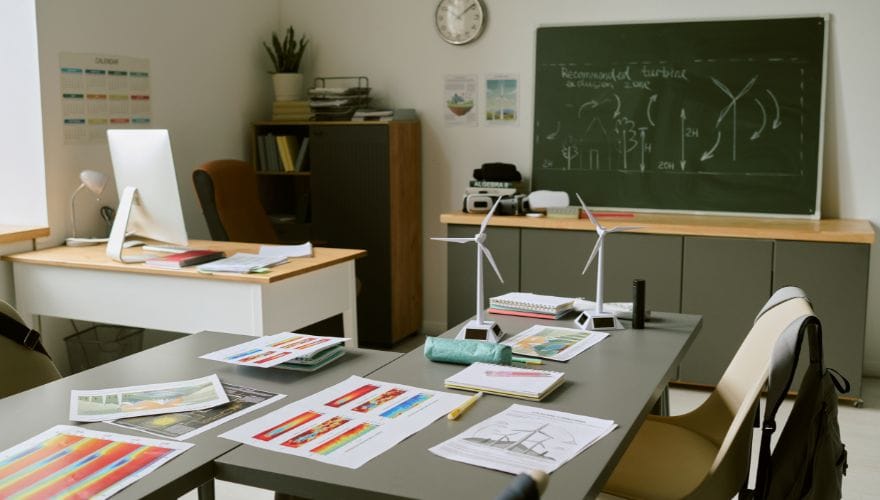
Why Classroom Furniture Layout Matters for Group Learning
The physical architecture of a room dictates human behavior. Changing the layout alters the social dynamics of your classroom, making group work a natural habit rather than a forced logistical chore.
1. Encourages Peer Collaboration
When students sit side-by-side facing a front whiteboard, talking to a neighbor requires turning their entire torso, which feels disruptive. Arranging furniture into open configurations places students face-to-face naturally, making brainstorming, editing, and peer-to-peer tutoring feel effortless.
2. Improves Student Engagement
Sitting in the back row of a traditional layout frequently leads to feelings of isolation and distraction. Flexible layouts eliminate the concept of a “back row.” By bringing all workspaces closer to central hubs, students stay accountable, participate more frequently, and express greater interest in group tasks.
3. Supports Active Learning
Active learning requires students to write, build, debate, and present. Adaptable furniture allows the physical environment to change instantly alongside the curriculum. A space can start as an independent testing zone and transform into a collaborative makerspace within minutes.
4. Makes Classroom Transitions Faster
In a rigid classroom, breaking into groups involves dragging heavy metal chair legs across the floor, causing loud noise and wasting 5 to 10 minutes of valuable instruction time. Lightweight, mobile pieces allow students to roll into their designated groups quietly in under a minute, maximizing actual learning time.
5. Enhances Teacher Mobility
Traditional layouts place the teacher behind a heavy front desk, creating an authoritative barrier. Flexible layouts allow the instructor’s desk to be downsized and moved, opening up clear paths to walk the floor, observe group progress, and provide targeted support to struggling students.
Best Flexible Classroom Layouts for Group Learning
Selecting the right arrangement depends on balancing your daily learning objectives with your specific room layout.
1. Cluster / Pod Layout
The cluster layout groups 4 to 6 modular desks together to form unified workspace islands across the room.
Best For: Project-based learning, engineering challenges, science labs, and small-group brainstorming sessions.
Pros: Maximizes shared desktop surface area; places students in immediate face-to-face contact; facilitates easy material sharing.
Challenges: Can increase off-topic socializing if not monitored properly; requires students to turn their chairs to view the front board.
Recommended Group Size: 4 to 6 students per cluster.
2. U-Shaped Layout

Meet&Co Flip Top Training Table
This setup arranges desks along three outer walls, leaving the center of the room entirely open and facing a primary instructor area or display screen.
Best For: Whole-class debates, high school literature discussions, and interactive video presentations.
Pros: Creates an inclusive environment where every single student can see every peer; offers the teacher an unimpeded walking path to approach any desk instantly.
Challenges: Requires a larger overall room footprint; cuts down on the available surface area needed for large-scale physical projects.
3. Hollow Square Layout
Four rows of outward-facing tables are connected to form a closed square loop with an empty, open space right in the center.
Best For: Socratic seminars, peer evaluations, and middle-to-high school group roundtables.
Pros: Provides an exceptionally authoritative feel that encourages mature, professional discussion; keeps the entire class unified as a single large working group.
Challenges: Hard to quickly split students down into smaller pairs; makes individual teacher-to-student intervention more difficult.
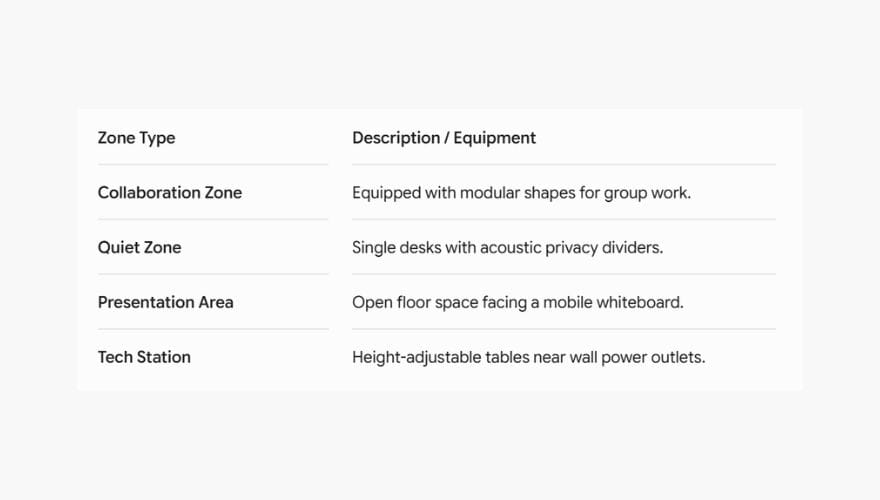
4. Zoned Learning Layout
Instead of treating the classroom as a uniform space, this approach divides the square footage into distinct functional zones.
5. Flexible Modular Layout
This setup relies entirely on highly versatile, puzzle-shaped multi-functional tables that can alter their layout profile continuously throughout the school day.
Best For: STEM labs, high-intensity art classes, and fast-scaling project spaces.
Pros: Unmatched adaptability; easily changes from pairs to trios, rows, or large circles to fit any creative idea.
Challenges: Demands premium, durable wheel locking components to prevent the tables from drifting apart during writing.
Also see: What Is Flexible Seating? A Simple Guide For Better Classrooms
How to Choose the Right Layout for Your Classroom
Avoid copying trendy interior designs blindly. Instead, analyze your specific school demographics to guide your procurement choices.
1. Based on Class Size
High-density classrooms with over 30 students should avoid large hollow squares or sprawling U-shapes, which waste valuable floor space. Instead, utilize compact geometric pods or nested rows that can pull apart into pairs as needed.
2. Based on Student Age
Elementary: Prioritize safety, bright soft seating options, low table heights, and easy-to-clean plastic surfaces.
High School: Focus on adult-sized ergonomic support, integrated technology power hubs, and configurations that mimic modern collaborative corporate offices.
3. Based on Teaching Style
If your curriculum relies heavily on lecturing with brief small-group intervals, opt for an adjustable row layout that quickly pivots into pairs. If your teaching style is student-led, prioritize a fully zoned or clustered layout.
4. Based on Room Size
Small, narrow classrooms benefit most from perimeter-based layouts or stackable setups where unnecessary chairs can be cleared out of the way completely to maintain open walking paths.
Furniture Features That Improve Group Learning
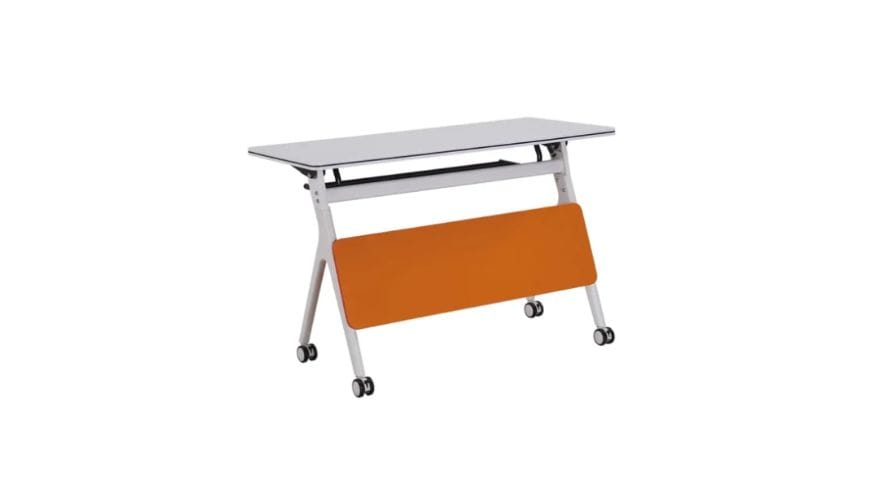
When evaluating potential school furniture upgrades, look closely for these high-utility design features.
1. Mobile Desks with Casters
Standard plastic glides require students to lift and carry furniture, risking back strain and floor damage. Look for heavy-duty polyurethane casters with a dual-lock system that secures both the wheel rotation and the swivel pivot simultaneously.
2. Lightweight Stackable Chairs
Chairs should feature built-in handles molded into the top of the backrest, allowing students to pick up and stack them five-high effortlessly when clearing the center of the room for collaborative presentations.
3. Height-Adjustable Tables
Students grow at radically different rates within the same grade level. Providing pneumatic or hand-crank height-adjustable tables ensures proper posture, reduces physical fatigue, and accommodates wheelchair accessibility seamlessly.
4. Writable Collaborative Surfaces
Replacing standard wood grains with dry-erase whiteboard laminates transforms the desk surface itself into a tool for engagement. Students can sketch diagrams, solve math equations, and mind-map ideas directly on their tables, making group work highly visual and interactive.
Common Classroom Layout Mistakes to Avoid
A few simple planning errors can quickly ruin the effectiveness of high-quality flexible furniture.
Blocking Teacher Walkways: Packing too many clusters into a room can trap the teacher at the front board. Always maintain a minimum 36-inch clear pathway around all desk islands.
Oversized Group Tables: Buying large, fixed 8-person conference tables limits your flexibility. It is much smarter to buy four small, modular 2-person tables that can link together or pull apart instantly.
Poor Visibility: Placing student seats completely backward to the main teaching wall forces them to twist their necks during direct instruction. Angle your clusters so every student can see the front room with a slight turn.
Too Much Noise: Group layouts inherently increase volume levels. Failing to soften the room with acoustic felt boards or fabric-upholstered soft seating can turn collaborative discussions into an echo chamber.
Lack of Storage: Flexible spaces require clean surfaces. If backpacks and coats are scattered across the floor, mobile furniture cannot roll safely. Always integrate mobile tote trays or perimeter locker storage cubbies.
How to Manage Noise and Distractions in Flexible Classrooms
More movement and communication requires deliberate structural and behavioral boundaries to maintain a productive learning focus.
To prevent small-group discussions from turning into a chaotic room-wide roar, teachers should establish clear visual and acoustic boundaries. Strategically placing acoustic felt room dividers or mobile double-sided whiteboards between cluster pods blocks direct sound paths and creates quiet, semi-private team hubs.
Additionally, introducing comfortable soft seating—such as upholstered foam ottomans, beanbags, or low benches—helps absorb ambient noise while offering a calming alternative space for students who feel overstimulated by bustling group zones.
Combine these physical elements with clear behavioral expectations, such as using low “coffee shop voices” and establishing clean traffic habits, to keep your flexible learning environment running smoothly and productively.
Flexible Classroom Design and Student Engagement
Modern educational research consistently shows that giving students autonomy over their physical environment directly improves their learning psychology. When students are allowed to select their preferred seating style—whether that means standing at a high-top table, balancing on a rockable stool, or collaborating in a cozy soft-seating corner—they develop a stronger sense of ownership over their education.
This sense of choice directly translates into reduced restlessness, longer attention spans, and a much greater willingness to participate in peer discussions. When designing modern spaces for educational institutes or professional training facilities, selecting ergonomic, flexible school furniture lines from expert commercial brands like Meet&Co Office Furniture provides the long-term durability and structural versatility required to foster collaborative student growth year after year.
Conclusion
Successfully arranging a flexible classroom requires shift in mindset from fixed symmetry to functional agility. There is no single “perfect” layout configuration that works for every single lesson. The true power of a modern classroom lies entirely in its capacity to transform from a lecture hall into a collaborative lab, and then into a quiet testing center, all in the span of a single school day.
By prioritizing mobile desks, stackable chairs, and clear sightlines, you remove the physical barriers that lead to student disengagement and fatigue. Focus on choosing high-quality, durable components that give both your teachers and your students the freedom to configure their learning environment to match their unique educational goals.
FAQs