





 Meet&Co
Picture this: you’re finally recording that episode you’ve been planning for weeks. You’re in the zone, the words are flowing, and then—a garbage truck rumbles past your window. Or worse, you finish recording, play it back, and hear that telltale hollow echo that screams “recorded in a bathroom.”
If this sounds familiar, you’re not alone. Poor audio quality is the fastest way to lose listeners, no matter how good your content is. The solution? A soundproof pod designed specifically for recording.
Soundproof pods have exploded in popularity among content creators, and for good reason. These self-contained recording spaces give you professional studio acoustics without renovating your home or renting expensive studio time. But with options ranging from DIY blanket fortresses to $20,000 professional booths, how do you choose the right one?
Meet&Co will break down everything you need to know about soundproof pods for podcasting and content creation.
First, Understand What You’re Actually Buying
Before diving into specific products, it helps to understand what these pods actually do. Many people confuse soundproofing with acoustic treatment, but they’re different—and a good pod handles both.
Soundproofing blocks sound from entering or leaving the space. This keeps traffic noise, barking dogs, and household sounds out of your recordings. It also prevents your voice from disturbing others nearby.
Acoustic treatment controls how sound behaves inside the space. It reduces echo, reverb, and standing waves, so your voice sounds clean and professional.
A quality podcasting pod delivers both. The walls combine dense materials to block external noise with absorbent surfaces to tame internal reflections.
The Three Paths to a Recording Space
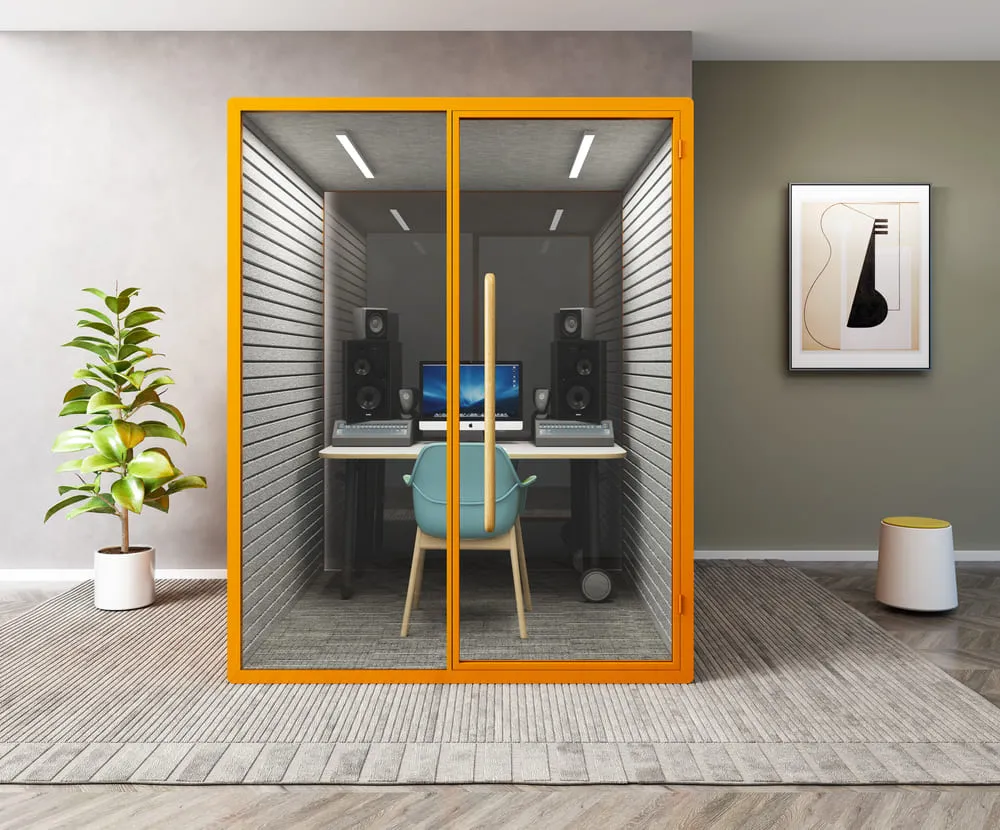
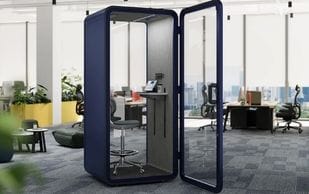
Meet&Co Office Pod Series B
Your budget and space determine which option makes sense. Here’s how the main approaches compare:
| Option | Price Range | Sound Quality | Setup Time | Best For |
| DIY blanket booth | $0–$50 | Decent | 10 minutes | Beginners, travelers, zero-budget creators |
| Portable isolation shield | $40–$150 | Good | 5 minutes | Desktop recording, portable setups |
| Reflection filter + room treatment | $150–$500 | Very good | 1–2 hours | Dedicated home office, semi-pro podcasters |
| Professional soundproof pod | $7,000–$25,000+ | Excellent | Half-day | Serious creators, studios, coworking spaces |
Option 1: The DIY Blanket Booth
If you’re just starting out or recording in a pinch, you can build a surprisingly effective recording space with stuff you already own.
The Closet Trick
Open a closet filled with clothes, push the hangers aside, and set up your microphone inside. The hanging clothes act as natural sound absorbers, creating a dead space that eliminates echo remarkably well. Many professional podcasters started exactly this way.
The Blanket Fort
Drape heavy moving blankets or thick comforters over a microphone stand or chair to create a tent-like enclosure. Place your mic inside without touching the fabric . This setup dramatically reduces room reflections and costs nothing if you already have blankets.
What You’ll Need
- Heavy moving blankets or thick comforters ($15–$30 each if buying)
- A sturdy clothing rack or microphone stand
- Rugs for hard floors
- Weatherstripping tape for door gaps ($5–$10)
The trade-off: These solutions work, but they’re ugly, temporary, and can get stuffy during long recordings. They’re perfect for getting started, but most creators eventually want something more permanent.
Option 2: Desktop Isolation Shields
A step up from DIY solutions, portable isolation shields mount directly to your microphone stand and wrap around the back of the mic.
How They Work
These shields combine multiple layers of acoustic foam with a curved plastic backing. They block sound reflections coming from behind the microphone, which is where most room echo enters your recording.
What to Look For
- At least 5 cm (2 inches) of foam thickness for meaningful absorption
- Curved design to trap sound rather than scatter it
- Multiple layers of different foam densities
Popular Options
The SE Electronics Reflection Filter series remains the industry standard, with prices ranging from $100–$200 depending on size. Cheaper alternatives exist for $40–$60, but foam quality varies significantly.
The Reality Check
Isolation shields help, but they don’t fix a bad room. If you’re recording in a tile bathroom, the shield will reduce echo but won’t eliminate it entirely. Pair them with some basic room treatment for the best results.
Option 3: Professional Soundproof Pods
This is the big leagues. Professional soundproof pods are standalone structures designed specifically for recording. Companies like Bureau, Sonic Box Studios, and others build these modular booths that install in hours without construction.
Why Go Pro?
Professional pods deliver three things DIY solutions can’t:
- True isolation: Quality pods reduce external noise by up to 30 decibels. That’s the difference between hearing traffic and not.
- Controlled acoustics: The interior is engineered for voice recording, with precisely placed absorption and diffusion. No guesswork, no tweaking.
- Comfort for long sessions: Built-in ventilation systems cycle fresh air every few minutes, keeping you comfortable during hour-long recordings.
What Different Pods Offer
| Feature | Entry-Level Pod | Professional Pod | High-End Studio Pod |
| Size | Solo (fits 1 person) | 1–2 people | 3–4+ people |
| Noise reduction | 20–25 dB | 25–30 dB | 30+ dB |
| Ventilation | Passive vents | Quiet fan system | Active HVAC |
| Price range | $6,000–$10,000 | $10,000–$18,000 | $18,000–$25,000+ |
| Setup time | 2–3 hours | 3–4 hours | 4–6 hours |
Meet&Co Soundproof Booths
_4.webp)
Meet&Co Office Pod Series D
Meet&Co designs thoughtfully crafted podcast booths specifically for creators who want professional audio without the construction headaches. Their booths arrive in modular panels that assemble in hours, not days, and require zero permanent changes to your space.
What sets Room apart is attention to the creator workflow. Their booths include built-in cable management, mounting points for microphones and monitors, and ventilation that actually works during long recording sessions. The interior acoustics are engineered specifically for spoken word, so your voice sounds warm and present without that hollow “room sound.”
They offer solo booths perfect for solo podcasters and voice-over work, plus larger configurations for interview-style recordings.
Bureau Podcast Booths
Bureau offers several models specifically designed for content creation. Their Podcast Kit includes:
- Lounge seating for relaxed, conversational recordings
- Acoustic rear walls to reduce reflection
- Pre-wired cable management
- Mounting points for monitors and cameras
Prices start around $6,999 for solo booths and go up to $24,999+ for multi-person setups.
Sonic Box Studios
Based in the UK, Sonic Box builds garden studios that double as recording spaces. Their approach is different—you get a full garden room that happens to be acoustically treated. The Pro and Lite models work best for dedicated recording, while the Leisure suits multi-use spaces.
Also see: 10 Best Soundproof Office Pods for Distraction-Free Work: 2026 Guide
The Investment Math
A professional pod costs $7,000–$25,000. Compare that to:
- Building a traditional studio: $15,000–$50,000+
- Renting studio time: $50–$150 per hour
If you record regularly, a pod pays for itself in a couple of years. Plus, it’s an asset you own and can move if you relocate.
Key Features to Compare When Shopping for an Acoustic Pod
| Feature | Why It Matters | What to Look For |
| Noise reduction rating | Determines how well it blocks external sound | 25–30 dB reduction for professional use |
| Ventilation system | Keeps you comfortable during long sessions | Active ventilation with quiet fans, air changes every 3–5 minutes |
| Interior dimensions | Affects how many people fit and how cramped it feels | At least 4’x4′ for solo, 6’x6′ for duo |
| Acoustic treatment | Controls echo inside the pod | Combination of absorption panels and bass traps |
| Cable management | Keeps setup tidy and professional | Built-in conduits, grommets, and power routing |
| Assembly requirements | Affects installation time and complexity | Modular design, installs in hours with no construction |
| Mobility | Whether you can take it when you move | Modular panels that disassemble and relocate |
Do You Actually Need a Soundproof Pod?
Let’s be honest: most podcasters don’t need a $10,000 booth. Here’s how to decide what’s right for you:
You’re Fine with DIY or a Shield If:
- You’re just starting out
- You record in a naturally quiet space (bedroom with carpet and furniture)
- You don’t mind occasional background noise
- Your budget is under $200
Consider a Professional Pod If:
- You record daily or multiple times per week
- Background noise consistently ruins takes
- You share living space and need to contain your sound
- Podcasting is your business and professionalism matters
- You want a dedicated space that looks professional on video
As one audio engineer put it: “Most podcasters don’t need full soundproofing—they need controlled acoustics. A well-treated small space outperforms a large untreated one” .
The Most Important Lesson
Here’s something every podcaster should know: your room matters more than your microphone.
A $100 microphone in a treated room sounds better than a $1,000 microphone in a bathroom. The room is where your voice lives before it ever reaches the mic. If that space sounds bad, no amount of expensive gear will fix it completely.
So before you spend thousands on a new mic or mixer, look at your recording space first. Can you move to a closet? Hang blankets? Add rugs? These changes cost nothing but transform your audio.
Conclusion
Soundproof pods for podcasting range from zero-cost DIY solutions to professional booths costing as much as a car. The right choice depends entirely on your goals, budget, and situation.
For beginners: start with a closet or blanket fort. See if podcasting sticks before investing.
For serious hobbyists: a good isolation shield plus basic room treatment hits the sweet spot of quality and affordability.
For professionals: a dedicated soundproof pod is a business investment that pays for itself in time saved and quality gained.
FAQ
What’s the difference between soundproofing and acoustic treatment?
Soundproofing blocks sound from entering or leaving. Acoustic treatment controls echo and reverb inside the space. You need both for professional recordings.
How much do professional podcast booths cost?
Prices start around $6,999 for solo booths and range up to $25,000+ for multi-person studios with full features.
Can I build my own recording booth cheaply?
Yes! A closet full of clothes or a blanket fort works surprisingly well for zero cost. Moving blankets and rugs add improvement for under $50.
Do isolation shields really work?
They help by blocking reflections behind the microphone, but they won’t fix a terrible room. Pair with basic treatment for best results .
Will a soundproof pod get hot during recording?
Quality pods include ventilation systems that cycle fresh air every few minutes, keeping you comfortable during long sessions.
How much noise reduction do I need?
Professional pods offer 25–30 dB reduction, which eliminates most household and traffic noise. For reference, 30 dB reduction makes loud speech sound like a whisper.