





 Meet&Co
Let‘s be honest. The afternoon slump hits almost everyone. Your eyes get heavy around 2 PM. Your focus drifts. That second cup of coffee is not really helping anymore.
What if instead of reaching for caffeine, you just leaned back and rested for 10 minutes?
There‘s a growing body of evidence that short power naps actually improve cognitive performance, decision-making, and creativity — by up to 34% according to some studies. NASA found that pilots who napped for 20 to 30 minutes were more than 50% more alert and over 30% more proficient at their jobs than those who did not nap.
So the science is clear. The missing piece is the chair.
Most office chairs are designed for upright work, not comfortable reclining. This guide from Meet&Co walks you through four lounge chairs that actually work for quick office naps — including two from Meet&Co — plus practical tips on how to nap smarter in a professional setting.
The Science of the Power Nap (Quick Version)
Before we get to chairs, here is what you need to know about short naps.
Duration matters. The ideal power nap is 10 to 20 minutes — long enough to refresh alertness, but short enough to avoid entering deep sleep. Naps longer than 30 minutes can cause grogginess (called sleep inertia) and may interfere with nighttime rest.
Timing matters. Early afternoon, roughly between 1 PM and 3 PM, is the most effective window. This aligns with the body‘s natural circadian dip in energy.
Health benefits are real. Research shows regular short naps can reduce stress, lower the risk of heart disease by up to 48%, boost memory and processing ability, and improve mood and focus.
The key? Set an alarm. Keep it short. And choose a chair that actually lets you lean back comfortably.

What Makes a Chair Good for Office Naps?
Not every chair works well for napping. Here is what to look for.
-
Reclining backrest. The chair should allow you to lean back significantly, ideally with a smooth tilt mechanism that does not require wrestling with levers.
-
Head and neck support. A high backrest or built‑in headrest makes a huge difference when you close your eyes.
-
Space for your legs. If the chair does not have an ottoman like the Rose Lounge Chair, look for enough clearance to stretch your legs or tuck your feet under the seat.
-
Armrests that don‘t get in the way. Padded armrests are comfortable, but they should not restrict your ability to shift position.
-
Quiet operation. A chair that creaks or squeaks when you move will wake you up — and annoy your coworkers.
4 Lounge Chairs Worth Considering for Office Naps
Here are four chairs that actually work for quick office naps, from a premium design icon to a playful bean bag.
| Chair | Best For | Key Nap Feature | Approx. Price Range | Floor Space Needed |
|---|---|---|---|---|
| Rose Lounge Chair + Ottoman (Meet&Co) | Dedicated quiet rooms, daily nappers | Full leg extension with ottoman, high back | Mid | Larger (chair + ottoman) |
| Meet&Co Bean Bag Chair | Small spaces, portable napping | Conforms to body, high back, footrest | Mid | Medium to large |
| Herman Miller Eames Lounge Chair + Ottoman | Executive offices, design focus | Iconic ergonomic shell, matching ottoman | Premium | Large (chair + ottoman) |
| IKEA POÄNG Armchair | Budget‑conscious buyers | Gentle rocking motion, high back, optional footstool | Low | Medium (armchair) |
1. Rose Lounge Chair with Ottoman (Meet&Co) — Best for Full Relaxation
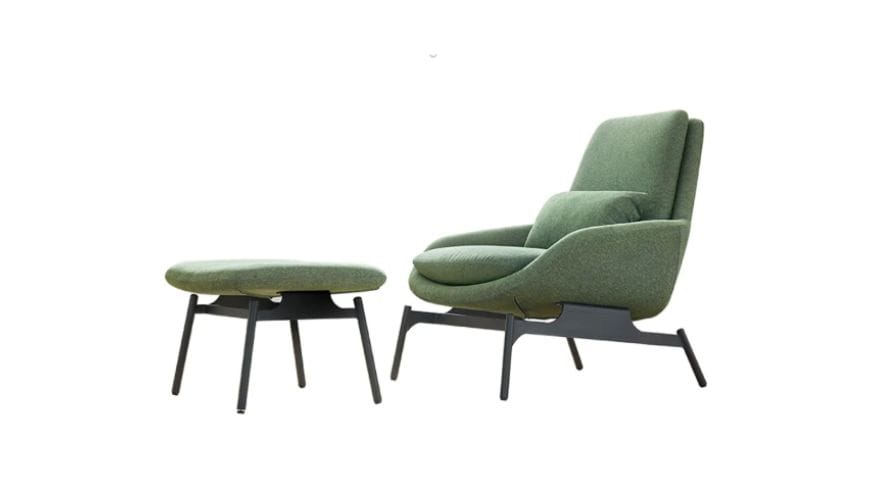
If you have the floor space for a lounge chair and ottoman, this is the setup that comes closest to a proper nap.
The Rose Lounge Chair features a generously sized seat and a high-back design that cradles you from shoulders to tailbone. The angle is just right — not too upright, not so reclined that you slide off. Add the matching ottoman, and you have a place to rest your legs fully extended. That full-body support makes a real difference when you only have 15 minutes to reset.
The chair comes in a warm, inviting upholstery that feels soft without losing its shape. The padded armrests are wide enough to rest your elbows, but not so wide that they force your arms into awkward angles. And because it is built for commercial use, the frame and cushioning hold up to daily use — no sagging after a few months.
Our designer’s tip: This chair takes up more space than a standard task chair, but it is for napping, not desk work. Tuck it into a quiet corner of your office or a dedicated break area. A small side table nearby makes it even more usable for reading or checking emails when you are not napping.
Best for: Offices with a dedicated quiet room or break area, and anyone who wants a proper reclining setup for regular afternoon rests.
Key strengths: High back for full support, matching ottoman for extended legs, commercial-grade durability, padded armrests.
Note: This chair is best suited for a nap-dedicated zone rather than your primary desk — think quiet corner, break room, or wellness room.
2. Meet&Co Bean Bag Chair — Best for Casual, Quick Power Naps
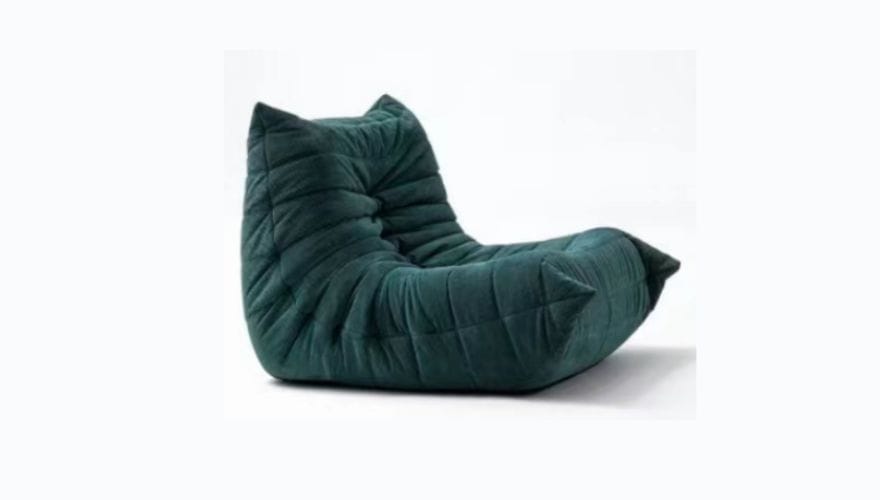
A bean bag chair might seem like an unusual choice for an office, but hear us out.
Modern bean bag chairs have come a long way from the shapeless sacks you might remember. High‑quality bean bags use shredded foam or dense polystyrene beads that provide surprising structural support. Some are shaped to keep you in a slightly upright position — no more sinking into a puddle every time you sit down.
The Meet&Co Bean Bag Chair is durable and comfy. You can keep it tucked in a corner when not in use, then drag it out when you need a 15‑minute reset. The soft, fabric cover feels comfortable against your skin, and the bean bag conforms to your body, which can feel wonderfully supportive for short rests.
Our editor Mark’s experience: In a home office setup, a bean bag chair stored in the corner served as an occasional nap spot that took up almost no floor space. When guests came over, it was extra seating. When afternoon fatigue hit, it was a nap spot. For tight spaces, that versatility matters.
Now for the honest trade‑offs. A bean bag is not suitable for prolonged desk work — it lacks lumbar support and encourages a slumped posture that will strain your back over time. But for a short 10‑minute power nap? The gentle, conforming support can be surprisingly effective.
⚠️ Important: Bean bag chairs are for napping, not for working. Their lack of structural support means they should not replace your primary task chair. Use them for short rests only.
Best for: Very small offices, people who need portable nap seating, and anyone who wants the option to nap but does not have space for a dedicated lounge chair.
Key strengths: Lightweight and portable, takes up minimal floor space when stored, conforms to your body for short naps, works as casual guest seating.
3. Herman Miller Eames Lounge Chair and Ottoman — The Design‑Lover’s Nap Chair
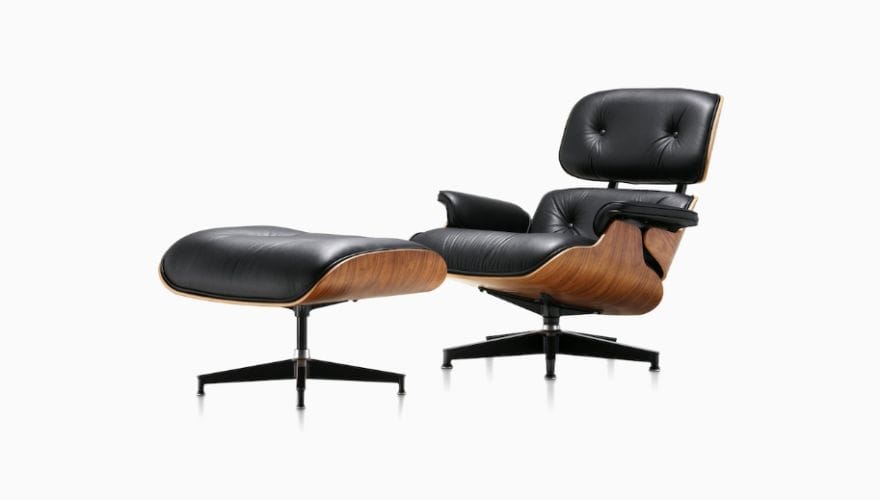
Source: https://store.hermanmiller.com/living-room-furniture-lounge-chairs-ottomans/eames-lounge-chair-and-ottoman/5667.html?lang=en_US
This one is for offices where budget is less of a constraint and design matters as much as function.
The Eames Lounge Chair has been a design icon since 1956, and one reason it has lasted that long is how comfortable it is. The molded plywood shell is angled to take pressure off your spine, and the three‑section cushion design (headrest, back, seat) cradles you from head to foot. Add the matching ottoman, and you have a setup that is genuinely conducive to napping.
Herman Miller‘s own product description notes that the chair is “a beautiful place for a short rest” — and for good reason.
Best for: Executive offices, design‑focused companies, and anyone who wants a nap‑capable chair that doubles as a statement piece.
Key strengths: Iconic design, excellent ergonomic support, high‑quality materials, matching ottoman for full leg extension.
The trade‑off: It costs several thousand dollars. For most offices, that is a tough expense to justify for occasional napping.
Note: The Eames Lounge Chair is beautiful and comfortable, but its price point puts it out of reach for most office budgets. Consider it an aspirational option or a long‑term investment.
4. IKEA POÄNG Armchair — Best Budget Nap Chair
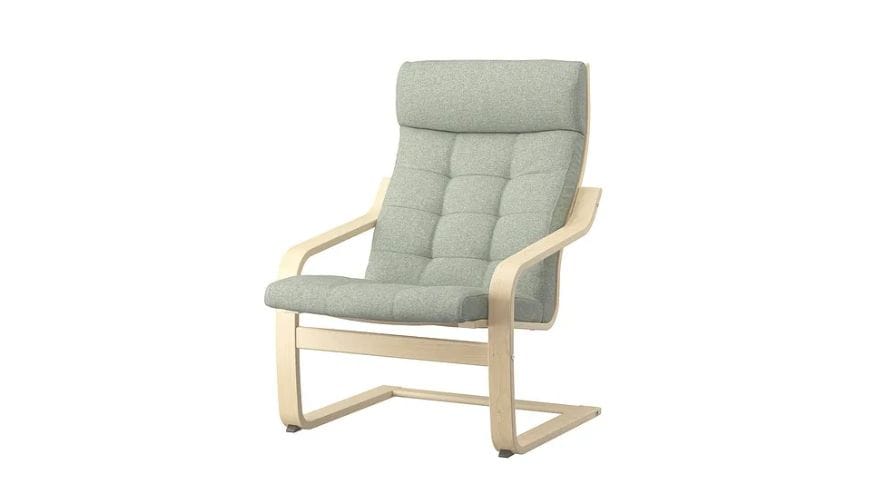
https://www.ikea.com.hk/en/products/coffee-and-side-table/armchairs/poang-spr-09501903
If you want a nap‑capable chair without spending much, the IKEA POÄNG is worth a look. This bentwood rocker has been an IKEA staple for decades, and for good reason.
The laminated birch frame is curved to provide a gentle, natural rocking motion that encourages relaxation. The high back supports your head and neck, and the angled seat keeps you in a comfortable, slightly reclined position. The chair is lightweight enough to move around, but sturdy enough to feel secure.
The POÄNG does not have an ottoman by default, but IKEA sells a matching footstool separately. Together, they form a surprisingly comfortable nap setup for well under $300.
The chair comes in several frame and cushion options, from plain birch to dark stained finishes, and cushion fabrics ranging from cotton to leather‑look materials. Assembly is straightforward — most people put it together in about 20 minutes.
Best for: Budget‑conscious offices, home offices, and anyone who wants a nap‑ready chair without spending much.
Key strengths: Very affordable, lightweight but sturdy, high back for head support, optional matching footstool.
How to Set Up a Nap‑Friendly Space Without Looking Unprofessional
Having a nap‑capable chair is one thing. Using it professionally is another. Here is how to get it right.
Designate a quiet zone. Do not nap at your office desk. Choose a break room, a wellness room, a library corner, or a rarely used meeting space. This keeps the professionalism of your main workspace intact.
Control the lighting. Cool, bright light promotes alertness. Warm lighting promotes relaxation. If your nap corner has overhead lights, turn them off and use a small lamp or rely on indirect light. Ideally, aim for warm tones (around 2700K to 3000K) in rest areas.
Keep the temperature comfortable. The ideal range for rest is slightly warmer than active work environments — think 23–25°C (73–77°F) rather than the typical 22°C (72°F) for focus work.
Add a small side table. Having a place to put your phone, glasses, or a glass of water makes the space feel intentional, not thrown together.
Consider a white noise machine or app. A consistent, low‑volume background sound can mask office chatter and help you drift off faster — without disturbing others.
Set clear boundaries. If you manage a team, be transparent about napping policies. A simple guideline — for example, “10‑15 minute power naps allowed in the wellness room between 1‑3 PM” — removes confusion and embarrassment.
Our editor’s tip: If you do not have a quiet room for napping, a private office with an armchair can work. For open‑plan offices, consider adding a single lounge chair in a low‑traffic corner behind a bookshelf or a tall plant. Visual separation matters.
A Quick Guide to Napping Smarter at Work
Even with the perfect chair, nap timing and technique matter. Here are a few practical pointers.
-
Keep it under 20 minutes. Use your phone‘s timer. Any longer and you risk waking up groggy.
-
Nap in the early afternoon. The natural dip in alertness happens between 1 PM and 3 PM. Napping outside this window may interfere with nighttime sleep.
-
Drink coffee right before (yes, really). Caffeine takes about 20 minutes to kick in. A coffee right before a power nap means you wake up as the caffeine starts working — a double boost.
-
Dim the lights. If possible, turn off overhead lights and use a lamp or rely on natural light. Warm, dim lighting signals your brain to relax.
-
Keep a spare pair of noise‑cancelling headphones at your desk. Good for napping, good for focus work, good for everything.
Frequently Asked Questions (FAQ)
1. Are office chairs good for napping?
Most standard office chairs are not designed for reclining. They tend to keep your spine upright and your neck unsupported. Chairs with adjustable backrests that recline significantly can work for short naps, especially if they have a headrest. But for regular napping, a dedicated lounge chair or an ergonomic chair with deep recline and good head support is much better.
2. Will people judge me for napping at work?
Not if you do it discreetly and professionally. Use a designated quiet space, keep naps short (10–20 minutes), and avoid napping at your desk in full view of colleagues. With companies like Google, NASA, and Nike embracing strategic napping, the stigma is fading — especially when the productivity gains are this clear.
3. Can I nap in a bean bag chair without hurting my back?
For a short 10‑minute power nap, a bean bag chair is fine. The conforming support can feel quite comfortable for brief rests. However, bean bags lack the structural support needed for prolonged sitting. Do not use one as your main desk chair — and if you feel any back discomfort, switch to a proper lounge chair with better lumbar support.
4. What is the cheapest way to set up office napping?
The IKEA POÄNG Armchair (under $150) plus a timer on your phone. That is a full nap setup for less than the cost of a mid‑range office chair. If budget is extremely tight, a high‑back armless lounge chair from a discount retailer can work — just make sure it does not wobble and provides decent neck support.