





 Meet&Co
For an office that needs to adapt over time, training tables are a practical way to create flexible space. The proper configuration can transform a room in minutes for anything from a staff workshop to a team meeting. In fact, 90% of professionals say a well-designed workspace is key to their performance, according to one workplace design survey. A reliable office furniture supplier in china can also help businesses choose tables suited to different training and workplace layouts.
We have put together this guide to walk through the top training tables and their respective pros and cons so the right choice is made easily.
Key Takeaways
- High-quality training tables will give you the mobility, storage, and durability your office needs.
- If rooms are often used for collaborative work or meetings, flip-top and nesting styles are excellent options.
- For a permanent layout in a dedicated training room, the stability of a fixed-frame table is superior.
- Your decision should come down to what the space can support in terms of flexibility, seating, and its intended use.
What Makes a Good Training Table for an Office?
It is more than a matter of finding a surface with room to sit. Today’s offices need furniture that can accommodate onboarding, presentations and temporary work areas with equal ease. A good table must handle daily use and be simple to reconfigure when the need arises.
Build Quality
You will understand the quality of a table over years of use. Office furniture has to be tested with constant setup changes and equipment being placed on it. Commercial-grade laminate is popular for a reason; it is durable enough to handle normal wear, stains, and scratches.
Then there is the frame. With multiple employees using the table in a week, you want steel legs and a reinforced structure to keep it steady and stable during a session. When making an investment in training room furniture, it is better to have a durable table designed for long-term use in a busy area than to go with the cheapest option.
Storage and Mobility
Modern offices do not limit a room to a single function, so a table’s ability to move is a distinct advantage. Locking casters make it possible to create a new layout without the heavy lifting. For frequently changing layouts, training tables with wheels make it easier to move furniture between configurations without disrupting the room. For smaller operations where the morning’s training room becomes the afternoon’s conference space, a flip-top or nesting model is extremely useful. They can be folded and put away to clear the floor.
Size and Workspace
How much room you have will determine the table size. A compact 24-inch depth is sufficient for a small room without making the area feel tight, while a larger corporate training area will need the width to put out laptops and documents comfortably. You should also consider seating capacity; a table for a full-day training is not the same as one for a short workshop. Proper planning is especially important when arranging training room tables, as seating, circulation, and available floor space all affect the final layout.
There are other features that improve usability as well. Modesty panels add a bit of privacy and a tidier look, and cable management helps organize technology. Some models even have power access for devices or are adjustable in height for ergonomic purposes. When choosing office training tables, ergonomics, cable management, surface depth, and user comfort should also be considered.
Fixed Frame vs Flip Top Nesting Training Tables
The question of whether to go with a fixed-frame or a flip-top nesting design is frequently asked. It comes down to how often the room is reconfigured.
Fixed Frame Training Tables
A fixed-frame table prioritizes stability. They are commonly used in a dedicated room where the furniture will not be relocated. There are fewer parts to maintain, and they provide a stable foundation for classroom-style sessions. For regular training in the same location, they are dependable.
Flip Top and Nesting Training Tables
On the other hand, the flip-top nesting table is for maximum adaptability. In a hybrid or shared space, these can be nested to move them aside when needed. While they may cost more to start with, for a company hosting events and workshops with varying layouts, the practicality makes them a worthwhile investment. Different training tables can suit different room layouts, from traditional rows to collaborative configurations, depending on how frequently the space needs to change.
10 Best Training Tables for Offices
Meet&Co Flip Top Nesting Training Table
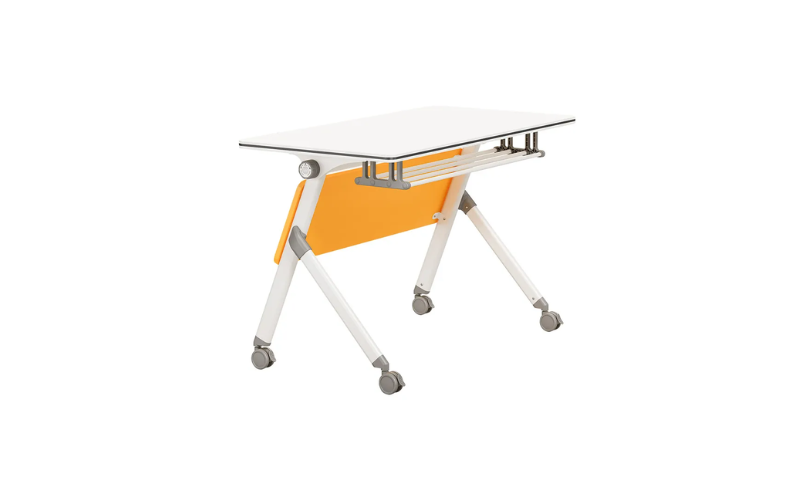
An excellent choice for the office that requires furniture to adapt to a variety of activities. Where traditional fixed tables are static, the Meet&Co is made for workplaces where the furniture needs to transition quickly from a training session to a workshop or collaborative meeting.
The flip-top nesting feature is what makes it different. When it is time to clear the room, several tables can be folded and put away together. This is useful in modern offices with multi-purpose rooms where you want as much flexibility as you do durability. Designed for professional settings, it handles daily use of laptops and presentation equipment, and its mobile design makes it easier to reconfigure the layout or store items.
Pros:
- Saves space in a flexible office
- Far easier to put away than a fixed table
- Accommodates various configurations
- A good fit for meetings and events
- Makes the most of limited office space
Cons:
- A higher-cost option than a basic fixed-frame
- The moving parts will require some maintenance down the line
Mobile Y-Leg Training Table
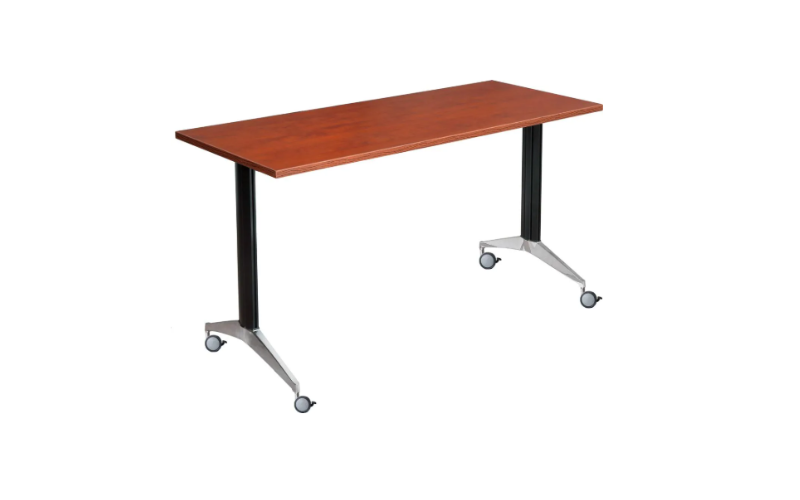
Image source: https://madisonliquidators.com/
If the workspace arrangement is changing regularly, the Mobile Y-Leg is the way to go. The rolling legs mean there is no heavy lifting required to put the table in another room or set it up for an employee session. It is a practical option for corporate offices, shared spaces, and training centers that value being able to reposition easily.
You get commercial-grade durability for everyday office demands, and with the range of sizes available, any business can find what fits.
Pros:
- Rolling base for easy movement
- Durable build
- Good for layouts that change often
- Available in a variety of sizes
Cons:
Not as compact as a nesting unit
Needs its own storage when put aside
24" T-Leg Training Table
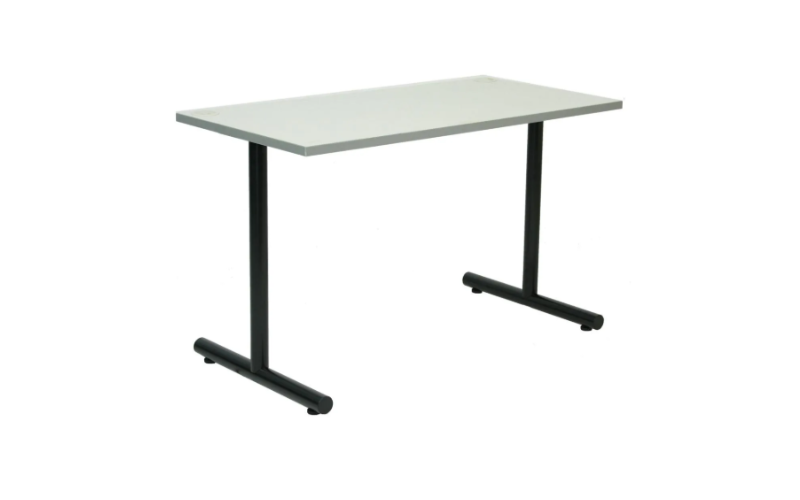
Image source: https://madisonliquidators.com/
For an office with a dedicated training room and little need to be on the move with the furniture, the 24" T-Leg is a sensible pick. The fixed frame is about stability, which is what you want for a long presentation or classroom-style event. With fewer components to worry about than a folding model, it is a straightforward and reliable piece of office furniture. The T-leg gives it a clean, professional look to match.
Pros:
- Dependable and stable
- Minimal maintenance
- Well suited to permanent training areas
- Professional finish
Cons:
- Does not have the flexibility of a mobile table
- Moving it is more difficult
30" T-Leg Training Table
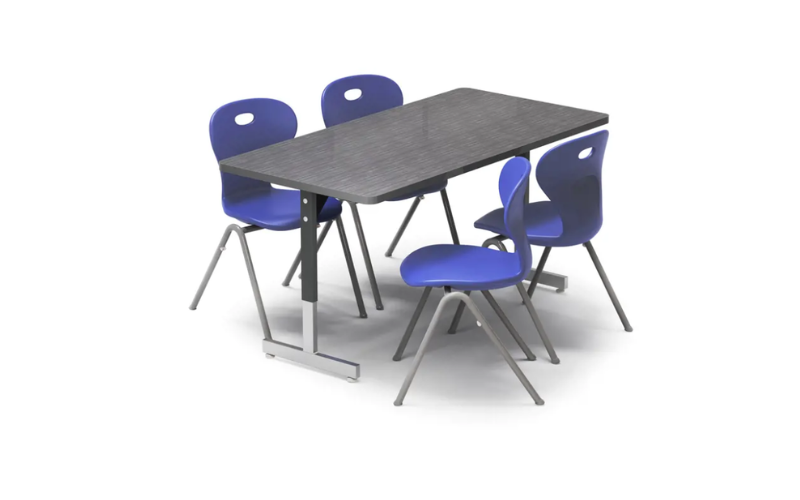
Image source: https://www.alliedusa.com/
When employees require a bit more elbow room, the 30" T-Leg has the extra depth over the standard version. The additional surface area is helpful for keeping laptops, notebooks, and other equipment at hand during an extended session. It is a comfortable proposition for corporate training rooms where staff may be at the table for hours.
Pros:
- Stable fixed frame
- Plenty of room for the user
- Works well with equipment-heavy setups
- Comfortable for longer sessions
Cons:
- Uses more of the floor
- Not as handy if the layout is subject to frequent changes
Flip Top Nesting Training Table With Modesty Panel
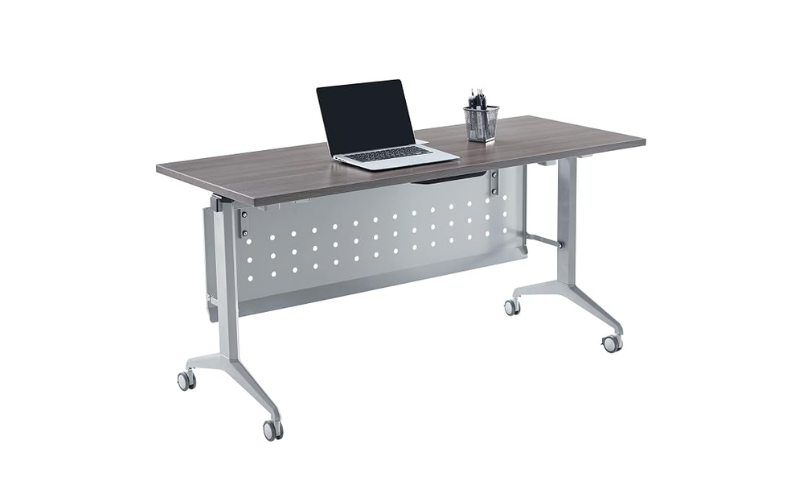
Image source: https://www.amazon.com/
This version of the flip-top nesting table has a more refined corporate aesthetic thanks to the modesty panel. It is for those professional settings where appearance is an important consideration. Functionally, it is the same, allowing for efficient storage when the room has to be put to another use. The following is a review of several training table options, each with its own set of merits and drawbacks.
Pros:
- Professional corporate appearance
- Efficient nesting storage
- Locking caster mobility
- Scratch-resistant laminate surface
Cons:
- Reduced legroom
- Heavier than basic tables
- Higher purchase cost
Corp Design Flip Top Nesting Training Table
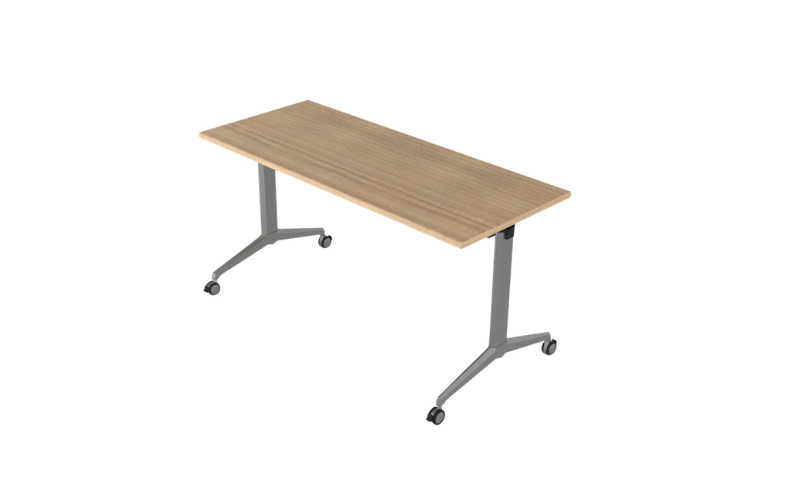
Image source: https://www.corpdesign.com/
An office looking for a furniture solution that will remain useful over time, rather than a temporary fix, will find the Corp Design model well-suited to its needs. With a solid commercial design and dependable flip-top mechanism, it is a premium product for organizations that use their conference and collaborative spaces frequently.
Durability is perhaps its chief selling point; tables must remain stable even when an office regularly rearranges them. The nesting feature is also useful for tucking multiple tables away to free up a room for something else.
Pros:
- Premium build for regular office use
- Professional look in corporate settings
- Nesting allows for efficient storage
- A valuable long-term choice
Cons:
- More expensive than a basic training table
- The extra features might be unnecessary for a smaller operation
Mobile Flip Top Training Table
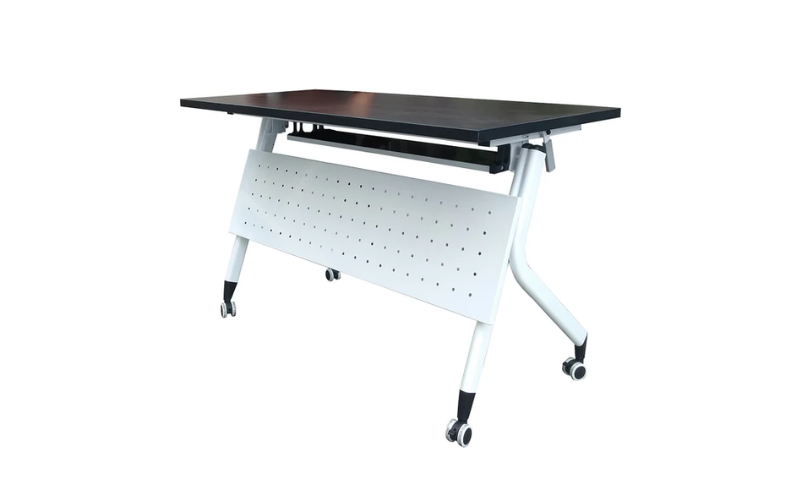
Image source: https://www.cubixoffice.com/
Where flexibility is part of the daily workflow, the Mobile Flip Top is the way to go. It is constructed to let staff create new configurations for a workshop or team activity quickly, rather than being tied to one room layout. The mobile base and flip-top surface are a practical combination in a shared environment, making it simple to reposition or fold the table aside once it has completed its use.
Pros:
- Time is saved when rearranging the room
- Moves with ease from one space to another
- Ideal for hybrid work setups
- Covers a range of office functions
Cons:
- Some planning is needed for storage
- The moving parts may call for maintenance now and then
National Public Seating Flip-N-Store Training Table
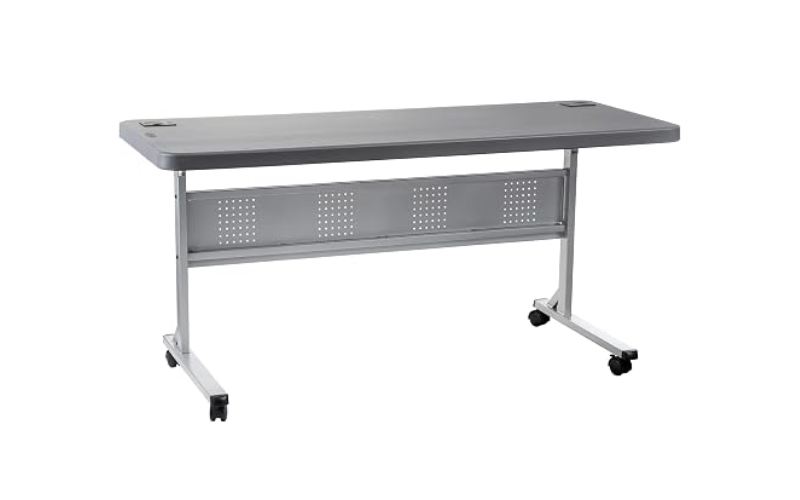
Image source: https://www.amazon.com/
There is no need to pay a premium for a practical solution with the National Public Seating Flip-N-Store. It is a functional choice for schools, community venues, and businesses with tighter budgets that want a reliable workspace and easy storage when the room has to be cleared. The design is simple and straightforward to operate without any complicated mechanisms.
Pros:
- An affordable way to add flexibility
- Practical for both offices and educational facilities
- Simple to store and use
Cons:
- Lacks some of the advanced features
- Would not fit well in an executive office
Mayline Flip Top Nesting Training Table
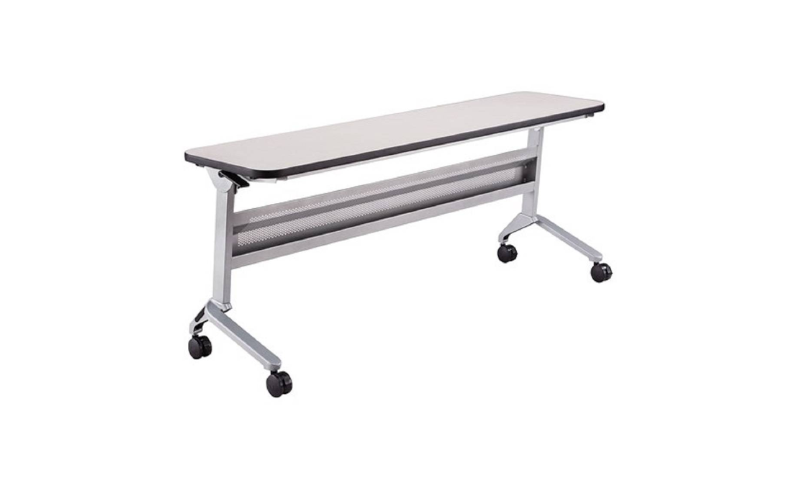
Image source: https://www.maylineoffice.com/
In an office with limited space, the Mayline is a strong option. By nesting several tables together, it is possible to open up a small room quickly. This is of particular benefit to compact offices and coworking spaces that would rather have one area serve multiple purposes than have a permanent training room.
Pros:
- Very flexible workplace solution
- Improves storage efficiency
- Good for quick changes in smaller offices
Cons:
- You still need somewhere to put them when nested
- Does not suit a permanent layout
Adjustable Training Table
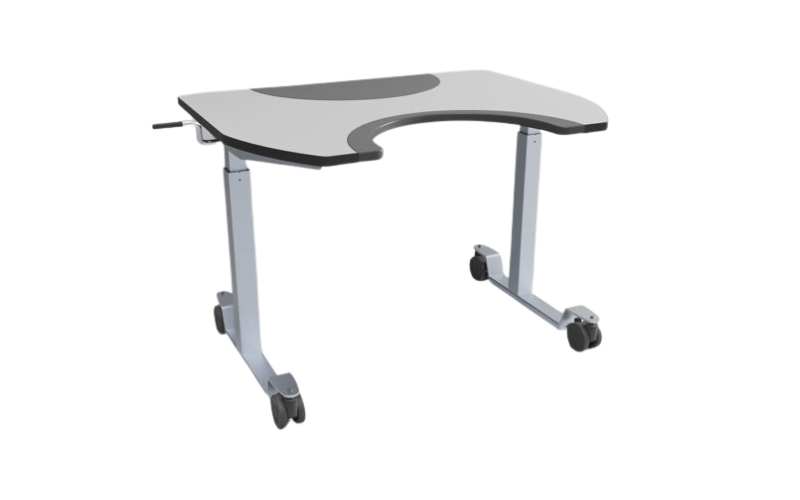
Image source: https://ropox.com/
As modern workplaces focus more on comfort and how employees choose to work, adjustable models are becoming more popular. They offer the ability to customize the workspace in a way fixed-height tables cannot, which is useful when a room is being used by trainers and teams throughout the day. The result is a more ergonomic and adaptable setting.
Pros:
- Fits the preferences of different users
- Well suited to contemporary offices
- Ergonomic benefits
Cons:
- Generally, it costs more than standard options
- The adjustment hardware may need attention
How Much Should You Spend on Training Tables?
Training table prices depend on the design, materials, and features available, as well as what is expected of them in use. For an office with a designated training room, a basic fixed-frame model is often the best option; these are more affordable and serve their purpose when stability is more important than flexibility.
Then there are mid-range options. These tend to be the preferred choice for businesses that put their tables through regular meetings and training. They will have better finishes and storage, and some degree of mobility. At the other end of the spectrum are premium commercial models with advanced flip-top or nesting features. They come at a higher price, but you get stronger construction, longer warranties, and greater flexibility as benefits.
Are Training Tables Worth It for Modern Offices?
Training tables are no longer confined to the traditional classroom or set aside for employee learning. Today’s workplace demands flexible layouts where a single room can have several uses in a day. As hybrid work becomes more common, companies are creating adaptable environments rather than dedicating space to a single function.
A conference room might need to double as a workshop or a project zone when needed. Training tables for conference rooms can support this kind of flexibility, allowing the same space to accommodate meetings, workshops, and collaborative sessions.
Conclusion
It is clear that training tables have become an important part of flexible office design, not just for educating staff. The right model will be based on how an office runs: a fixed frame for a permanent room or a nesting type for a more adaptable layout. When it comes time to buy, consider the budget, the number of users, and how much the table will be used. When selected carefully, it is a long-term value for any workspace.
FAQs
1. What are training tables used for?
They are suited to multi-purpose spaces for presentations, workshops, collaborative work, and temporary setups, as well as standard employee training and meetings.
2. Are flip-top training tables better than fixed tables?
If the office layout is subject to frequent change, the flip-top is preferable since it folds and stores with ease. Where stability is the main priority in a dedicated room, the fixed table is the better option.
3. What size training table is best for an office?
That will be a matter of the room and the number of people using it. You may want a compact table for a smaller office, whereas a large training room will need something with more surface area for documents and laptops.
4. How many people can sit at a training table?
A standard table will seat two to four people, though larger models have the capacity for more. It all comes down to the table size.
5. Are nesting training tables worth buying?
For offices that need flexibility, they are well worth it. They allow for quick storage and help to use available space efficiently.
6. What features should I look for in office training tables?
Beyond appropriate sizing and a strong frame, consider what your office needs in terms of mobility, durable materials, and cable management.