






 Meet&Co
Standing desks for teachers have become essential tools for enhancing comfort, productivity, and classroom engagement.
Whether you’re managing a busy classroom or teaching remotely from home, the right standing desk can prevent back pain, improve posture, and make long teaching hours more manageable.
In this guide, we’ll explore the top ergonomic and adjustable standing desks for teachers in 2026, including the popular Sendi E Adjustable Standing Desk, and share tips on setup, maintenance, and choosing the perfect desk for your teaching style.
Why Teachers Need Standing Desks
Teachers spend hours standing, sitting, and moving around the classroom.
This combination of postures can lead to fatigue, back pain, and decreased focus. Standing desks for teachers offer several benefits:
Health Benefits: Reducing prolonged sitting lowers the risk of back pain and improves circulation.
Increased Energy and Engagement: Alternating between sitting and standing can boost alertness, helping teachers stay energetic throughout the day.
Enhanced Student Interaction: A teacher who can move freely and maintain good posture encourages more dynamic classroom engagement.
Key Features to Look for in a Teacher’s Standing Desk
Choosing a standing desk for classroom or home use requires careful attention to several factors:
1. Adjustability
Height-adjustable desks ensure that teachers of all heights can find a comfortable working position.
Look for office desks with a range of at least 28” to 48”, suitable for sitting and standing.
2. Durability
Classrooms are high-traffic environments.
Desks should have sturdy frames, durable materials, and a strong weight capacity to support computers, textbooks, and teaching supplies.
3. Workspace Size
Ample surface area is crucial for lesson plans, laptops, monitors, and teaching aids.
Desks under 48 inches may be better for small classrooms, while larger desks suit home teaching setups.
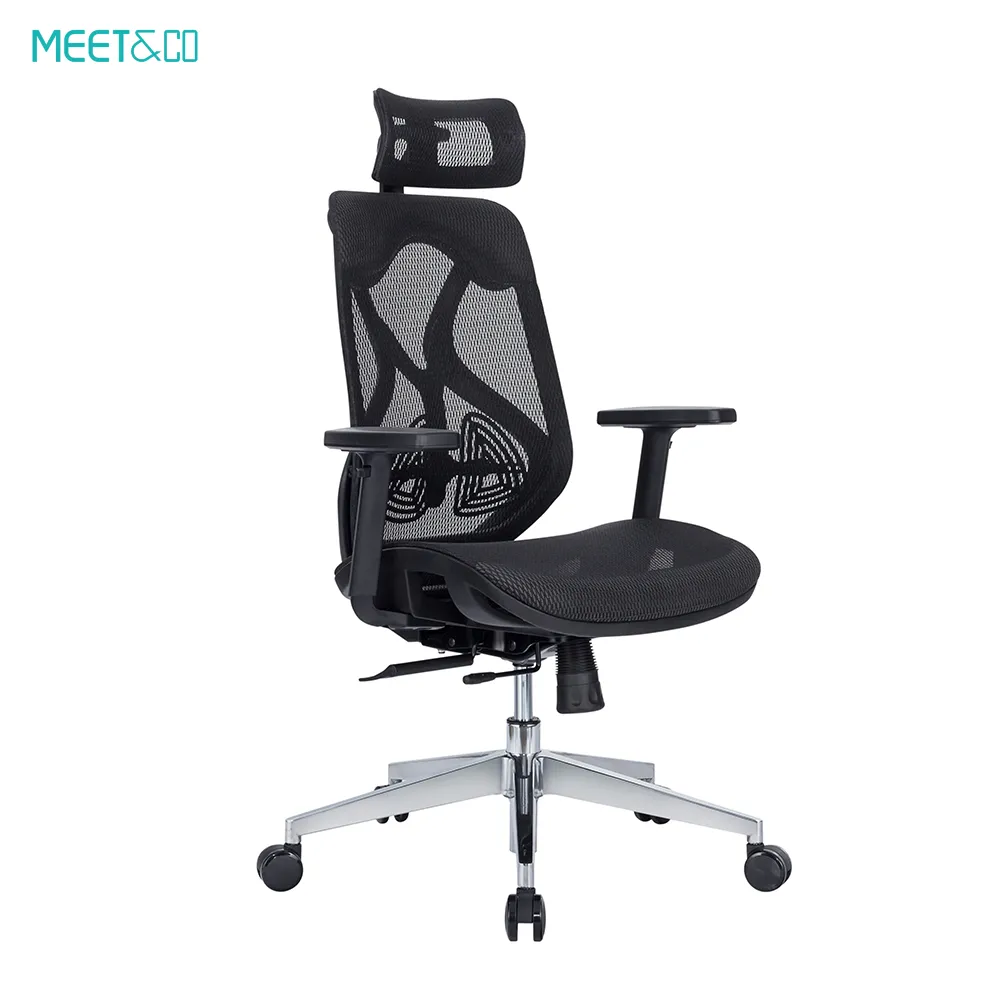
4. Ergonomic Design
Rounded edges, cable management, and adjustable keyboard trays can make a desk more comfortable and reduce strain on wrists, shoulders, and back.
5. Portability & Assembly
Lightweight or modular desks allow teachers to move easily between classrooms or storage areas.
Desks with straightforward assembly are ideal for busy educators.
Types of Standing Desks for Teachers
Electric vs. Manual Desks
Electric Standing Desks: Quick and effortless adjustment at the push of a button. Ideal for teachers switching between multiple workstations.
Manual Crank Desks: More affordable, durable, and reliable without electricity. Best for single-location setups.
Sit-Stand Convertible Desks
These desks allow seamless transitions between sitting and standing throughout the day.
Great for teachers balancing desk work and classroom movement.
Compact Desks for Small Classrooms
Smaller standing desks fit limited spaces without sacrificing functionality.
Consider foldable or corner models for tight classroom layouts.
Top Standing Desks for Teachers in 2026
Here are our top picks for adjustable standing height desks that combine durability, ergonomic design, and adjustability:
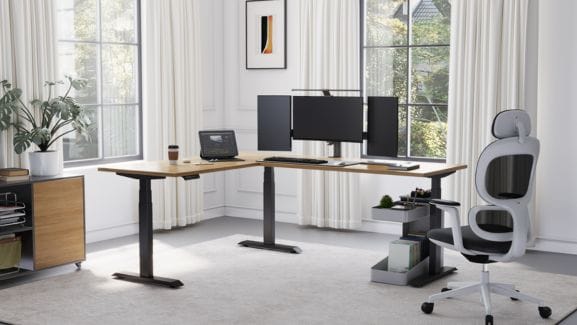
1. Sendi E Adjustable Standing Desk
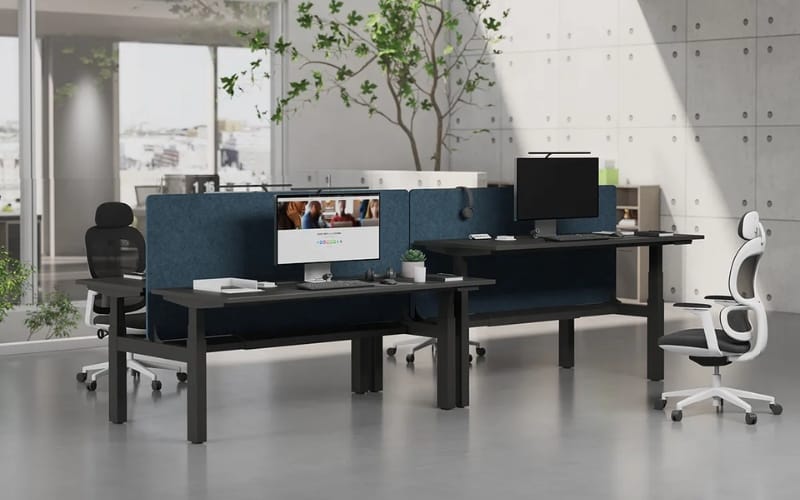
Pros: Electric height adjustment, smooth transition between sitting and standing, sturdy frame.
Cons: Slightly higher price point than manual desks.
Specifications: Height range 24.8”–50.4”, weight capacity 281 lbs, spacious 55.1”–70.9”x27.6” work surface.
Ideal Use: Perfect for both classroom and home teaching setups.
2. Uplift V2 Standing Desk
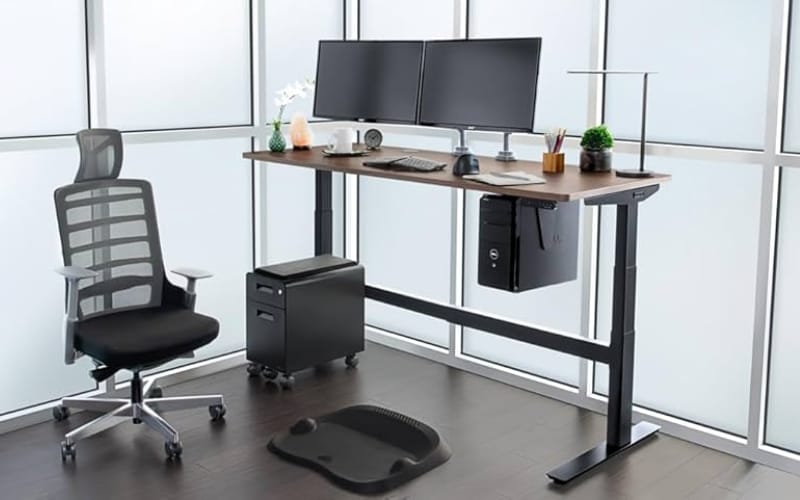
Pros: Highly adjustable, stable even at maximum height, wide variety of desktop options.
Cons: Higher cost compared to simpler models.
Specifications: Height range 25.5”–51.1”, weight capacity 355 lbs, customizable desk size.
Ideal Use: Ideal for teachers needing a premium desk with heavy equipment (monitors, multiple devices).
3. Fully Jarvis Bamboo Standing Desk
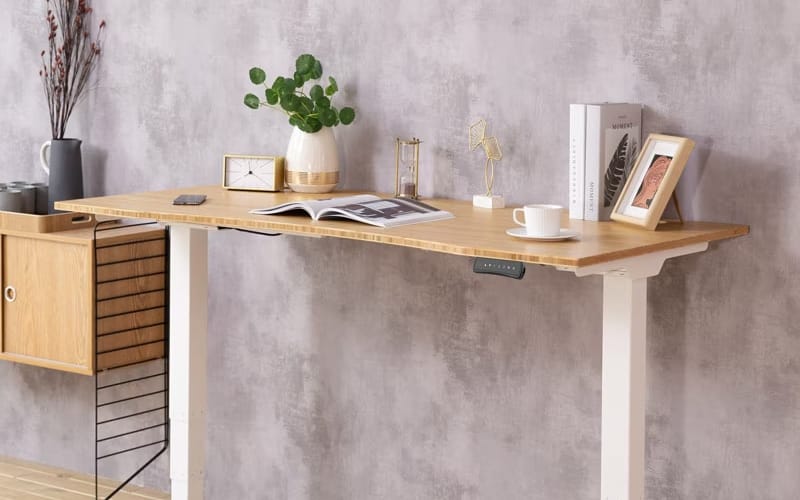
Pros: Eco-friendly bamboo desktop, smooth electric lift, strong and durable.
Cons: Slightly heavier assembly, premium pricing.
Specifications: Height range 25.5”–51”, weight capacity 350 lbs, customizable desktop size.
Ideal Use: Teachers who prefer natural materials and sustainable products.
Comparison Table
| Product | Height Range | Weight Capacity | Surface Size | Type |
|---|---|---|---|---|
| Sendi E Height-Adjustable Standing Desk | 24.8”–50.4” | 281 lbs | 55.1”–70.9”x27.6” | Electric |
| Uplift V2 Standing Desk | 25.5″-51.1″ | 355 lbs | Customizable | Electric |
| Fully Jarvis Bamboo Standing Desk | 25.5″-51″ | 350 lbs | Customizable | Electric |
How to Properly Set Up a Standing Desk for Teachers
Proper setup maximizes comfort and reduces strain.
Desk Height: Elbows at a 90° angle when typing. Monitor top at eye level.
Keyboard and Mouse Placement: Keep wrists straight; consider ergonomic mats.
Foot Placement: Use anti-fatigue mats to reduce pressure on legs and feet.
Recommended Accessories: Laptop stands, document holders, cable organizers for clutter-free setup.
Common Mistakes Teachers Make with Standing Desks
Standing too long without breaks: Alternate between sitting and standing every 30–60 minutes.
Ignoring ergonomic setup: Poor posture can negate health benefits.
Choosing desks without enough workspace: Crowded surfaces reduce efficiency and comfort.
Maintenance Tips for Teacher Standing Desks
Regular Cleaning: Wipe surfaces with mild soap and water. Avoid harsh chemicals.
Check Adjustments: Test height mechanisms monthly to ensure smooth operation.
Weight Management: Avoid overloading desks to prolong lifespan and maintain stability.
Conclusion
Choosing the right standing desk for teachers enhances comfort, productivity, and classroom interaction.
Whether you select the Sendi E Electric Standing Desk for its smooth electric adjustment or a compact manual desk for smaller spaces, a well-set up standing desk is an investment in both health and teaching efficiency.
For more ergonomic and adjustable options, check out Meet&Co.
FAQ
The desk should allow elbows to rest at a 90° angle and monitor top at eye level.
Yes, alternating between sitting and standing keeps energy levels high and improves engagement.
Electric desks are easier to adjust, but manual desks are often more durable and affordable.
Alternating every 30–60 minutes is recommended to reduce fatigue and strain.
Anti-fatigue mats, monitor stands, document holders, and cable management tools.

_17.webp)

_2.webp)


