






 Meet&Co
You know that feeling around 3 PM—the one where you start shifting constantly in your chair, trying to find a comfortable position that just doesn’t seem to exist anymore. Your back aches, your tailbone hurts, or your legs feel numb. Sound familiar?
The truth is, even a good office chair sometimes isn’t enough. Many chairs come with thin padding that flattens over time or generic cushions that don’t fit your body’s unique needs. The right seat cushion can transform your workday, turning eight hours of sitting from a pain-inducing ordeal into genuinely comfortable focus time. Let’s find the best cushion for your specific situation.
Do You Really Need a Seat Cushion?
Before diving into options, ask yourself a few honest questions:
- Do you find yourself fidgeting or shifting constantly?
- Do you feel numbness in your legs or hips during long sessions?
- Is there lingering soreness in your tailbone or lower back at day’s end?
- Does your current chair seat feel flat or hard?
If you answered yes to any of these, a quality cushion likely isn’t a luxury—it’s a necessity. The right cushion supports proper posture, reduces pressure points, and helps you stay focused on work instead of discomfort.
First, Identify Your Pain Point

Different aches need different solutions. Here’s a quick guide to matching cushions with common complaints:
| Pain Type | What to Look For |
| Tailbone pain (coccydynia) | U-shaped cutout or donut design to remove direct pressure |
| Lower back pain | Cushion that tilts pelvis slightly forward + separate lumbar support |
| Sciatica | Memory foam with pressure redistribution to reduce nerve compression |
| Numb legs or hips | Wedge shape or split design (two separate pads) for better circulation |
| General discomfort | Quality memory foam or gel hybrid with even pressure distribution |
Getting this match right matters more than brand names or fancy features. A cushion designed for tailbone pain won’t help much if your issue is poor posture causing lower back strain.
Material Matters: Memory Foam vs. Gel vs. Hybrid
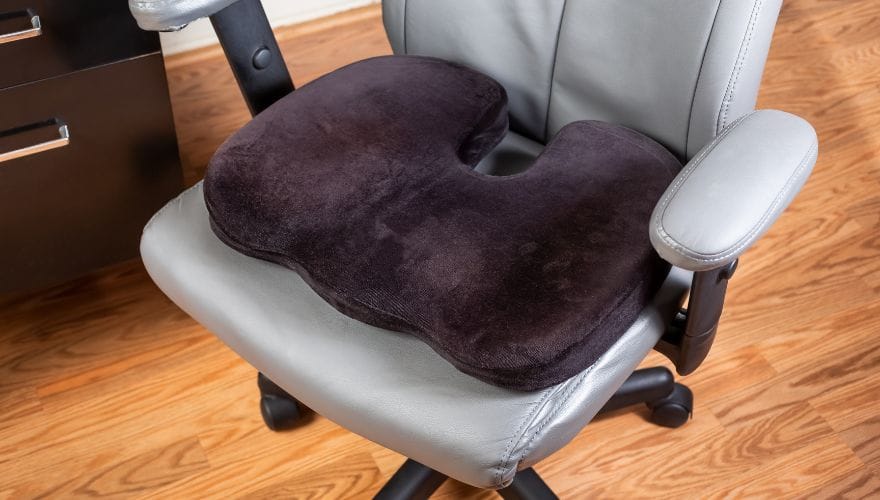
The material inside your cushion determines how it feels, how long it lasts, and whether you’ll overheat.
1. Memory Foam
Memory foam conforms closely to your body, cradling your curves and distributing weight evenly. It’s excellent for pressure relief. The downside? Traditional memory foam traps heat, which can leave you sweaty and uncomfortable. Look for “gel-infused” or “open-cell” versions if you run warm.
2. Gel
Gel cushions offer a bouncier, more responsive feel. They excel at staying cool and provide good support for circulation issues. Pure gel cushions can feel firm and heavy, which some people love and others find uncomfortable.
3. Hybrid (Gel + Foam)
This combination delivers the best of both worlds: the conforming comfort of memory foam with the cooling properties of gel. Most top-rated cushions use hybrid designs for good reason—they work for the widest range of people.
4. High-Density Foam
If you’re a heavier person or want something that holds its shape for years, high-density foam is worth considering. It’s firmer than memory foam but resists sagging much longer.
Key Features That Separate Good from Great
1. Non-Slip Bottom
Nothing’s more annoying than a cushion that slides forward every time you stand up. Look for rubberized grips or non-skid bottoms that stay put on your chair seat.
2. Removable, Washable Cover
You’ll spend thousands of hours sitting on this cushion. It will collect sweat, skin cells, and the occasional coffee spill. A removable cover you can toss in the washing machine isn’t optional—it’s essential.
3. Carry Handle
If you work between home and office, or just like taking your comfort with you, a built-in handle makes transport much easier.
4. Proper Thickness
Most people do best with cushions between 2 and 4 inches thick. Too thin and you’ll still feel the hard chair underneath. Too thick and you might sit too high, throwing off your desk ergonomics.
5. Firmness Sweet Spot
The best cushion feels supportive, not sink-into-it soft. If you push down with your hand, it should compress but spring back. Mushy cushions feel great for five minutes, then leave you unsupported for hours.
Top Seat Cushions at a Glance
Here’s how the most popular options compare:
| Product | Material | Best For | Price Range | Key Feature |
| Tempur-Pedic Seat Cushion | High-density memory foam | Overall best, long sessions | $$-$$$ | Molds perfectly, machine-washable cover |
| Purple Royal Seat Cushion | GelFlex Grid | Tailbone pain, hot sleepers | $$-$$$ | Honeycomb design, never heats up |
| ComfiLife Gel-Infused | Gel + memory foam | All-day comfort, value | $ | Cooling gel layer, non-slip bottom |
| Cushion Lab Pressure Relief | Extra-dense memory foam | Posture improvement | $$ | Split design, charcoal-infused |
| Everlasting Comfort | Memory foam | Sciatica, tailbone relief | $ | U-shaped design, doctor-recommended |
| Xtreme Comforts | Thick memory foam | Budget pick, general use | $ | Vented cover, carry handle |
How to Use Your Cushion Correctly
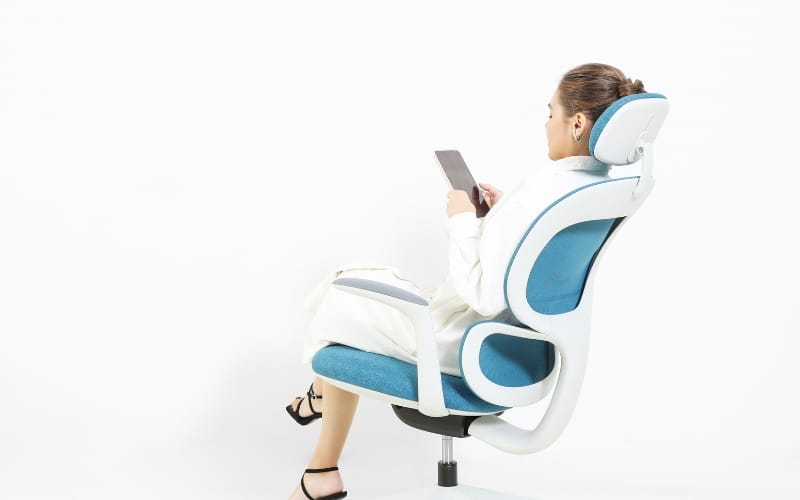
Budding Ergonomic Office Chair
Even the best cushion won’t work magic if you use it wrong.
1. Positioning Matters
Place the cushion so your sits bones (the bony parts under your glutes) land in the center of the padding. For U-shaped cushions, make sure the open space aligns with your tailbone.
2. Adjust Your Chair Height
Adding a cushion raises your sitting height by 2 to 4 inches. You’ll likely need to lower your chair to keep your feet flat on the floor and your elbows at desk height. Skipping this step creates new problems.
Also see: What is the Standard Chair Height? A Simple Guide
3. Pair With Lumbar Support
A seat cushion supports your bottom, but your lower back needs help too. Use it alongside a proper lumbar roll or back cushion for complete support.
4. Keep Moving
Even the perfect cushion isn’t a substitute for movement. Stand up every hour, stretch, walk around. Your body needs both support and variety.
Common Chair Cushion Mistakes to Avoid
Buying for looks. That stylish woven cushion might look great, but if it flattens in two weeks, you’ve wasted money. Prioritize function.
Choosing too-soft foam. Plush feels nice in the store but lacks the density to support you through eight-hour days. Firm support beats soft comfort long-term.
Ignoring the cover material. Vinyl or cheap polyester covers trap heat and sweat. Look for breathable natural fibers or moisture-wicking fabrics.
Forgetting to measure. Some cushions are surprisingly large. Measure your chair seat first to ensure your new cushion actually fits.
When to Replace Your Cushion
No cushion lasts forever. Watch for these signs:
- Visible sagging or permanent indentations
- Loss of bounce—it stays compressed when you stand up
- Return of pain you thought you’d solved
- Worn-out cover with tears or thinning fabric
With daily use, most cushions need replacement every 1.5 to 3 years. Higher-density options last longer on the upper end of that range.
Conclusion
The best seat cushion for your office chair isn’t the most expensive or the most popular—it’s the one that addresses your specific discomfort. Start by identifying where you hurt. Match that pain to the right cushion design. Choose quality materials with good reviews. Then use it correctly with proper chair adjustment.
Your workdays are long enough without adding physical misery. A good cushion costs far less than a new chair and can breathe fresh life into your current setup. Take a few minutes to assess your needs, pick the right option, and enjoy the difference real comfort makes.
FAQ
1. Can a seat cushion fix my back pain?
It can help significantly if your pain stems from poor sitting posture or pressure points. For chronic or severe back pain, consult a healthcare professional.
2. Are gel cushions better than memory foam?
Neither is universally better. Gel stays cooler; memory foam conforms more closely. Hybrid designs combine both strengths.
3. How thick should an office chair cushion be?
Most people do well with 2 to 4 inches. Thicker isn’t always better—too much height disrupts desk ergonomics.
4. Will a cushion make me sit too high?
Possibly. Always check your foot position and desk height after adding a cushion. Lower your chair if needed.
5. Can I use the same cushion for my car and office?
Absolutely. Many people buy two, but if you move between spaces frequently, choose one with a carry handle and portable design.