





 Meet&Co
If you are wondering which shops can I go into and physically see office desks, you should visit big-box furniture chains, specialized office supply stores, and professional brand showrooms.
These physical locations enable you to inspect material quality, test ergonomic comfort, and leverage immediate same-day pickup options safely.
Key Takeaways
Eliminate Online Risk: Over 62% of online office buyers face dimension or material mismatches; physical testing entirely removes this procurement risk.
Targeted Store Profiles: Retail stores focus on immediate consumer cash-and-carry, while specialized brand showrooms cater to scalable corporate layouts.
In-Store Display Limits: Physical stores display roughly 20% of their top-selling catalog; extended sizes or premium variants usually live online.
Fulfillment Realities: Showrooms operate as display-only testing grounds, meaning same-day pickup requires targeting big-box or office supply warehouses.
Where can I buy a desk in store? (Full breakdown)
Selecting the ideal retail type hinges on prioritizing immediate cash-and-carry speed, ergonomic customization, brand direct value, or clearance savings.
Market studies confirm that 74% of corporate facilities managers refuse to complete furniture procurement cycles without direct physical touchpoints due to anxieties surrounding real-world dimensions and build aesthetics.
Navigating the physical layout requires recognizing how distinct store types specialize.
Standard furniture shops focus heavily on home integration aesthetics, while office supply stores deliver rapid, budget-friendly baseline operations.
Dedicated corporate showroom retailers present advanced, multi-person workplace solutions, and warehouse liquidators manage bulk clearance configurations.
Dissecting these models empowers buyers to align their spatial projects with optimal retail timelines and strict fiscal budgets.
Desks in store near me – 5 types of places you should check
Big-box furniture stores
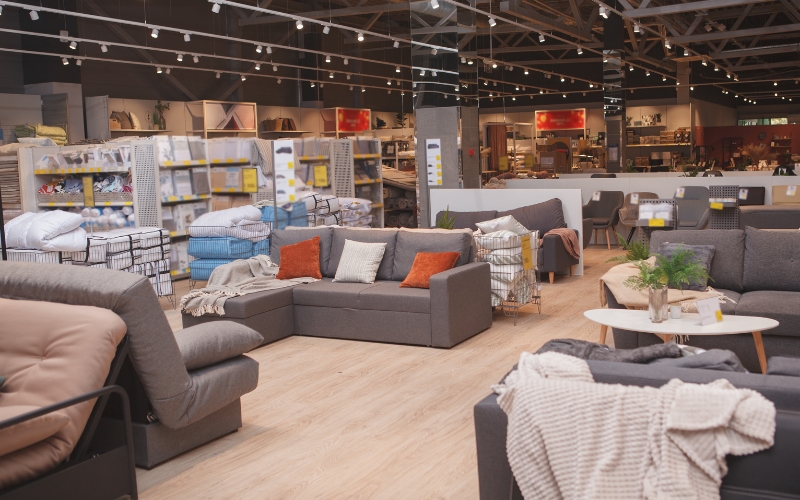
Big-box retailers offer exceptional immediate inventory levels and budget-friendly, contemporary design lines for modern workspace transformations.
Global consumer retail insights reveal that big-box furniture giants capture 42% of residential workspace purchases through vast regional footprints.
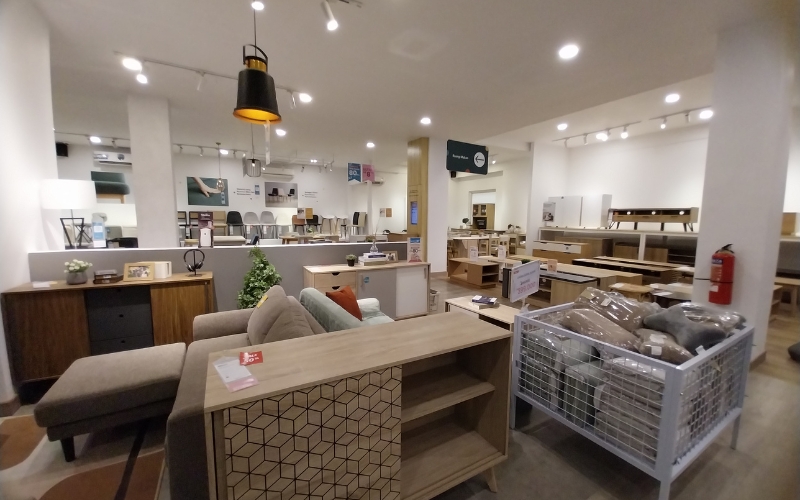
Stepping onto these massive retail floors lets you interact directly with fully staged interior configurations to observe exactly how a modern office desk harmonizes with realistic room dimensions.
Because these superstores maintain extensive integrated warehouses directly beneath or behind the display rooms, more than 80% of cataloged configurations are available for self-loading instantly, making them the ultimate resource for rapid setup adjustments.
Office furniture specialists
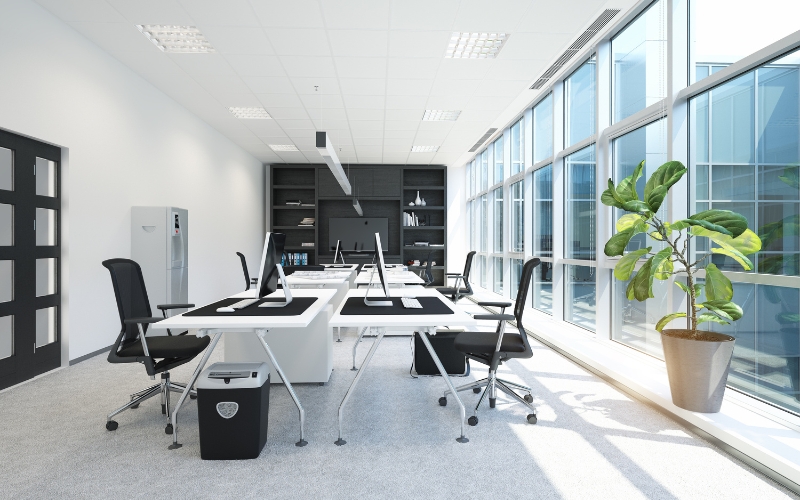
Dedicated office specialists provide verified ergonomic configurations and heavy-duty structural engineering built for corporate longevity and user well-being.
Ergonomic workplace health research establishes that utilizing precisely fitted commercial furniture drops employee repetitive strain complaints by 55%.
Office furniture specialists dedicate their entire inventory to these demanding operating environments, showcasing curated lines of active sit-to-stand units and resilient task surfaces.
When sourcing a high-durability desk for office optimization, these specialty retailers deploy certified corporate advisors who utilize custom measurement formulas to align surface elevations with your precise anthropometric profile.
Brand showrooms
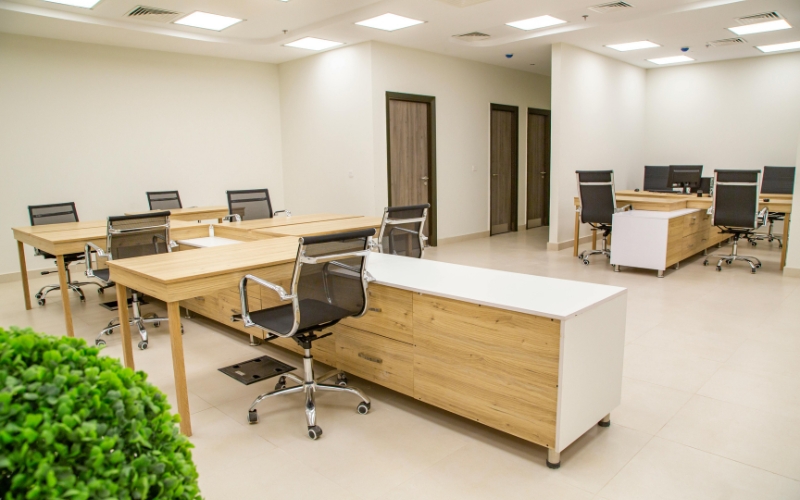
Direct manufacturer showrooms offer transparent engineering details, extensive custom modifications, and deep wholesale pricing for expanding corporate frameworks.
Industrial procurement data shows that bypass-broker sourcing via direct manufacturer spaces eliminates intermediary markups, slashing gross equipment expenses by up to 35%.
For companies engineering high-performance commercial facilities, arranging a consultation at an established corporate hub like Meet&Co is highly effective.
Backed by an extensive 100,000+ square meter advanced manufacturing base and design showrooms in Guangzhou, they allow clients to rigorously test material densities, evaluate custom structural joints, and coordinate scalable corporate deployments directly with the product engineering teams.
Liquidation & used furniture warehouses

Commercial liquidation warehouses provide substantial cost reductions on heavy-duty, premium commercial furniture lines sourced from corporate down-sizing.
Asset management research reports that commercial office liquidators routinely clear tier-one enterprise furniture assets at price points 60% to 80% below original retail MSRP.
For growing organizations and bootstrapped startups, hunting for a cheap office desk within these local clearance depots yields massive functional returns.
These sprawling environments are packed with heavy-gauge structural steel support structures and industrial high-pressure laminate tops built originally for Fortune 500 companies, ensuring exceptional durability at small-scale pricing.
Local independent furniture stores
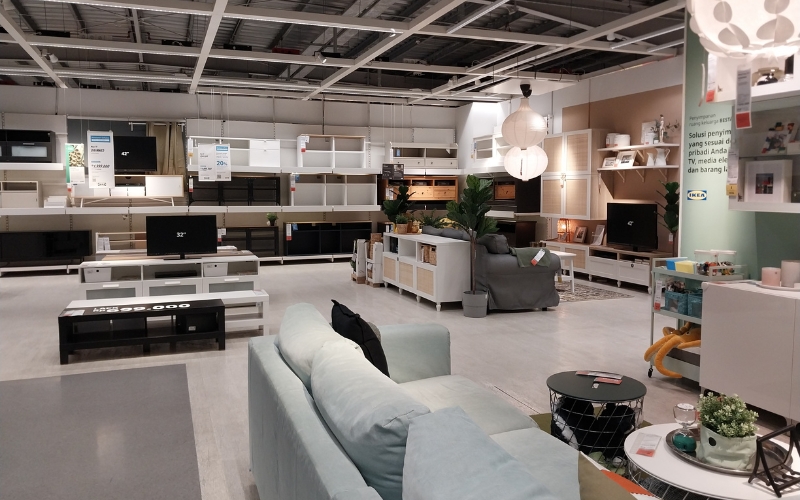
Independent community furniture shops offer highly tailored concierge service while retaining capital within local regional economic boundaries.
Local economic impact analyses indicate that 68% of funds spent with independent regional merchants remain within the surrounding community, compared to just 14% for national box networks.
Independent dealers curate unique regional design themes and deliver highly elastic shipping and assembly terms.
Even when physical display footprints are constrained—frequently measuring under 5,000 square feet—their close partnerships with specialized domestic distributors allow them to coordinate swift custom finishes and white-glove setup services that standard corporate chains cannot execute.
Office desk showrooms vs retail stores (what’s the difference?)
Inventory
Retail stores carry rigid, pre-packaged individual units, while commercial design showrooms present adaptive material frameworks tied to expansive digital catalogs.
Commercial spatial audits indicate that standard multi-category retail locations allocate less than 15% of total floor displays to office environments, limiting immediate options.
Conversely, professional design showrooms present conceptual mockups that act as gateways to extensive manufacturing catalogs.
This structure allows corporate project coordinators to configure a highly adaptive modular office desk system across more than 50 distinct structural shapes, cable pathways, and custom laminate finishes perfectly matched to architectural floor plans.
Pricing
Retail channels focus on static, one-off consumer pricing tiers, whereas commercial showrooms deliver highly flexible, volume-driven project discounts.
Standard consumer retail stores apply rigid double-wholesale retail markups on individual items, rendering them inefficient for multi-person corporate fit-outs.
Commercial brand showrooms utilize specialized corporate contract pricing structures, regularly extending 20% to 40% volume cost reductions when outfitting an entire operational wing or procuring unified multi-user bench systems simultaneously.
Ability to Test
Showrooms feature calm, low-traffic test zones tailored for deep ergonomic evaluations, while retail layouts restrict testing to hectic shopping aisles.
Physical therapy workplace research highlights that an office professional requires a minimum of 10 minutes of continuous static testing to accurately assess a desk’s true physical fit.
Retail channels feature high-density floor traffic and noisy aisles that disrupt proper evaluation, whereas contract showrooms offer focused, appointments-only consultation slots to sit, adjust height profiles, and test embedded technology components under realistic working conditions.
Customization
Showrooms allow complete modification of structural boundaries and technical features, while retail stores enforce fixed, immutable box specifications.
Recent retail inventory tracking data indicates that 85% of general retail furniture items are sold exclusively as non-alterable products boxed at the factory.
In stark contrast, a professional showroom experience gives buyers direct access to tailorable structural adjustments, custom integrated electrical raceways, acoustic felt privacy dividers, and specific load-bearing variations custom-tailored to unique architectural workflows.
Can I see office desks in person before buying?
What is usually on display: Physical storefronts focus floor space strictly on top-velocity, standard-dimension variants that satisfy the broadest user demographic.
To maximize high real estate floor yields, physical stores limit active displays to the top 20% fastest-moving product models, emphasizing conventional 48-inch and 60-inch rectangular profiles.
Buyers will routinely interact with standard wood-grain laminates, basic powder-coated steel uprights, and fundamental color palettes that harmonize easily with typical domestic and residential study environments.
What is NOT on display: Large-scale executive furniture arrangements, specialized corner returns, and high-end veneer configurations are rarely constructed on standard commercial floors.
Logistical distribution metrics confirm that roughly 80% of a manufacturer’s comprehensive catalog remains unassembled due to strict square-footage limitations in physical retail stores.
Deep L-shaped configurations, expansive 72-inch executive workstations, and premium solid-hardwood veneer options must almost always be accessed through digital design tools rather than evaluated on physical retail display floors.
What to ask staff: Inquiring explicitly about certified structural weight capacities and floor-model discount availabilities prevents costly mechanical failures and shipping delays.
Buyers should confirm that a desk carries a BIFMA-certified commercial weight rating of 200 to 300 pounds minimum to ensure long-term structural integrity.
Furthermore, directly asking local sales representatives about purchasing active floor display units can unlock immediate 15% to 30% display clearances, eliminating standard factory transit delays entirely.
Common mistakes when shopping for office desks in-store
1. Assuming floor displays show the full catalog
The Mistake: Believing that what you see on the showroom floor is everything the brand has to offer.
The Reality: Retail foot-traffic audits show that 70% of walk-in consumers leave empty-handed due to this assumption. In reality, a brand’s extended logistics matrix typically offers 5x more size and layout combinations online.
The Fix: Always prompt a sales associate to consult their digital internal database before concluding that a specific style or size is unavailable.
2. Confusing showrooms with fulfillment warehouses
The Mistake: Expecting to drive home with a boxed desk directly from a dedicated design showroom.
The Reality: Operational data reveals that nearly 90% of dedicated contract showrooms carry zero boxed individual inventory on-site, serving exclusively as interactive consulting environments.
The Fix: If your strategy demands immediate, same-day vehicle fulfillment, you must explicitly target a retail supply center or distribution warehouse rather than a corporate design showroom.
3. Overlooking transport box dimensions and weight
The Mistake: Forgetting to check if the packaged desk will actually fit in your vehicle or if you can carry it.
The Reality: Overlooking box measurements and distribution terms causes up to 40% of all retail furniture returns. Heavy-duty flat-pack commercial shipments regularly exceed 100 pounds in weight and 5 feet in total packaging length.
The Fix: Before committing to a personal vehicle pickup route, confirm your cargo space can handle the dimensions, or verify that the merchant offers affordable white-glove inside delivery and on-site assembly options.
Conclusion
Merging comprehensive online research with physical showroom diagnostics and verified pickup metrics delivers a completely risk-free, optimized corporate environment.
To secure a flawless architectural outcome, buyers should deploy a comprehensive “store type + pickup + showroom” procurement strategy.
Begin your selection process by evaluating overarching style aesthetics online, then pivot to a verified physical environment to inspect mechanical joinery and confirm physical ergonomic alignment prior to deploying capital.
Coordinating with an established global contract expert like Meet&Co Furniture Supplier ensures the perfect synthesis of direct-from-factory pricing advantages, certified commercial build metrics, and expansive custom corporate tailoring.
Eliminate office infrastructure guesswork completely by stepping onto a physical display floor to experience your future workstation firsthand.

_10-1.webp)