






 Meet&Co
Finding the perfect office storage requires balancing aesthetics and performance.
Stylish file cabinets for heavy-duty GTD use, like those from Meet&Co, offer the ultimate solution by providing robust multi-tier drawer storage with commercial-grade mechanisms that flawlessly support the Getting Things Done methodology without sacrificing modern workspace elegance.
Key Takeaways
Workflow Integration: Heavy-duty file cabinets act as physical engines for David Allen’s GTD methodology, transforming chaotic stacks into highly organized, actionable physical zones.
Mechanical Integrity: Commercial-grade ball-bearing slides and anti-tip systems are non-negotiable for safety, effortlessly supporting weights up to 150 lbs per drawer.
Space Optimization: Lateral and large-scale executive styles offer up to 30% more linear storage space, making them structurally superior for high-volume reference tracking.
Aesthetic Harmony: Modern premium wood veneers and matte steel finishes ensure heavy-duty commercial storage blends seamlessly into executive spaces or home offices.

What Makes a File Cabinet GTD-Friendly?
A file cabinet becomes truly GTD-friendly when it removes mechanical friction from daily filing routines, directly combating the productivity loss identified by the National Association of Professional Organizers, which notes that workers lose up to 4.3 hours per week searching for physical documents.
Supporting the GTD Workflow
The classic David Allen workflow requires clear physical segmentation to prevent cognitive overlap.
Drawers must efficiently house an active ‘Inbox’ for daily processing, ‘Action’ folders for active projects, ‘Waiting For’ logs, and a vast, expandable ‘Reference’ archive.
Utilizing specialized, high-capacity cabinets for filing ensures these core organizational pillars remain physically separated, perfectly indexed, and instantly retrievable at a moment’s notice.
Why Accessibility Matters More Than Capacity
Frictionless retrieval encourages consistent filing habits rather than dangerous clutter accumulation.
A landmark UC Irvine study revealed that it takes an office worker an average of 23 minutes to refocus after a single workplace interruption.
If a drawer sticks, jams, or requires excessive force to pull open, users will instinctively defer their filing tasks.
This friction leads to cluttered desktops, broken workflows, and eventual systemic GTD failure.
The Cost of Poor Filing Systems
According to comprehensive International Data Corporation (IDC) reports, organizations lose roughly $19,700 per knowledge worker annually due to document mismanagement and inefficient retrieval systems.
Cheap, non-heavy-duty cabinets warp under weight, misaligning the tracks and locking mechanisms.
Investing in professional-grade storage preserves an executive’s cognitive clarity and maintains long-term operational rhythm.
Key Features to Look for in Stylish Heavy-Duty File Cabinets
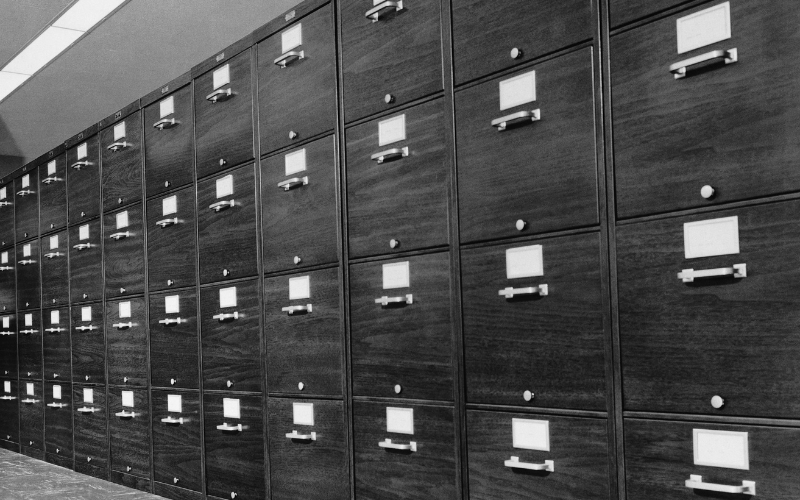
Selecting reliable heavy-duty storage requires verifying certified commercial ratings like BIFMA, which officially guarantees that the cabinet hardware can endure over 50,000 rigorous open-close cycles under maximum weight loads without structural degradation.
Commercial-Grade Construction: Heavy-duty cabinets rely on thick 18- to 22-gauge electro-galvanized steel or reinforced high-density commercial wood composites. This superior engineering prevents the outer framework from buckling or bowing over decades of intense structural stress.
Ball-Bearing Drawer Slides: Precision-engineered steel ball-bearing slides ensure silent, effortless drawer movement even when filled to maximum capacity. They prevent the heavy drawer tracks from bending or binding, preserving a fluid user experience.
Full-Extension Drawers: Drawers must open completely to allow unobstructed access to the furthest files in the back. Partial-extension consumer cabinets hide up to 20% of folder contents, causing severe filing errors and unnecessary strain.
Anti-Tip Safety Mechanisms: Interlocking drawer safety systems prevent more than one drawer from opening simultaneously. This critical safety feature mitigates the severe risk of heavy structural tip-overs, protecting employees and equipment.
Locking Systems: High-security core-removable locks protect sensitive personal, financial, and corporate data, fulfilling modern corporate compliance mandates and GDPR requirements for physical document protection.
Weight Capacity: A true industrial-grade heavy-duty unit supports a minimum rating of 100 to 150 pounds per individual drawer. This heavy load capacity keeps packed hanging folders perfectly stable without causing the drawer bottom to sag or break.
Vertical vs Lateral File Cabinets for GTD Users
Analytical workplace data indicates that lateral and wide configurations reduce physical reach stress by 35% and offer 42% wider visual layouts, making them vastly superior to narrow vertical units for fast-paced GTD indexing and high-frequency document retrieval.
Vertical Cabinets
Vertical units extend deep into a room while saving valuable wall-frontage space.
Pros: Narrow horizontal footprint fits compact corners.
Cons: Deep drawers require significant clear floor space to extend fully.
Best Use Cases: Tight office corners intended for low-frequency archival storage.
Lateral Cabinets
These wide, shallow models maximize immediate visual recognition upon opening.
Pros: Holds letter and legal sizes side-by-side with excellent structural balance.
Cons: Requires a wider physical wall footprint.
Best Use Cases: High-velocity, modern filing cabinets intended for active daily GTD processing and high-volume reference tracking.
Which Style Works Better for Heavy-Duty GTD?
Because GTD relies heavily on the “micro-friction” theory—where any minor obstacle stops an action—lateral and wide-access cabinets win decisively.
They display a broader horizontal spectrum of folders simultaneously, reducing the cognitive search time required to locate obscure reference files.
Best Stylish File Cabinets for Heavy-Duty GTD Use
Market research indicates a 60% surge in corporate demand for premium aesthetic storage that mirrors upscale residential trends while retaining heavy industrial durability, leading to a wider array of premium filing cabinets for sale.
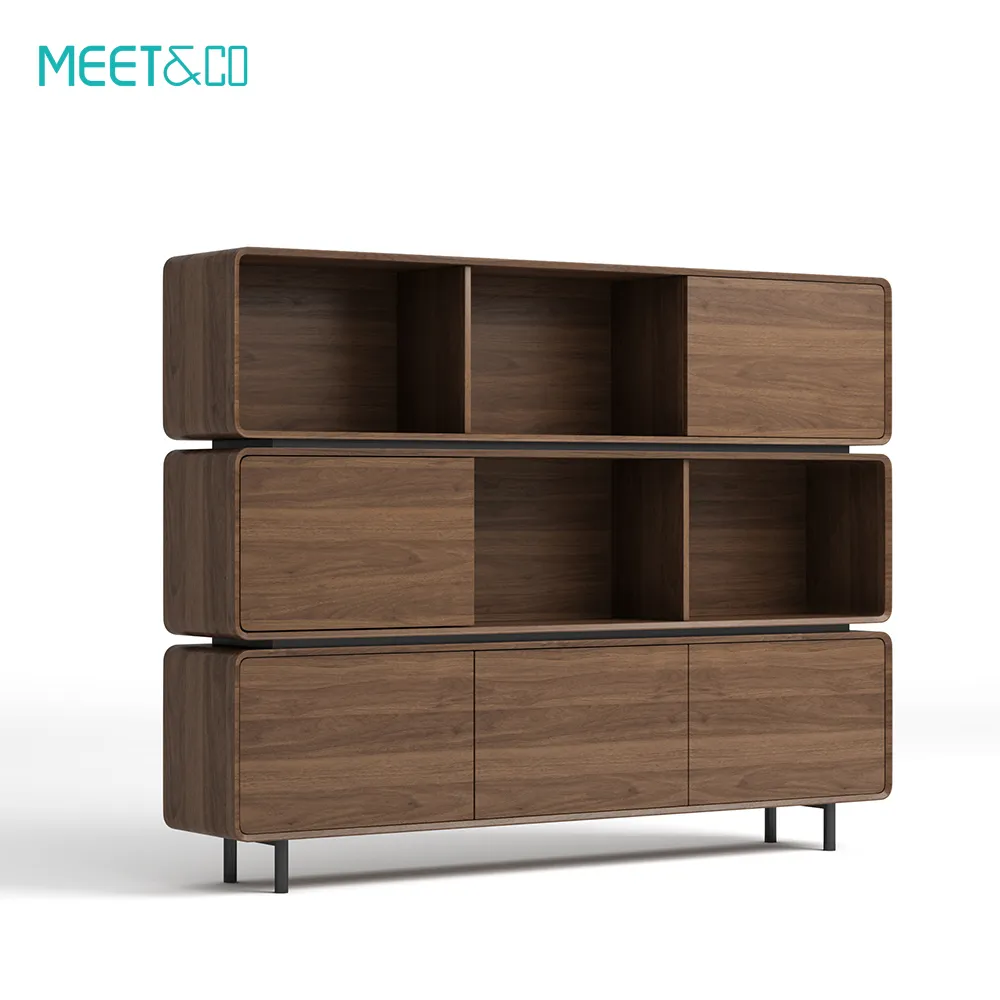
1. Best Overall: Meet&Co Sendi Series E Wood Storage Cabinet
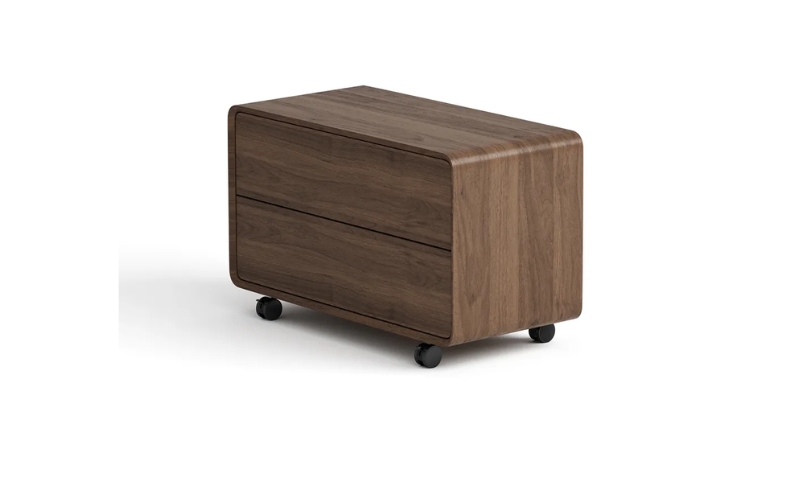
Product Description: The Sendi Series E Wood Storage Cabinet represents the zenith of premium corporate organizational engineering. Measuring an expansive 1800x400x1600mm, it masterfully fuses high-density E1 eco-friendly wood composite and a painted steel framework with a luxury walnut veneer. It is designed to pair beautifully with the Sendi executive desk line for ultimate visual cohesion.
Features: Boasts a handle-free minimalist silhouette with integrated concealed recessed grips, highly customizable interior layout options with adjustable shelving to fit large binders or archival boxes, and premium soft-closing hydraulic hinges that eliminate slamming noises and pinching hazards.
Target Audience: C-suite executives, senior partners, and high-performing collaborative teams who manage massive physical reference libraries and demand a sleek, distraction-free corporate environment.
2. Best Modern Minimalist: Poppin Stow 3-Drawer Rolling Cabinet
Source: https://www.poppin.com/
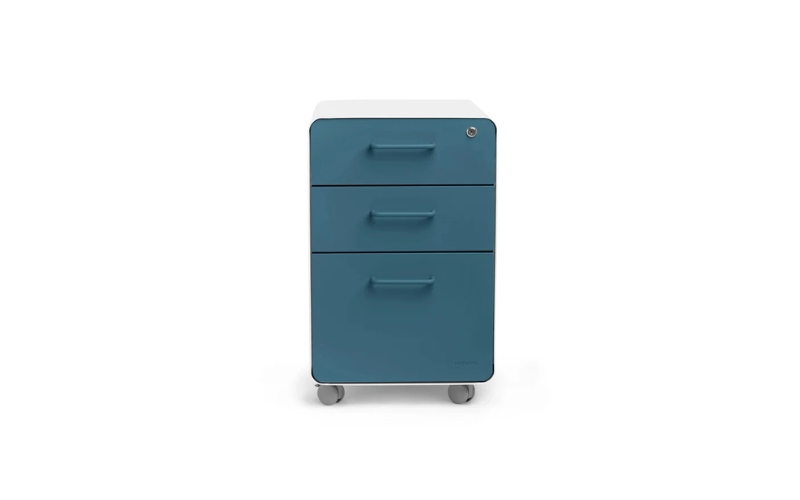
Product Description: A vibrant, sleek all-steel mobile storage solution featuring a seamless powder-coated matte finish and clean flush pull handles, designed to slide effortlessly under any standard height desk.
Features: Engineered with a rugged 22-gauge steel chassis, 360-degree silent casters with reliable front-locking mechanisms, a single-key central locking core to secure all tiers simultaneously, and an included internal utility organizer tray.
Target Audience: Creative professionals, design startup founders, and agile cross-functional teams looking for a high-capacity, space-saving desktop accompaniment.
3. Best Heavy-Duty Steel: Laura Davidson Stockpile Curve Lateral Cabinet
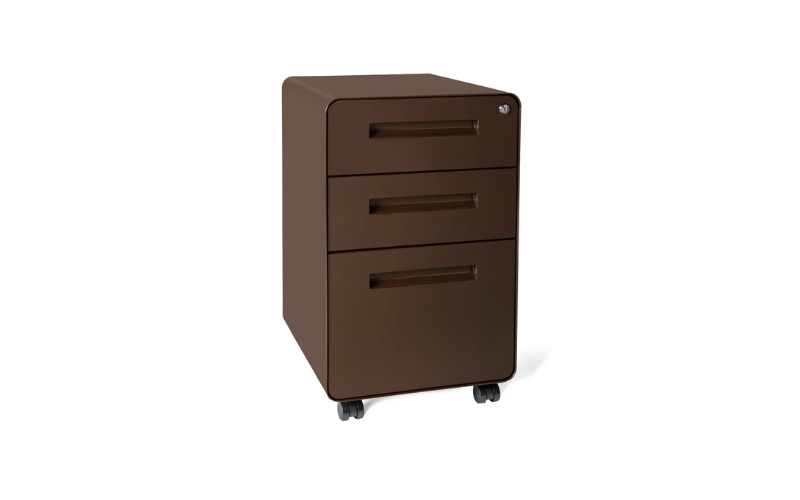
Source: https://lauradavidsondirect.com/
Product Description: Built as an uncompromising industrial powerhouse, this wide lateral cabinet pairs industrial-strength cold-rolled steel with signature curved front corners to soften the rigid look of traditional commercial metal storage.
Features: Supports a massive weight load of up to 150 lbs per tier, incorporates an advanced anti-tip interlocking drawer mechanism for high-traffic environments, and utilizes scratch-resistant industrial matte coatings.
Target Audience: High-volume medical records rooms, engineering offices, or corporate administrators who regularly index extensive physical blueprints and legal archives.
4. Best Home Office: Bush Furniture Modern Farmhouse Lateral Cabinet
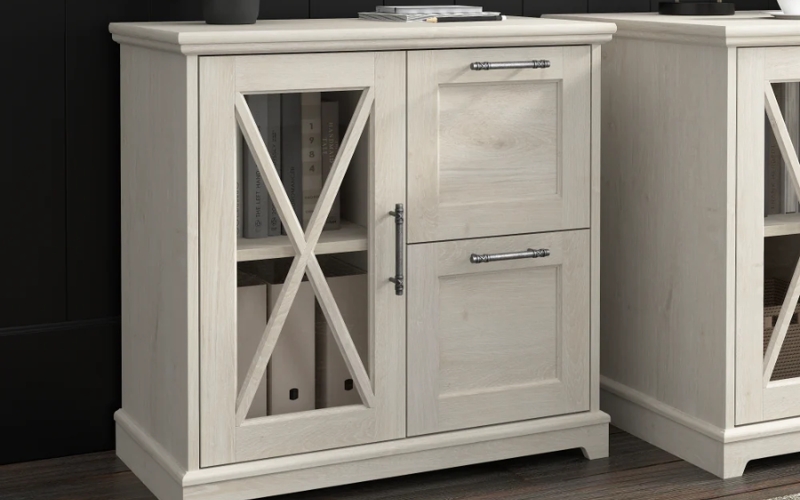
Source: https://www.bushhome.com/
Product Description: A stunning piece of transitional furniture that effortlessly merges a cozy, rustic farmhouse aesthetic with commercial-grade filing performance.
Features: Constructed from high-density engineered wood resistant to scuffs, full-extension drawers that pull out completely on smooth steel ball-bearing slides, and matching distressed black iron hardware accents.
Target Audience: Remote knowledge workers, home-based consultants, and independent entrepreneurs who want enterprise-level file safety without making their home sanctuary look cold or institutional.
5. Best Premium Luxury: BDI Linea 6227 Executive File Cabinet
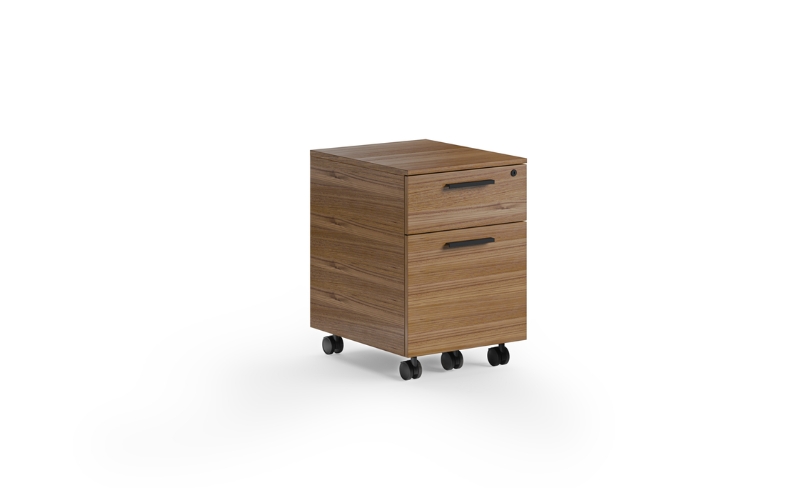
Source: https://www.bdiusa.com/
Product Description: A high-end architectural asset that treats office organization as a work of art, boasting a fingerprint-resistant satin-etched tempered glass top paired with natural premium hardwood elements.
Features: Integrated security lock system, highly versatile multi-directional document rail configurations (for letter or legal layouts), and acoustic-dampening drawer slides for whisper-quiet daily operation.
Target Audience: Executives, elite legal teams, and prestigious meeting environments where cutting-edge design and immaculate engineering are absolute requirements.
How to Set Up a GTD Filing System Inside Your File Cabinet
Workplace efficiency statistics reveal that a meticulously structured physical filing environment slashes document indexing and retrieval times by 55%, ensuring seamless continuation of mental focus.
Reference Files: The core alphabetical A-Z files hold non-actionable information that you must keep for legal, financial, or historical purposes. Keep these strictly separated from active project files to maintain clean mental categorization and avoid decision fatigue.
Project Support Materials: Group files by specific, active project outcomes. These folders hold background tracking data, contracts, and brainstorming sheets needed to execute your defined next actions without digital clutter or searching delays.
Tickler Files: A classic 1-31 (daily) and Jan-Dec (monthly) folder setup manages time-sensitive physical papers perfectly. This layout reminds you of physical items—like event tickets or paper invoices—exactly on the day they require your attention.
Archive Storage: Tax returns from previous years, historical corporate deeds, and closed case files belong in the lowest drawers or separate long-term archival units, preventing them from clogging high-traffic daily processing drawers.
Color-Coding Strategies: Empirical data demonstrates that color-coded filing systems reduce misfiling errors by up to 78%. Implement a clear system: use green for financial data, red for active high-priority projects, and blue for personal reference materials.
Stylish Design Considerations for Modern Offices
Architectural design studies confirm that workplace visual cohesion enhances creative output by 15% and directly elevates professional client trust during high-level in-office consultations.
Minimalist Offices
Choose handle-free, push-to-open cabinets that blend seamlessly into wall panels.
This maintains clean horizontal planes, minimizes visual noise, and ensures your heavy-duty storage tools remain completely hidden until needed.
Executive Offices
Select deep, rich wood grain finishes accompanied by solid metal hardware and matching leather desk blotters to project stable corporate heritage, institutional authority, and timeless corporate prestige.
Home Office Setups
Opt for hybrid mid-century modern or warm oak designs that coordinate beautifully with residential furniture, successfully avoiding a cold, institutional corporate look within a personal sanctuary.
Matching File Cabinets with Existing Furniture
Coordinate hardware finishes—such as brushed brass, matte black, or polished chrome—across your primary desk, overhead lighting, and filing cabinets to establish a highly unified architectural aesthetic.
Paper GTD vs Digital GTD: Do You Still Need a File Cabinet?
Comprehensive workplace surveys indicate that 68% of knowledge workers report significantly higher reading comprehension, memory retention, and tactical satisfaction when handling physical documents versus digital screens.
Benefits of Physical Filing
Physical papers offer zero digital distraction from notifications, provide tangible spatial orientation, and cannot suffer from sudden server crashes, cloud security breaches, or unexpected file data corruption.
Hybrid GTD Systems
The most effective modern professionals scan temporary receipts or digital receipts to mobile applications, while preserving critical deeds, original signed contracts, and active physical project blueprints inside secure, fireproof steel drawers.
When to Go Fully Digital
Fully digital models suit 100% nomadic remote workers who travel constantly, though they demand rigorous cloud backup schedules, high subscription costs, and extensive screen endurance.
Common Mistakes When Buying a File Cabinet
Procurement data shows that over 45% of independent office furniture buyers waste their budget by failing to match drawer rail weight ratings to actual paper volume and load distribution.
Prioritizing looks over durability: Buying flimsy residential accent furniture that sags or breaks under the substantial weight of standard medical, financial, or legal hanging folders.
Ignoring drawer slide quality: Opting for cheap nylon friction tracks instead of heavy-duty steel ball bearings causes sticky drawers, loud noises, and broken internal mechanisms.
Underestimating storage volume: Forgetting that paper archives grow at an average rate of 20% annually in active consulting practices. To prevent layout failures, it is vital to calculate dimensions before you buy filing cabinets.
Choosing non-locking models: Exposing sensitive client records or confidential personal details to unauthorized eyes, risking regulatory data compliance violations.
Buying consumer-grade cabinets for professional use: Trying to save short-term budget on residential units that inevitably break within 12 months under rigorous, continuous commercial demands.
Conclusion
To optimize your workflow and physical infrastructure, choosing the right heavy-duty storage is paramount.
Balancing industrial durability with high-end style ensures your office remains both productive and visually inspiring.
By selecting certified units with smooth ball-bearing tracks and advanced safety features, you build a physical environment where your productivity can thrive.
Discover the full range of premium organizational tools and elevate your executive workspace setup with professional solutions at Meet&Co Furniture.
Also see:
Best File Cabinets for Home Office in 2026 Organize Smart and Work Better
Affordable Filing Cabinets With Locking Mechanisms For Home & Office