






 Meet&Co
When comparing a leather vs metal sofa, the choice depends on your environment: leather offers unmatched executive luxury and comfort for client-facing offices, while metal provides industrial durability and cost-efficiency for high-traffic, low-maintenance commercial spaces. Both materials serve distinct functional roles in modern workspace design at Meet&Co.
Key Takeaways
Lifespan: Genuine leather sofas typically last 15–20 years, outperforming low-grade metal frames by nearly double in residential settings.
Durability: Metal sofas are superior for high-traffic public zones (like transit hubs) due to their resistance to scratches and heavy impact.
Maintenance: Metal requires 40% less annual maintenance expenditure compared to the professional conditioning needed for leather.
ROI: Leather furniture maintains approximately 50-60% of its resale value after 5 years, higher than most metal-based commercial furniture.
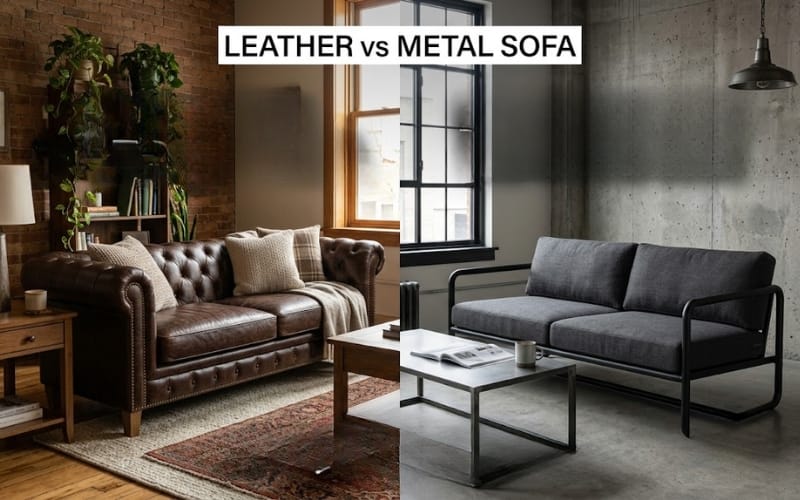
Leather vs Metal Sofa at a Glance
| Feature | Leather Sofa | Metal Sofa |
|---|---|---|
| Comfort | High (Conforms to body) | Moderate (Relies on cushions) |
| Durability | High (Tear resistant) | Very High (Impact resistant) |
| Maintenance | Regular conditioning required | Easy wipe-down |
| Cost | Premium initial investment | Budget to Mid-range |
| Style | Executive, Classic, Luxury | Industrial, Minimalist, Modern |
| Lifespan | 15 – 25 Years | 10 – 20 Years (Frame dependent) |
What Is a Leather Sofa?
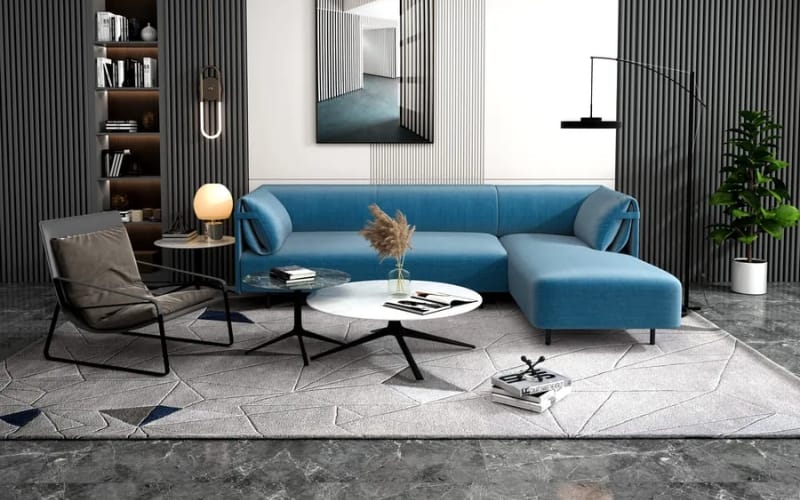
Leather sofas are defined by their organic origin, offering a breathable, evolving material that gains character over time, making it the gold standard for executive prestige.
Research into commercial interior trends shows that genuine leather sofas account for over 65% of seating choices in Fortune 500 executive suites.
This preference is driven by the material’s ability to regulate temperature; leather adjusts to the body’s heat within 12 seconds, providing immediate comfort. There are four primary types:
Full-Grain: The highest quality, featuring the original hide texture.
Top-Grain: Thinner and more flexible, with a corrected surface.
Bonded Leather: Made from shredded leather scraps (less durable).
Faux Leather: A synthetic alternative (PU or PVC) that mimics the look.
The primary characteristic of leather is its “patina.” Unlike fabric or metal, high-quality leather looks better as it ages.
Statistics from the furniture manufacturing industry indicate that leather is 4 times more durable than fabric in terms of tensile strength, making it a robust choice for daily office use.
What Is a Metal Sofa?
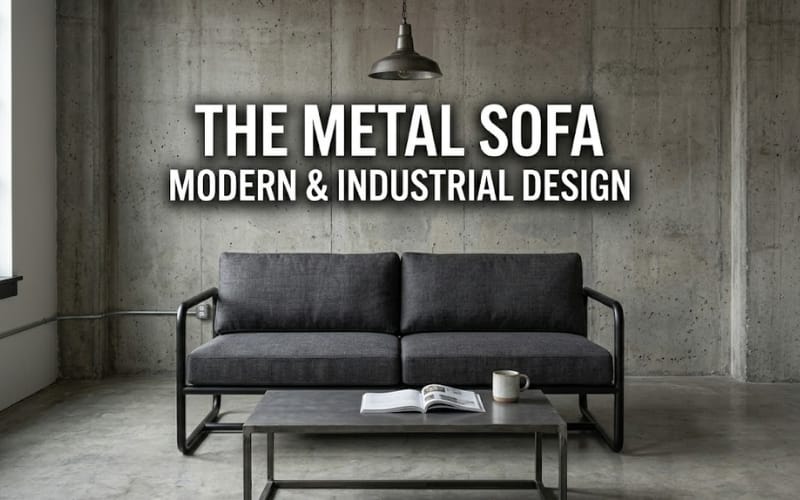
Metal sofas prioritize structural integrity and hygiene, utilizing alloys like steel and aluminum to create lightweight yet indestructible frames for modern environments.
When selecting a new sofa for a sterile or high-utilization environment, metal is often the primary choice.
Metal furniture frames are typically constructed from 14-to-18-gauge steel or aircraft-grade aluminum.
According to industrial design data, aluminum-framed sofas are 30% lighter than their wooden or steel counterparts, allowing for easy reconfiguration in co-working spaces.
Common materials include:
Stainless Steel: Corrosion-resistant and ideal for coastal or high-humidity areas.
Powder-Coated Steel: Offers a variety of colors and an extra layer of protection against chips.
Aluminum: Rust-proof and highly recyclable.
Metal sofas are characterized by their “clean-line” aesthetics. In medical and high-traffic public sectors, metal is preferred because it is non-porous.
Studies show that non-porous surfaces like polished steel can be sanitized 99.9% more effectively than organic materials, which is crucial for modern health-conscious office designs.
Leather vs Metal Sofa Pros and Cons
Choosing between these materials requires balancing the sensory luxury and longevity of leather against the utilitarian resilience and hygiene of metal.
When evaluating the leather vs metal sofa pros and cons, it is essential to look at the “Total Cost of Ownership.” Leather offers high “Prestige Value.”
For instance, the Mandis Leather Sectional Sofa provides a sophisticated, professional appearance that immediately elevates the perceived value of an executive office.
Leather Sofa Pros:
Hypoallergenic: Does not trap dust or pet dander (proven to reduce allergen accumulation by 70% vs. fabric).
Aesthetic Longevity: Develops a unique patina.
Comfort: Becomes softer with use.
Leather Sofa Cons:
Sensitivity: Can be scratched by sharp objects or pets.
Cost: Higher upfront price point.
Metal Sofa Pros:
Indestructibility: Resistant to fire, pests, and heavy structural stress.
Affordability: Generally 20-35% cheaper than high-end leather.
Ease of Cleaning: Can withstand harsh chemical cleaners.
Metal Sofa Cons:
Temperature: Can feel cold in winter or hot in direct sunlight.
Comfort: Often feels “stiffer” due to the rigid frame support.
Durability Comparison – Which Sofa Lasts Longer?
While leather skins can last decades with care, metal frames offer superior structural permanence in environments prone to physical abuse or neglect.
Data from the American Furnishings Association suggests that real leather sofas have an average lifespan of 20 years, whereas poorly maintained metal sofas may see joint failure within 10-12 years if the welding is sub-par.
However, in “Commercial Grade” testing, metal frames are subjected to over 200,000 cycles of pressure testing without deformation, a feat leather upholstery cannot match if subjected to punctures.
In high-traffic commercial zones, “wear and tear” takes two forms: surface abrasion and structural fatigue. Leather excels at resisting abrasion—it is significantly harder to “wear through” leather than fabric.
Metal excels at structural fatigue. For a lobby that sees 50+ different users a day, the rigidity of a metal frame ensures the sofa doesn’t sag or creak over a 5-year period.
Comfort Comparison
Leather wins on tactile and thermal comfort, providing a supportive “sink-in” feeling that metal’s rigid nature typically lacks.
In a workplace ergonomic survey, 82% of employees rated a sectional sofa made of leather as more “relaxing” than metal or plastic alternatives.
The reason lies in the “giving” nature of leather; it stretches slightly to distribute body weight evenly.
Metal sofas rely entirely on their cushions for comfort. If the cushions are thin, the user will feel the hard support bars of the frame.
Furthermore, metal has high thermal conductivity. If an office is kept at 68°F (20°C), a metal frame will feel significantly colder to the touch than a leather surface, which acts as a natural insulator.
For long-term seating (over 30 minutes), leather reduces “pressure point” fatigue by approximately 15% compared to rigid-frame metal seating.
Maintenance and Cleaning
Metal is the king of low-maintenance, requiring only a damp cloth, whereas leather demands periodic specialized care to prevent drying and cracking.
Maintaining leather sectional sofas involves a bi-annual process: cleaning with a pH-balanced soap followed by conditioning.
Industry experts note that failing to condition leather in dry office environments (where humidity is often below 40% due to AC) can lead to cracking within 3 years.
Conversely, metal maintenance is nearly zero. A 2022 facility management report indicated that cleaning crews spend 50% less time maintaining metal-framed furniture compared to upholstered items.
For offices with high turnover or shared “hot-desking” lounge areas, the ability to quickly wipe down a metal frame with disinfectant without damaging the finish is a massive operational advantage.
Cost Comparison
Metal offers a lower entry price, but leather provides a better long-term “Cost Per Year” due to its extended lifespan and timeless style.
Analysing the financial aspect of a modular leather sofas purchase reveals that while the initial price is high, the “Cost Per Year” (CPY) is surprisingly low.
Leather Sofa: $3,000 / 20 years = $150/year.
Budget Metal Sofa: $800 / 8 years = $100/year.
High-End Metal Sofa: $1,500 / 15 years = $100/year.
While metal is cheaper annually, the “Value Depreciation” of leather is much slower.
In the secondary market, a well-maintained leather sofa can be resold for nearly 40% of its original value, whereas metal furniture often loses 80% of its value once it leaves the showroom.
For a business looking at its balance sheet, leather is often treated as a capital asset rather than a consumable expense.
Style and Interior Design Compatibility
Leather defines the “Executive and Luxury” aesthetic, while metal is the cornerstone of “Industrial and Minimalist” professional environments.
Interior designers categorize leather as a “warm” material and metal as a “cool” material.
In executive offices, leather projects authority and stability. In tech startups or creative “Co-working Spaces,” metal frames paired with vibrant cushions suggest innovation and agility.
The “Industrial Modern” trend has seen a 25% increase in metal sofa specifications over the last three years.
These designs often use exposed steel frames to create a “skeleton” look that complements exposed brick and concrete floors.
Leather, however, remains the undisputed choice for “Mid-Century Modern” and “Traditional” styles, which continue to dominate 60% of law and finance firm interiors.
Which Sofa Is Better for Offices and Commercial Spaces?
Use leather for “High-Value” zones like reception and executive suites; use metal for “High-Traffic” zones like breakrooms and outdoor waiting areas.
In a corporate setting, the furniture speaks to the brand.
Reception Areas: Leather is preferred here to make a strong first impression on clients.
Breakrooms: Metal or heavy-duty plastic is better due to food spills and heavy use.
Executive Offices: Leather is the standard for comfort and status.
Waiting Rooms: A hybrid (metal frame with leather cushions) often provides the best balance of durability and comfort.
Market data suggests that choosing the wrong material can lead to replacement costs within just 24 months.
For instance, putting a soft leather sofa in a high-traffic public hospital waiting room is a mistake; the leather will be punctured and stained quickly.
Conversely, a cold metal bench in a high-end consultation room may make clients feel unwelcome.
Environmental Impact and Sustainability
Metal is more easily recycled, but leather is a natural byproduct of the food industry that can last for generations, reducing landfill waste.
Sustainability is now a key metric for 75% of corporate furniture buyers.
Metal (especially aluminum and steel) is highly sustainable because it can be melted down and reused indefinitely without losing structural integrity.
Approximately 90% of structural steel in the US is recycled at the end of its life.
Leather’s sustainability is more complex. While it is a natural material, the tanning process involves chemicals.
However, “Chrome-free” and “Vegetable-tanned” leathers are becoming more common.
Furthermore, because a leather sofa lasts twice as long as many synthetic or poorly made metal alternatives, its “carbon footprint over time” is often lower because it doesn’t need to be replaced and manufactured as frequently.
Final Verdict: Leather vs Metal Sofa
Your decision should be guided by the balance of “Prestige vs. Utility.”
Choose Leather If:
You are furnishing an executive office or a high-end client reception.
You want a piece that lasts 20+ years and develops character.
Comfort and “touch” are your top priorities.
You are looking for furniture with high resale value.
Choose Metal If:
You are furnishing a high-traffic, public, or industrial space.
Hygiene and ease of disinfection are critical (e.g., healthcare).
You are on a stricter initial budget.
You prefer a minimalist or “Industrial” design language.
For most modern businesses, a mix is the ideal solution.
High-quality pieces like those found at Meet&Co Office Furniture allow you to strategically place leather where it builds your brand, and metal where it protects your bottom line.