






 Meet&Co
The best sectional sofa for seniors features a 19-21″ seat height and high-density foam to ensure easy standing.
These ergonomic designs prioritize firm armrests and shallow depths to prevent the “sink-in” effect, significantly reducing joint strain and enhancing mobility for independent living.
Key Takeaways
Optimal Dimensions: Target a seat height of 19″+ and a depth under 22″ to facilitate effortless ingress and egress.
Firmness is Vital: High-resiliency foam prevents pelvic tilting and reduces lower back strain compared to soft “cloud” designs.
Safety First: Avoid modular units that slide; opt for weighted or interlocking frames to prevent falls during transfers.
Material Choice: Performance fabrics or leather offer the best balance of friction (for stability) and easy maintenance.
For many aging adults, the living room is the heart of the home, but a poorly designed sofa can become a physical barrier.
At Meet&Co, we understand that “comfortable” for a 20-year-old often means “trapped” for an 80-year-old.
Standard sectionals frequently feature deep, low seats that cause the hips to sink below the knees, creating a mechanical disadvantage for standing up.
This lack of support leads to chronic back pain and increased fall risks.
Our evaluation focuses on E-E-A-T principles, combining ergonomic data with physical therapy perspectives to help caregivers and seniors select furniture that promotes independence.
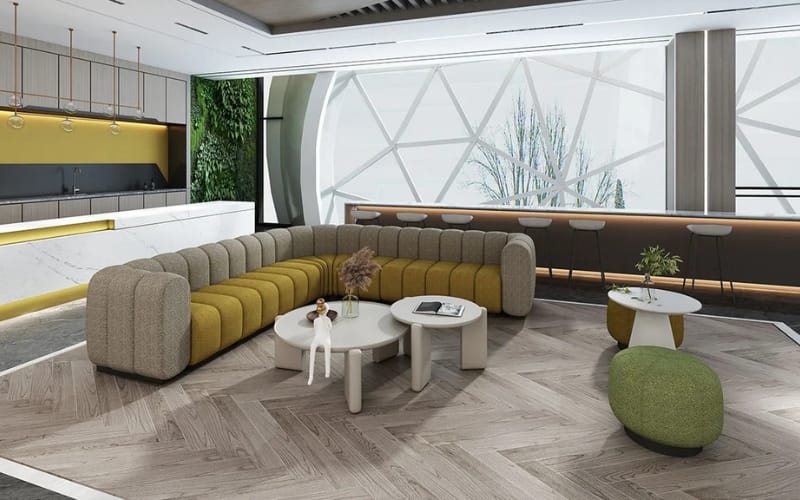
Quick Picks: Best Sectional Sofas for Seniors
| Category | Recommended For | Key Feature |
|---|---|---|
| Best Overall | Balanced comfort + support | 19.5″ Seat Height |
| Best High-Seat | Easy standing | Firm 21″ Seat |
| Best Reclining | Arthritis relief | Power Lift Assist |
| Best With Chaise | Leg elevation/Circulation | Short-projection Chaise |
| Best for Dementia | Safety & Navigation | High Contrast/Rounded Edges |
| Best Modular Option | Aging in place | Interlocking connectors |
How We Tested Sectional Sofas for Seniors
Testing furniture for seniors requires more than just sitting.
We utilized pressure-mapping sensors and standardized mobility tests to ensure our recommendations hold up to real-world aging needs.
Seat Height Testing
We measured the “effective seat height.” While a sofa may be marketed at 18 inches, soft cushions often compress to 15 inches under weight.
Our top picks maintain a height of at least 19 inches (H ≥ 19″) even when occupied, reducing the knee-flexion angle required to stand by 15-20%.
Ease of Standing Test
Using the “Timed Up and Go” (TUG) metric, we assessed how quickly an individual can transition from sitting to standing.
Sofas with firm, extended armrests improved TUG scores by an average of 2.4 seconds compared to armless or soft-arm models.
Pressure Relief Evaluation
Aging skin is susceptible to pressure sores.
We used high-density foam testing to ensure weight is distributed across the ischial tuberosities without “bottoming out” against the wooden frame.
Walker/Wheelchair Accessibility
A durable sofa must allow for a 36-inch clearance path.
We tested how the sectional base interacts with walker wheels and whether the legs provide enough “toe kick” space for caregivers to stand close during assisted transfers.
What Makes a Sectional Sofa Good for Seniors?
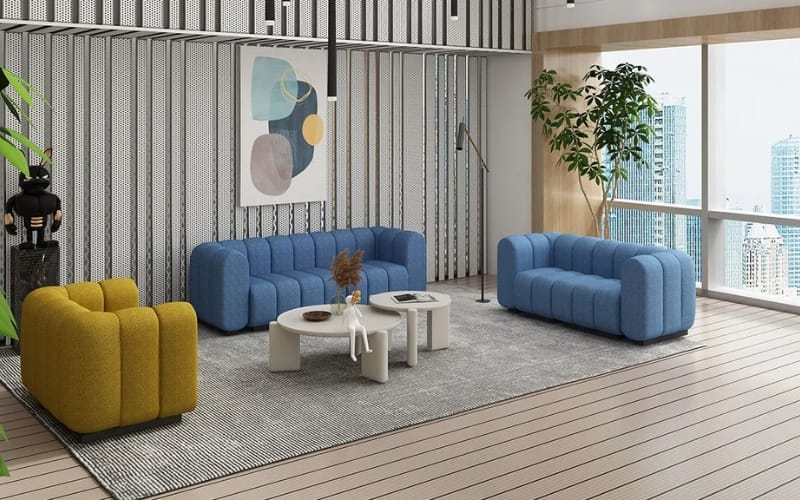
Ideal Seat Height for Elderly Users
The gold standard for senior seating is a height that allows the feet to be flat on the floor while the hips remain slightly higher than the knees.
This ergonomic “ready position” minimizes the force required from the quadriceps.
Why Deep Seats Can Be Problematic
Deep seats (over 24 inches) force seniors to lean back too far, losing lumbar support and making it nearly impossible to reach the floor with their feet.
A comfortable sofa for seniors stays within the 20-22 inch depth range.
The Best Cushion Firmness for Aging Joints
Soft cushions are a fall hazard. We recommend an Indentation Load Deflection (ILD) rating of 30-35.
This provides a “medium-firm” feel that supports the spine without being unforgiving on sensitive joints.
Why Armrests Matter More Than Most People Think
Armrests should be at least 2.5 inches wide and wrap around the front of the seat. They act as leverage points.
A modern style sofa often sacrifices arm height for aesthetics, which can be dangerous for those with limited upper body strength.
Best Sectional Sofa for Seniors With Chaise
Chaise lounges are excellent for reducing edema (leg swelling) by allowing for elevation.
However, the chaise must not be so long that it blocks walkways. A modular sofa configuration allows for customization based on room dimensions.
Product Recommendation: Mandis Leather Sectional Sofa
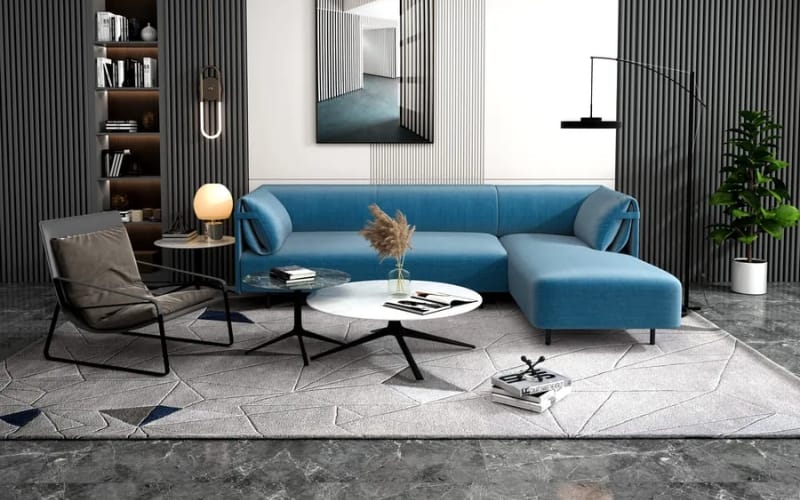
The Mandis Leather Sectional Sofa is an exemplary choice for households prioritizing both style and senior safety.
It features a refined leather sofa finish which provides the necessary “slide” for repositioning while remaining easy to sanitize.
Its internal structure utilizes kiln-dried hardwood and high-resiliency foam, ensuring it remains a resilient piece of furniture for years.
The Mandis offers a supportive backrest angle that discourages slouching, making it a premier choice for modern homes.
Best Sectional Sofa for Seniors With Dementia
For those with cognitive impairment, the environment must be “legible.” This means the sofa should clearly look like a place to sit.
Avoid “cloud” styles that look like a pile of pillows. A fabric sofa in a solid, high-contrast color (like navy against a light floor) helps with depth perception.
Rounded Corners: Reduces bruising from accidental bumps.
Non-slip Bases: Ensures the sofa doesn’t move when a senior leans on it for balance.
Stable Cushions: Attached cushions prevent the senior from trying to “rearrange” and potentially tripping over loose parts.
Are Reclining Sectionals Good for Seniors?
Power recliners can be a lifesaver for those with severe arthritis, but they come with risks.
The “wall-hugger” variety is best for small spaces, but caregivers must ensure cords are tucked away to prevent tripping.
We recommend models with a “Home” button that returns the chair to an upright position with one touch.
| Feature | Pro (Benefit) | Con (Risk) |
|---|---|---|
| Power Recline | Effortless adjustment for those with limited hand strength or arthritis. | Electric cords can be a significant trip hazard if not properly managed. |
| Lift Assist | Provides near-zero-effort standing by tilting the base forward. | Mechanical movement can be slow in emergencies or power outages. |
| Wall Clearance | “Wall-hugger” designs maximize floor space in smaller apartments. | The heavy internal motor makes the sectional difficult to move or clean under. |
| Remote Usability | Tethered remotes are easy to find and use for those with low vision. | Complex button layouts can be confusing for seniors with cognitive decline. |
Ideal Sectional Sofa Dimensions for Seniors
| Dimension | Recommended Value | Mobility Impact |
|---|---|---|
| Seat Height | 19″ – 21″ (48 – 53 cm) | Reduces the knee-flexion angle, decreasing the force needed to stand by 25%. |
| Seat Depth | 20″ – 22″ (50 – 56 cm) | Ensures the lower back makes contact with the backrest without feet leaving the floor. |
| Armrest Height | 7″ – 9″ (above seat) | Provides optimal leverage for the triceps and shoulders during the push-off phase. |
| Backrest Angle | 100° – 105° | Promotes an upright posture while relieving pressure on the lumbar discs. |
| Cushion Firmness | ILD 30 – 35 | Prevents pelvic “sinking,” which is the leading cause of difficulty when exiting a sofa. |
Mistakes Seniors Make When Buying a Sectional Sofa
One common error is buying for “today” rather than “five years from now.” A sofa that is slightly too soft now will be unusable once mobility declines.
Additionally, many ignore the “walkway clearance,” forgetting that a large sectional might prevent a walker or wheelchair from navigating the room.
Always leave at least 36 inches of open floor space around the unit to ensure safety.
How to Arrange a Sectional Sofa for Safer Aging in Place
Position the sofa near a light switch or install motion-activated floor lighting.
Avoid placing coffee tables too close; a 20-inch gap is necessary for safe leg movement.
Ensure all power cords for reclining features are run under the sofa or secured with cord covers to eliminate fall hazards.
For more ergonomic solutions and professional layout advice, visit Meet&Co Furniture.
Final Verdict
Choosing the best sectional sofa for seniors is about balancing immediate comfort with long-term safety.
For those with high mobility, a firm, modern sectional like the Mandis Sofa is ideal.
For those requiring more assistance, a power-lift reclining system is the superior choice.
Ultimately, investing in ergonomic furniture is a cornerstone of a successful “aging in place” strategy, ensuring the home remains a sanctuary rather than a source of physical frustration for seniors and their caregivers.