





 Meet&Co
Finding the ideal sofa sizes and dimensions requires balancing ergonomics with available living space.
Standard deep-seated three-seater sofas typically feature an overall length of 84 inches (213 cm), an overall depth of 38 inches (97 cm), and an overall height of 34 inches (86 cm), establishing a baseline for interior designers worldwide.
Key Takeaways
Standard Benchmarks: Classic three-seater sofas average 84″ L × 38″ D × 34″ H, serving as the universal reference point for living room space planning and floor layout design.
Ergonomic Ratios: A standard seat height of 17″-18″ coupled with an internal seat depth of 21″-22″ provides optimal posture support, reducing pressure on the lumbar spine and lower body.
Clearance Dynamics: Professional interior design rules dictate a mandatory 18-inch gap between the sofa edge and coffee tables, alongside 30-36 inches for primary room walkways.
Modular Efficiency: Scalable modular seating arrangements provide the highest volumetric efficiency, turning restricted urban footprints into flexible, high-utility environments.
Expert Sourcing: Procuring premium spatial solutions from established global commercial furniture manufacturers like Meet&Co ensures precise manufacturing metrics and exceptional structural durability.
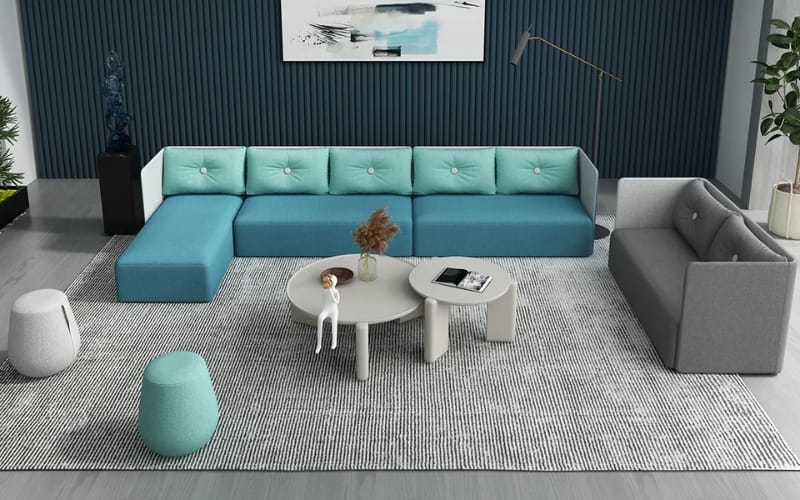
Sofa Dimensions Basics
Mastering fundamental structural parameters prevents furniture procurement errors and aligns physical boundaries with human ergonomics for optimal daily comfort.
When investing in a new sofa, interior architects analyze five distinct dimensional parameters to ensure a perfect spatial and physical fit.
Length (L) measures the absolute outermost distance from the exterior edge of the left armrest to the exterior edge of the right armrest.
Standard residential lengths fluctuate between 72 and 96 inches.
Total Depth (D) represents the absolute front-to-back footprint, which averages between 35 and 40 inches.
Total Height (H) indicates the vertical distance from the finished floor surface to the highest point of the backrest cushions, normally tracking between 30 and 36 inches.
Beyond these external boundaries, internal ergonomic dimensions dictate actual physiological comfort.
Seat Height—the distance from the floor to the top of the crown cushion—must remain between 15 and 20 inches.
An industry standard of 17.5 inches matches the average adult popliteal height, keeping feet flat on the floor to eliminate thigh pressure.
Internal Seat Depth measures from the front edge of the seat cushion to the front face of the backrest cushion, ranging from 20 to 25 inches.
Depths exceeding 23 inches require structural accent pillows to prevent slouching and lower back fatigue.
Arm Height tracks between 24 and 32 inches, supporting relaxed shoulder alignment.
Precise manufacturing relies on exact mathematical conversions: 1 inch equates to 2.54 centimeters, and 1 foot translates to 30.48 centimeters.
Sourcing furniture with these dimensions in mind ensures perfect physical integration.
Sofa Dimensions by Type
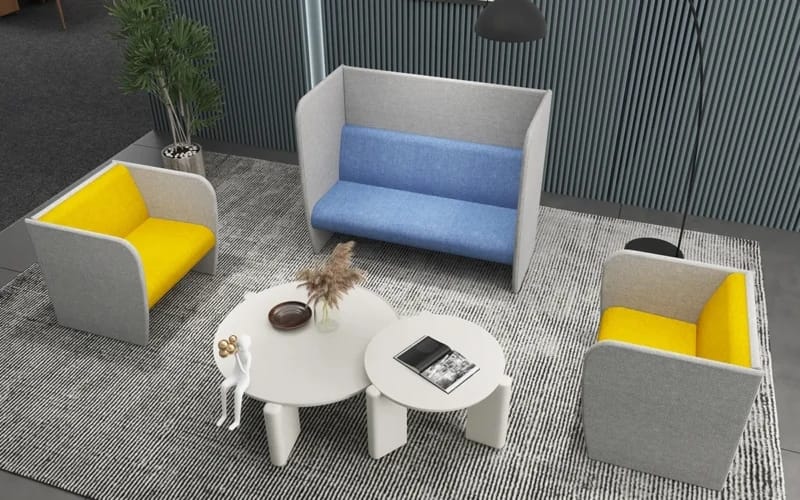
Seating footprints vary dramatically across furniture styles, with widths scaling up from compact 35-inch reading armchairs to expansive 120-inch multi-piece sectional configurations.
Different room footprints require specific furniture typologies to maintain an open layout and steady foot traffic.
Selecting a high-quality sofa means analyzing these standard categories:
1. Single Sofa / Armchair
Designed for individual seating, standard armchairs occupy a small footprint.
They typically measure 35 inches in width, 35 inches in depth, and 34 inches in height.
This makes them ideal for reading corners, bedroom nooks, or as secondary seating in larger configurations.
2. Loveseat (2-Seater Sofa)
Loveseats bridge the gap between individual chairs and full-size couches.
Standard external widths range from 52 to 71 inches, with a universal industry average of 60 inches.
They provide excellent seating capacity for apartments or narrow waiting areas.
3. Three-Seater Sofa
The quintessential standard for traditional living rooms, three-seater sofas measure between 70 and 96 inches in width, with 84 inches serving as the median benchmark.
They easily accommodate three adults while functioning as the main visual anchor of the room.
4. Sectional / L-Shaped Sofa
Sectionals combine linear seating with extended chaise lounges or perpendicular wings.
Standard small sectionals start at 95″ x 95″, while large multi-piece configurations easily extend to 120″ x 120″ or more, providing ample seating for large family rooms.
Comprehensive Sofa Dimensions Comparison Matrix
| Sofa Typology | Width / Length (Inches) | Width / Length (cm) | Depth (Inches / cm) | Height (Inches / cm) | Footprint Area (Sq. Ft / Sq. M) |
|---|---|---|---|---|---|
| Armchair | 31″ – 40″ | 78 – 102 cm | 35″ / 89 cm | 34″ / 86 cm | 8.5 sq ft / 0.8 sq m |
| Loveseat | 52″ – 71″ | 132 – 180 cm | 38″ / 97 cm | 34″ / 86 cm | 15.8 sq ft / 1.5 sq m |
| 3-Seater Sofa | 70″ – 96″ | 178 – 244 cm | 38″ / 97 cm | 34″ / 86 cm | 22.1 sq ft / 2.1 sq m |
| L-Sectional | 95″ – 120″ | 241 – 305 cm | 38″ / 97 cm (Chaise: 65″ / 165 cm) | 36″ / 91 cm | 31.6+ sq ft / 2.9+ sq m |
| Sofa Bed | 72″ – 89″ | 183 – 226 cm | 40″ / 102 cm (Open: 90″ / 228 cm) | 36″ / 91 cm | 22.2 sq ft / 2.1 sq m |
Unit Conversion Tables & Formulas
Standardized cross-unit data charts eliminate mathematical confusion, ensuring seamless spatial translations when dealing with international furniture suppliers.
Choosing a comfy sofa from an overseas manufacturer requires quick and fluent unit conversion.
Standard design prints fluctuate between inches, centimeters, meters, feet, and millimeters.
Universal Dimension Conversion Matrix
| Base Unit | Centimeters (cm) | Inches (in) | Feet (ft) | Meters (m) | Millimeters (mm) |
|---|---|---|---|---|---|
| 1 Centimeter | 1.00 | 0.3937 | 0.0328 | 0.0100 | 10.00 |
| 1 Inch | 2.54 | 1.00 | 0.0833 | 0.0254 | 25.40 |
| 1 Foot | 30.48 | 12.00 | 1.00 | 0.3048 | 304.80 |
| 1 Meter | 100.00 | 39.3701 | 3.2808 | 1.00 | 1000.00 |
| 1 Millimeter | 0.10 | 0.0394 | 0.0033 | 0.0010 | 1.00 |
Quick Calculation Formulas:
- Inches to Centimeters: Inches * 2.54 = Centimeters
- Centimeters to Inches: Centimeters * 0.3937 = Inches
- Feet to Meters: Feet * 0.3048 = Meters
- Millimeters to Inches: Millimeters / 25.4 = Inches
Using these verified conversion rules protects against unexpected surprises, ensuring an 84-inch sofa fits perfectly into a 215 cm alcove without catching on the walls due to rounding mistakes.
Sofa and Space Matching Advice
Balanced room layouts follow the 2:3 spatial ratio, meaning the main sofa length should take up about two-thirds of the primary wall it sits against.
To prevent rooms from feeling cramped or awkwardly empty, choosing a sofa for living room spaces requires following precise clearance guidelines.
For smaller urban apartments or compact living zones (under 150 square feet), picking bulky furniture can ruin the flow of the room.
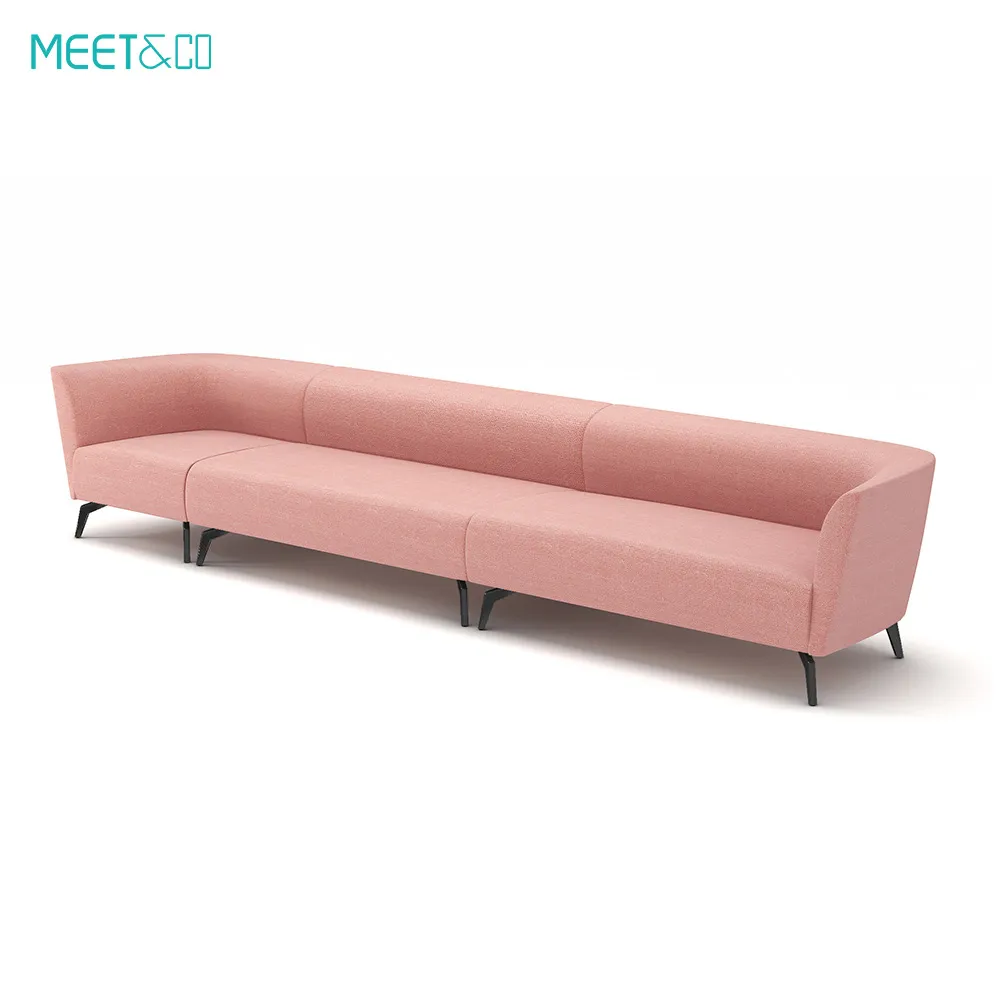
Instead, compact and highly flexible options like the Cloud Fabric Modular Sofa are highly recommended.
This modular piece offers rich seat depth while allowing you to easily change the configuration to match your exact room layout.
Room-by-Room Layout Blueprints
Small Living Rooms (< 150 sq ft): Best restricted to a total furniture length of 60 to 75 inches. Use a 2-seater loveseat or a small modular configuration against the longest wall to maximize central open space.
Medium Living Rooms (150 – 250 sq ft): Perfectly balanced by a standard 84-inch three-seater sofa. This can be paired with a single accent armchair placed at a 45-degree angle to create an intimate conversational grouping.
Large Open-Plan Spaces (> 250 sq ft): Easily handles large L-shaped or U-shaped sectionals stretching 120+ inches. These large pieces act as functional room dividers, separating the living zone from the dining area.
Clearance Distances for Flow and Function
Primary Walkways: Keep a 30 to 36-inch clear path around the sides and back of the sofa so people can move comfortably through the room.
Coffee Table Distance: Leave exactly 14 to 18 inches between the front edge of the sofa seat and the coffee table. This keeps items within easy reach while providing comfortable legroom.
TV Distance: Position the sofa at a distance equal to roughly 3 times the vertical height of the television screen (typically 7 to 10 feet for a 55-inch display) to avoid eye strain.
Practical Guide to Choosing Sofa Size
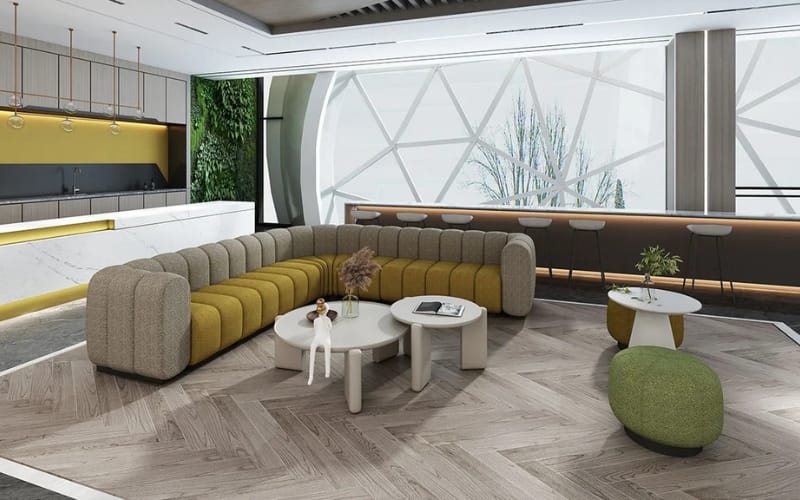
Successful furniture integration relies on measuring your entryways, delivery pathways, and personal physical needs before finalizing any purchase.
A common oversight when ordering a large sectional sofa is measuring the living room floor while completely forgetting about the delivery path.
Standard residential entryways and interior doors measure between 32 and 36 inches wide.
The sofa’s total height or total depth must be less than the narrowest door frame width to pass through horizontally.
For tight stairwells or elevator cabs, you must also check the diagonal clearance and ceiling heights; a minimum vertical clearance of 40 inches is generally required to tilt and turn long frames around corners.
Beyond delivery, consider your household’s physical needs. For premium comfort, plan for 30 inches of seating width per person.
Taller individuals will find better back support with higher backrests (36 inches and up) and deeper seats (24 inches).
Conversely, lower profiles (30 to 32 inches) work perfectly to create an open look in modern, low-ceiling spaces.
If you are ordering a custom or non-standard size, always map out the footprint on your floor using painter’s tape.
This simple trick lets you experience the true scale of the piece before it arrives.
Conclusion
Taking the time to accurately measure your room and check standard sofa dimensions protects your interior investment and guarantees daily comfort.
Finding the ideal balance of size, style, and room scale is straightforward when you use accurate measurements and standard conversion tables.
By cross-referencing your floor plans with verified dimension charts, you can confidently choose a layout that improves the look and flow of your home.
For premium living areas or corporate setups, exploring high-quality furniture from commercial design experts like Meet&Co Office Furniture ensures great structural durability and classic style.
Use these data-driven metrics to guide your next layout project today.