






 Meet&Co
Conference rooms get used in so many different ways. Sometimes it is a formal board meeting with executives in tailored suits. Sometimes it is a brainstorming session where people lean forward, sketch on whiteboards, and move around. Sometimes it is a training session that lasts all day long.
The chairs you put in that room matter.
If the chairs are uncomfortable, people shift around, lose focus, and start thinking about their backs instead of the discussion. If the chairs are too bulky for the room, people bump elbows and struggle to squeeze past each other. If the chairs do not match the table height, everyone slouches or strains.
This guide helps you sort it all out. We will look at the main types of conference chairs, how to match them with your table, what to measure before you buy, and a few solid chairs worth considering — including a leather executive chair, a modern sled‑base chair, and a stackable training chair.
Why Conference Chair Comfort Actually Matters
It is easy to treat conference chairs as an afterthought. You spend time picking the table, choosing the wall colour, and setting up the AV system. The chairs? Just pick something that looks decent and move on.
Here is the problem. People notice chairs. Not consciously, maybe, but they notice.
When a chair has good lumbar support, proper cushioning, and the right height, people sit still longer. They pay attention better. They contribute more. When a chair is uncomfortable — too hard, too low, too wobbly — people start fidgeting. They cross and uncross their legs. They lean on the table. They glance at the clock.
For shorter meetings, this is annoying but manageable. For extended meetings over two hours, it becomes a real issue. Discomfort becomes evident when you sit for prolonged periods without adequate support, and adjusting to find relief becomes a group distraction.
Research backs this up. Proper adjustability and posture support can reduce musculoskeletal strain and help sustain attention across long sessions. The right chair does not just feel better. It helps people work better.
Key Measurements for Your Conference Room
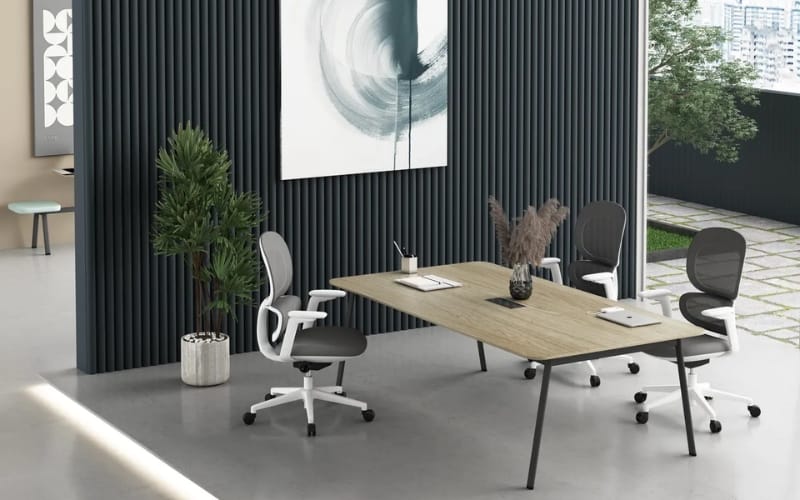
Before you look at any chairs, grab a tape measure. These numbers will save you from buying chairs that do not fit.
1. Table Height and Chair Height
Most conference tables stand 28 to 30 inches tall. Your chair seat should be around 17 to 19 inches high — low enough to slide under the table, high enough that knees do not bump the underside. If the table is on the higher side, look for chairs with adjustable seat height.
2. Clearance Behind Chairs
People need to get in and out without climbing over each other. Leave at least 30 inches of space between the back of a chair and the wall behind it. For main aisles where people walk, aim for 42 to 48 inches so two people can pass comfortably.
3. Space Between Chairs
At the table, allow 24 to 30 inches from the centre of one chair to the centre of the next. This gives each person enough elbow room without making the table feel too spread out. If your table has armrests or bulky chairs, lean toward the higher end of that range.
4. Room Size and Seating Capacity
A practical rule is to allow 10 to 12 square feet per person, including the table and circulation space. A small room under 100 square feet typically fits 4 to 6 people. A larger room over 200 square feet can support 15 or more, depending on the layout.
Also see: Top-Rated Ergonomic Conference Tables for Collaborative Meetings
Main Types of Conference Chairs
Here is a quick overview of the most common styles. Each one suits a different kind of meeting space.
| Chair Type | Best For | Key Features | Typical Chair Width |
|---|---|---|---|
| High‑Back Executive Chair | Formal boardrooms, client meetings | Premium upholstery, ergonomic support, professional look | 22–26 inches |
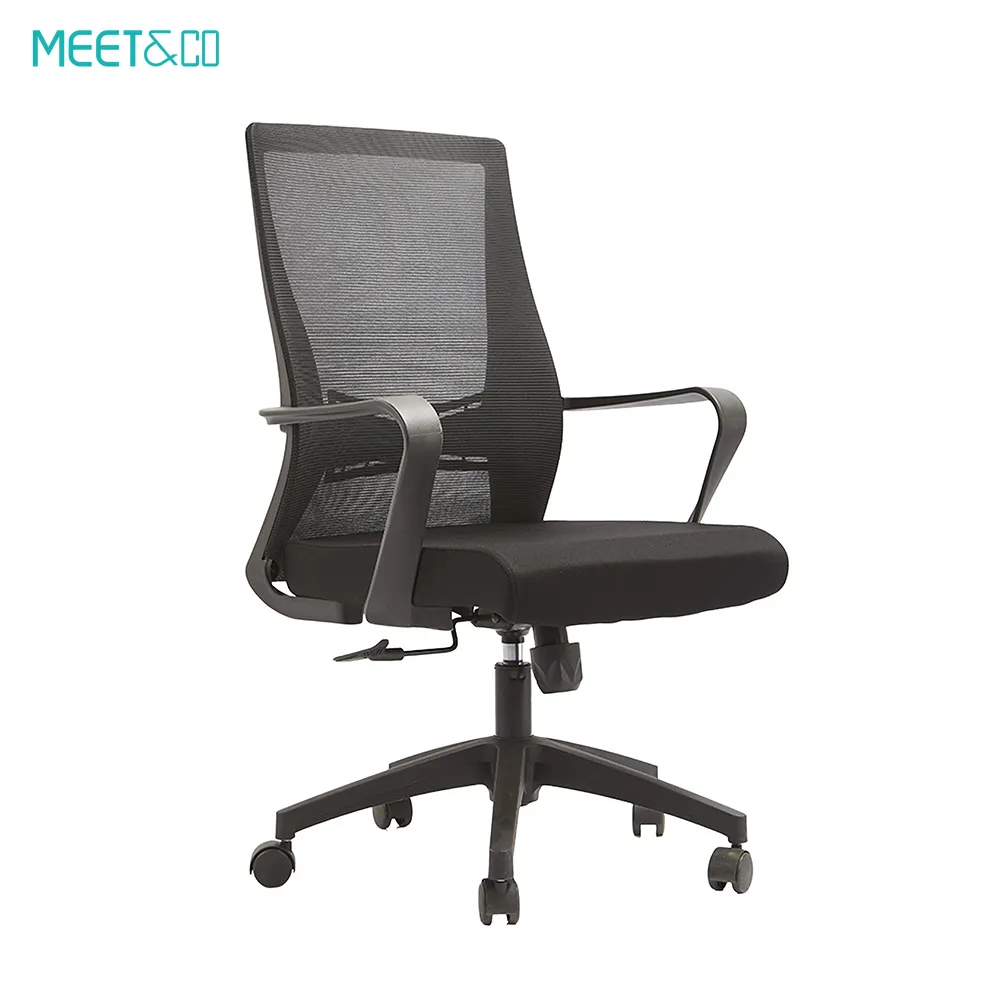
| Mid‑Back Task Chair | Daily use, general conference rooms | Adjustable height, reasonable ergonomics, good value | 20–24 inches |
| Sled‑Base Chair | Modern offices, visitor seating | Sleek metal frame, compact design, slight flex | 19–23 inches |
| Stackable Conference Chair | Multi‑purpose rooms, training spaces | Lightweight, stores vertically up to 10–40 high, mobile | 18–22 inches |
| Training Chair with Tablet Arm | Lecture halls, exam settings | Built‑in writing surface, often nests or stacks | 19–21 inches |
Also see: Types of Conference Room Chairs
How Meeting Length Affects Your Chair Choice
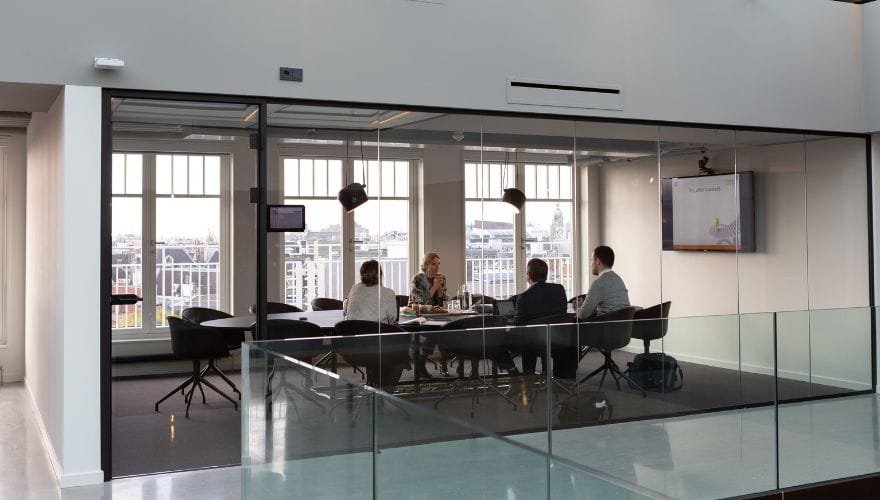
Do not buy the same chairs for a 30‑minute daily stand‑up and a 4‑hour quarterly review. Different durations need different support levels.
✔ Short Meetings (Under 1 Hour)
For quick check‑ins and brief discussions, basic ergonomic support and light cushioning is enough. Fixed‑height chairs work fine. Armrests are optional — people often lean on the table or sit loosely. This is where you can save money without sacrificing much comfort.
A basic sled‑base chair or a simple stackable chair does the job well.
✔ Extended Meetings (Over 2 Hours)
Once meetings go past the two‑hour mark, every small discomfort becomes a big distraction. Look for chairs with at least 2 inches of thick padding and strong lumbar support. Breathable materials — like mesh or perforated leather — help keep things cool.
If the chair has adjustable height, even better. Being able to fine‑tune the fit to each person makes a noticeable difference over long sessions.
A high‑back executive chair or a well‑padded mid‑back task chair is the way to go here.
✔ Full‑Day Training (6+ Hours)
For all‑day sessions, people need more than just good padding. They need to move. Chairs with synchronous tilt (where the seat and back move together) and adjustable lumbar support reduce fidgeting and encourage active listening across long sessions.
Breathable mesh backs are a lifesaver here. Nobody wants to peel themselves off a sweaty leather seat after six hours.
Matching Chairs to Your Conference Table
Rectangular Tables
The most common setup. Arrange chairs along the long sides first. For an 8‑foot table, 4 chairs per long side is comfortable (24 inches per person). You can squeeze 5 per side in a pinch, but elbows will touch.
Round or Oval Tables
These work well for smaller groups and encourage participation. A 48‑inch round table seats 4 comfortably. A 60‑inch table seats 6. Leave a little extra space between chairs because the curve makes armrests bump more easily.
U‑Shape Layouts
Great for training sessions and presentations. The open end leaves room for a presenter. Keep the two wings balanced — too much length on one side makes sightlines awkward.
A Note on Sightlines and Viewing Angles
This is easy to overlook until someone is craning their neck for two hours.
Keep participants within 12 to 16 feet of each other and ensure every seat faces the main display within a comfortable viewing angle. Avoid placing seats directly outside the 60 to 70 degree central viewing cone — peripheral viewers tire quickly and disengage.
In practice, this means arrange chairs so no one has to turn their head more than 30 degrees to see the screen. For long rectangular tables, the people at the ends are often the worst off. A U‑shape layout can help.
3 Conference Chairs Worth Considering
Here are three chairs that cover different ends of the conference room spectrum. One for formal boardrooms, one for modern meeting spaces, and one for flexible training rooms.
1. Meet&Co High Back Leather Chair — For Formal Boardrooms
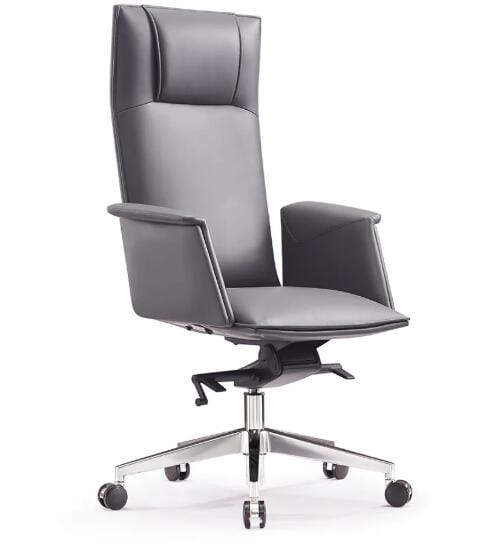
Some meeting spaces need a chair that commands respect. This is that chair.
The Meet&Co High Back Leather Chair is upholstered in genuine leather, which gives it a polished, professional look that clients and executives notice. The high back provides full support from lumbar to upper back — important for longer strategic discussions where people need to stay alert and comfortable.
The chair includes standard ergonomic adjustments: height adjustment to match different table heights, and a tilt mechanism so people can lean back slightly without tipping. The padded armrests add comfort without making the chair too bulky for a standard conference room.
What is worth noting is that this chair offers genuine leather at a price point where many competitors use PU or bonded materials. That makes a difference in how the chair looks and feels over time.
Best for: Executive boardrooms, client-facing meeting spaces, and any conference room where appearance matters as much as comfort.
2. Sled‑Base Conference Chair — For Modern Meeting Spaces
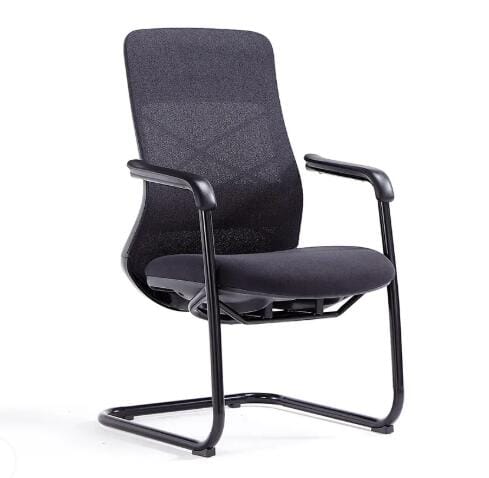
If your conference room has a clean, contemporary look, a sled‑base chair fits right in. The continuous metal frame that curves under the seat gives these chairs a sleek, floating appearance. And because there are no wheels, they stay put exactly where you place them.
Sled‑base chairs have a compact footprint, which makes them a good fit for smaller conference rooms or tight layouts. The frame has a slight springiness, which is more comfortable than it sounds — it gives a little when you lean back, which reduces the feeling of sitting on something rigid.
Many sled‑base chairs are available in breathable mesh backs, which is helpful if your conference room tends to run warm. The mesh keeps air circulating during longer meetings and adds a modern visual texture.
Modern sled‑base chairs often include thoughtful details like integrated linking systems that keep chairs aligned in neat rows without drifting apart. Some newer models also incorporate perforated shells for improved airflow and flex, enhancing ergonomic comfort beyond what you might expect from a fixed‑base chair.
Best for: Design-focused offices, smaller conference rooms, and visitor seating areas.
3. Stackable Conference Chair — For Multi‑Purpose and Training Rooms
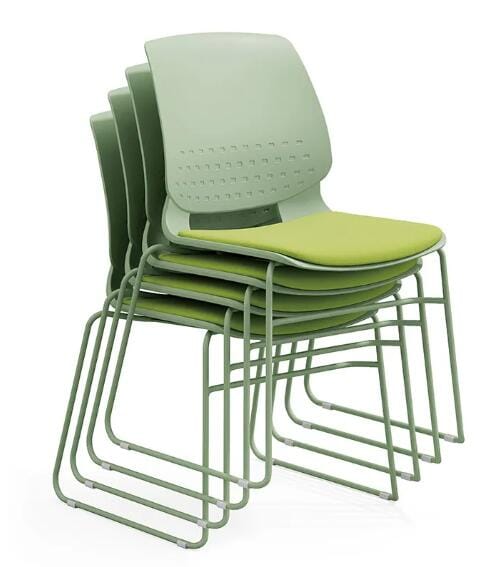
Not every conference room is used only for meetings. Some double as training spaces in the morning, lunchrooms at noon, and overflow workspaces in the afternoon. For those rooms, stackable chairs are a practical choice.
A good stackable chair is lightweight, easy to move, and stores vertically when not in use. Many models can be stacked 10 to 12 high on a rolling dolly, which means you can turn a room full of chairs into a clear floor in a few minutes. Some advanced designs can stack up to 40 units high, making them remarkably space‑efficient.
Do not assume that stackable means uncomfortable. Quality stackable chairs include contoured backrests, decent seat padding, and sometimes even breathable mesh backs with bounce‑back support. For all‑day training sessions, look for models with at least 2 inches of thick cushion and integrated lumbar support.
If your training room uses individual tablets or laptops, consider a stackable chair with a fold‑away writing tablet. These are common in lecture halls and exam settings because they save floor space by eliminating separate desks.
The BROBRIYO Stackable Mesh Conference Chair is a good example of this category. It is lightweight, stackable, and includes a folding mechanism that allows for incredibly compact storage. The 2X thick cushion and bounce‑back mesh backrest keep people comfortable during long sessions.
Best for: Training rooms, multi‑purpose spaces, and any conference room that needs to switch between different uses throughout the week.
Quick Comparison Table
| Feature | High‑Back Executive Chair | Sled‑Base Chair | Stackable Conference Chair |
|---|---|---|---|
| Best for | Formal boardrooms, client meetings | Modern meeting spaces, visitor areas | Training rooms, multi‑purpose spaces |
| Typical seat height | 18–20 inches (adjustable) | 17–19 inches (usually fixed) | 17–19 inches (varied) |
| Armrests | Padded, height‑adjustable | Often integrated, fixed | Flip‑up or removable |
| Mobility | Casters for movement | Stationary | Lightweight, sometimes castered |
| Storage | Takes up dedicated space | Takes up dedicated space | Stacks up to 10–40 high |
| Best meeting length | 2+ hours | Under 2 hours | Flexible |
A Word About Conference Tables
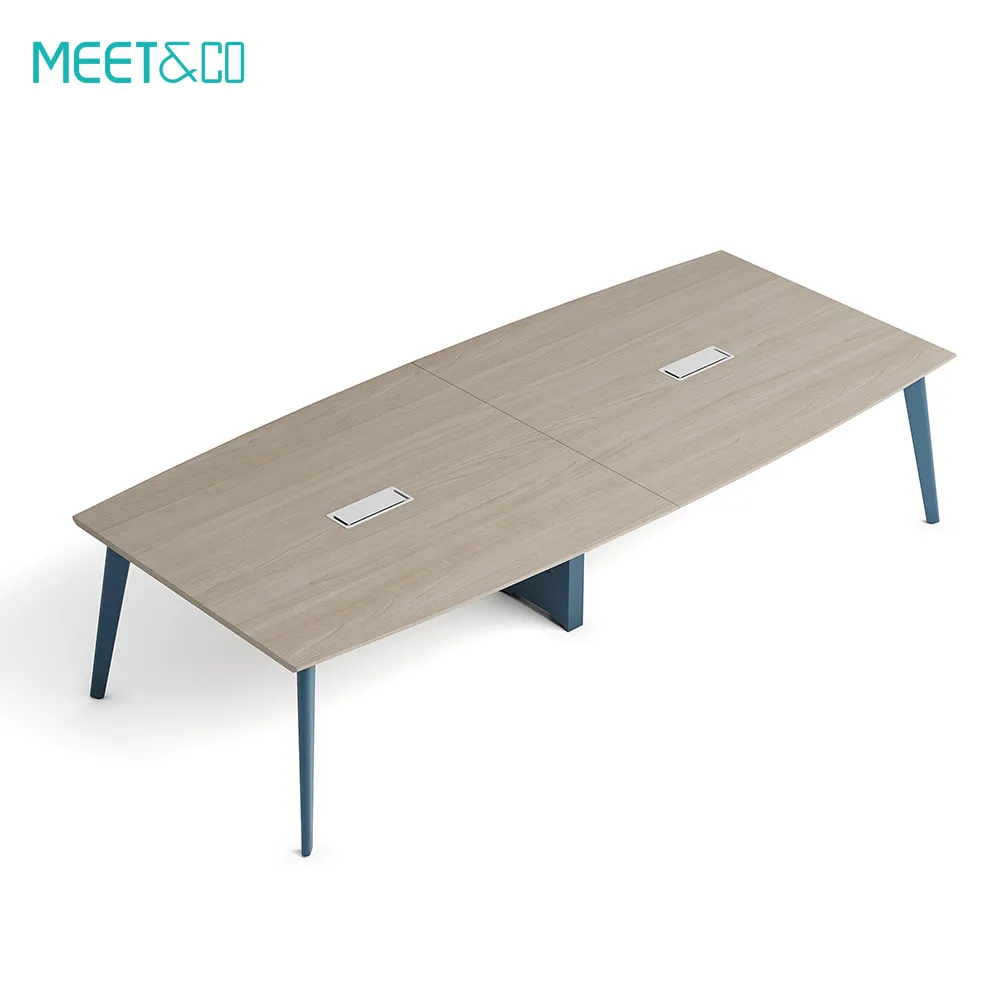
Do not forget the table itself. It is the partner to your chairs, and the two need to work together.
Table height. Standard is 29 to 30 inches. If you choose a taller table (common in some training rooms), make sure your chairs can adjust up to match. A mismatch means people sit with their shoulders hunched or their knees pressed against the underside.
Table width. For a room with chairs on both sides, a minimum of 36 to 42 inches of table width lets two people across from each other use laptops without crowding. More is better if people need to spread out papers or prototypes.
Table edges. A hard 90‑degree edge digs into forearms. Rounded or beveled edges are more comfortable and look more polished.
Table legs or pedestals. If the table has thick legs at the corners, people sitting at the ends might find their knees blocked. A central pedestal base or careful leg placement makes a difference for comfort.
Frequently Asked Questions (FAQ)
1. How many chairs fit around a conference table?
For rectangular tables, plan 24 to 30 inches per person along each side. A 6‑foot table fits 3 people per side comfortably (6 total). An 8‑foot table fits 4 per side (8 total). For round tables, a 48‑inch table seats 4, a 60‑inch seats 6. Always leave the ends clear for access unless the room is very tight.
2. Should conference chairs have wheels or casters?
It depends. In a boardroom where chairs stay in place most of the time, stationary chairs (sled‑base or four‑leg) work fine. They look cleaner and do not drift. In a training room or flexible meeting space where chairs get moved often, casters are helpful. Just make sure the wheels roll smoothly on your floor — soft casters for hardwood, larger wheels for carpet.
3. What is the difference between a conference chair and an office task chair?
Conference chairs are designed for shorter, more formal meetings. They prioritize a professional appearance and basic comfort, usually with fixed armrests and limited adjustments. Office task chairs are built for daily, long‑duration use. They have more adjustments — seat depth, lumbar height, tilt tension, multi‑direction armrests — and generally better ergonomics. If the same chair will be used for both purposes, lean toward a task chair. If the room is used only occasionally for meetings, a conference chair is fine.
4. Is leather or mesh better for conference chairs?
For formal boardrooms where appearance is the priority, leather (or high‑quality PU leather) looks more executive. For long sessions where people need to stay cool, mesh backs are more breathable and comfortable. Some chairs split the difference: leather seat for appearance, mesh back for breathability. Think about your climate and how long your typical meetings run.
_15.webp)


_9.webp)
