






 Meet&Co
Finding the perfect seating for your entertainment or workspace can be a daunting task.
When setting up a high-profile lounge or a casual breakroom, the most common question is: what height chairs for bar table setups provide the best comfort?
Choosing the wrong size not only ruins the aesthetic but leads to physical discomfort.
In this comprehensive guide, we leverage five years of industry experience to help you navigate dimensions, legroom, and ergonomic support.
Whether you are furnishing a commercial venue or a home kitchen, understanding the relationship between surface and seat is crucial for a professional finish.
Experts at Meet&Co suggest that the harmony between your table and chair determines how long a guest or employee will stay engaged in the space.

The Fundamental Rule: The 10-12 Inch Gap
The secret to comfortable seating lies in the “Golden Gap.”
Regardless of the specific bar table you choose, the distance from the top of the chair seat to the underside of the table should ideally be between 10 to 12 inches (25-30 cm).
This space allows for comfortable leg movement and prevents the user’s thighs from pressing against the table structure.
However, this is not a one-size-fits-all rule. If your table has a thick “apron” (the wooden or metal frame right under the tabletop), you may need to lean toward the 12-inch side of the spectrum.
Conversely, for thin-profile modern bar tables, 10 inches might feel perfectly adequate.
Comprehensive Height Comparison Chart
| Surface Category | Typical Table Height | Recommended Seat Height | Common Usage |
|---|---|---|---|
| Counter Height | 34″ – 36″ | 24″ – 26″ | Kitchen islands, casual dining |
| Standard Bar Height | 40″ – 42″ | 28″ – 30″ | Traditional pubs, home bars |
| Extra Tall / Pub Height | 45″ – 48″ | 33″ – 36″ | Commercial venues, balcony rails |
Beyond the Ruler: Professional Factors to Consider
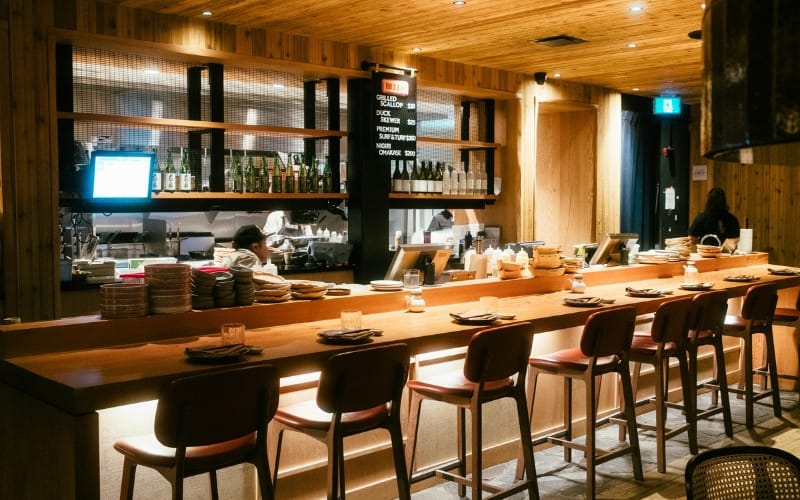
1. Cushion Compression and “Real” Height
One of the most frequent mistakes in tables for a bar planning is ignoring the “sink factor.”
A wooden stool at 30 inches stays at 30 inches. However, a luxury upholstered stool with 4 inches of high-density foam might sink 2 inches when a person sits down.
To maintain the 10-inch gap, you must measure the “compressed” height.
If you buy a chair that is technically the right height but has very soft padding, you may end up feeling like a child at the adult table.
2. The Role of Ergonomics in High Seating
While many focus on the table, the chair’s design is equally vital.
In modern office environments, designers are moving away from rigid stools toward an ergonomic chairs approach even at high surfaces.
This includes lumbar support and adjustable footrests.
Unlike a good office chair used at a standard desk, a bar-height chair relies heavily on the footrest for stability.
If the footrest is too low, the user’s legs will dangle, cutting off circulation.
3. Navigating the Bar Room Table Environment
Creating an inviting bar room table area requires more than just vertical accuracy. You must consider horizontal “elbow room.”
For stools with a width of 16-18 inches, you should leave about 6 inches between each chair.
If your chairs have armrests or are wider (20 inches+), increase that gap to 8-10 inches to ensure people can turn and exit the seat without bumping into their neighbor.
Measuring Like a Professional Editor
To get the measurement right for your what height chairs for bar table query, follow these steps:
Measure from the floor to the bottom of the table: Do not measure to the top of the table. The clearance for your knees is defined by the lowest point of the table’s underside.
Check for Obstructions: Look for support beams, crossbars, or drawers. If a drawer sticks down 3 inches, your chair height must be calculated based on the bottom of that drawer.
Determine the Quantity: Measure the total length of the table and divide by the seat width plus the 6-10 inch buffer mentioned above.
Special Considerations: Commercial vs. Residential
In a commercial setting, durability is as important as height.
While you might want a comfortable office chair for your home study, a commercial bar requires materials that can withstand high turnover.
Metal frames with reinforced footrests are standard for high-traffic zones.
However, for those working from a high counter at home, seeking features of a comfortable office chair—such as a swivel base and breathable mesh—is highly recommended to prevent fatigue during long shifts.
The Dilemma of Custom Table Heights
Occasionally, you may encounter a custom-built DIY table that doesn’t fit standard categories.
In these cases, avoid the fixed-height stool trap. Pneumatic or gas-lift stools are the perfect solution.
They allow users of different heights to find their own comfort zone.
This flexibility is a hallmark of quality Meet&Co Office Furniture, where adaptability meets sleek design.
Conclusion: Perfecting Your Setup
Answering the question of what height chairs for bar table setups is the first step in creating a functional, beautiful space.
By sticking to the 10-12 inch rule, accounting for cushion compression, and ensuring adequate horizontal spacing, you transform a simple piece of furniture into a professional-grade station.
Remember, whether you are picking out a bar table for a trendy bistro or an ergonomic stool for a standing desk conversion, the comfort of the user is the ultimate metric of success.


_4.webp)