





 Meet&Co
So you are looking for visitor chairs. Maybe you are setting up a new conference room. Maybe your reception area needs an update. Or maybe you just realized that the chairs your guests sit on are honestly pretty embarrassing.
Here is the thing about visitor chairs — people do not talk about them much. But they notice. A client sits in your office for a 30‑minute meeting. If that chair is wobbly, too low, or just plain uncomfortable, they walk away with a quiet impression that something is off.
The good news? Choosing good visitor chairs is not hard. You just need to avoid a few common traps.
Let us walk through five mistakes people make when buying office visitor chairs — and how to get it right instead.
Mistake 1: Choosing Looks Over Comfort
It is easy to fall for a chair that looks great in a catalog. Clean lines. Beautiful leather. Matches your desk perfectly.
But here is what happens. The chair arrives. You put it in your office. A visitor sits down for a 45‑minute conversation. Ten minutes in, they start shifting around. Twenty minutes in, they are clearly uncomfortable. By the end, they are relieved to stand up.
What to do instead. Comfort matters for short sits too. A good visitor chair should have decent padding (not rock‑hard, not sink‑in soft) and a backrest that actually supports the lower back. If possible, sit in the chair yourself before buying. Spend five minutes in it. Does it feel okay? Would you want to sit there during a long meeting?
A quick check. Press your hand into the seat cushion. Does it spring back, or does it feel thin? Thin padding means trouble.
Mistake 2: Focusing Only on the Price Tag
Everyone likes a good deal. But when it comes to visitor chairs, the cheapest option often ends up costing more.
Low‑price chairs use low‑density foam that flattens within months. They use thin upholstery that tears or stains easily. The frames wobble. The gas lifts fail. And because there is no warranty to speak of, you end up buying replacements — sometimes twice as often as you expected.
What to do instead. Think about total cost, not just the price today. A $120 chair that lasts three years is actually cheaper than a $60 chair that needs replacing every year. Look for chairs with sturdy frames (steel or reinforced nylon), decent foam density, and a warranty that shows the manufacturer stands behind their product.
A quick check. Flip the chair over. What is the frame made of? Metal or reinforced nylon is good. Thin plastic? Probably not.
Mistake 3: Forgetting to Measure Your Space
This happens more often than you think. You find chairs you love. You order them. They arrive. And… they do not fit.
Maybe they are too wide for the space between your desk and the wall. Maybe the arms hit the underside of the conference table. Maybe there is no room to walk past them. Suddenly, your nice new chairs are in the way.
What to do instead. Measure everything before you order. Not just the chair width — measure the space where the chair will go. Leave room for people to walk past (at least 24 inches of clearance). Check the table height if the chairs will tuck underneath. Think about doorways if you need to move chairs between rooms.
A quick check. Tape the chair‘s footprint on your floor. Can you comfortably walk around it? Can someone sit down without banging their knees?
Also see: Best Office Guest Chair for Your Office in 2026
Mistake 4: Overlooking the Wrong Upholstery for Your Space
Visitor chairs go through a lot. Coffee spills. Rainy umbrellas. Scuffs from bags. Different rooms need different materials, and choosing the wrong one can mean constant cleaning or early replacement.
For high‑traffic reception areas. Vinyl, PU leather, or stain‑resistant fabric is your friend. These materials wipe clean easily and hold up to daily use. Light‑colored fabric? Probably not worth the risk.
For private offices. Here you can lean into fabric or genuine leather if it fits your style. The traffic is lighter, so you have more freedom.
For conference rooms. Think about how the chair will be used. Are people eating lunch during meetings? Do guests often bring coffee? A material that resists stains will save you headaches.
A quick check. Pour a few drops of water on the upholstery (ask the supplier for a sample). Does it bead up and wipe off, or does it soak right in?
Mistake 5: Not Testing Before Buying in Bulk
You need twelve visitor chairs for your conference room. You find a good price online. You order twelve. They arrive. And they are not comfortable. Or they are smaller than you expected. Or the color is different from what you saw on your screen.
Now you are stuck with twelve chairs you do not really want.
What to do instead. If you are buying multiple chairs, try one first. Order a single sample. Put it in your space for a few days. Have a few people sit in it. See how it holds up. Only then — if everyone is happy — place the larger order.
A quick check. Ask the supplier about their sample policy. A good supplier will let you try before you commit to a bulk order.
| Mistake | Why It Hurts | How to Avoid It |
|---|---|---|
| Looks over comfort | Uncomfortable guests, bad impressions | Sit in the chair yourself for 5+ minutes |
| Only looking at price | Hidden costs, early replacement | Compare total cost over 3–5 years |
| Not measuring space | Chairs that do not fit, blocked walkways | Tape the footprint, measure everything |
| Wrong upholstery | Stains, wear, constant cleaning | Match material to traffic level |
| Skipping a test | Regret on bulk orders | Order one sample chair first |
3 Great Office Visitor Chairs to Consider
Here are three solid options for different spaces and needs.
1. Meet&Co Verta Lounge Chair — Best for a Warm, Inviting Reception
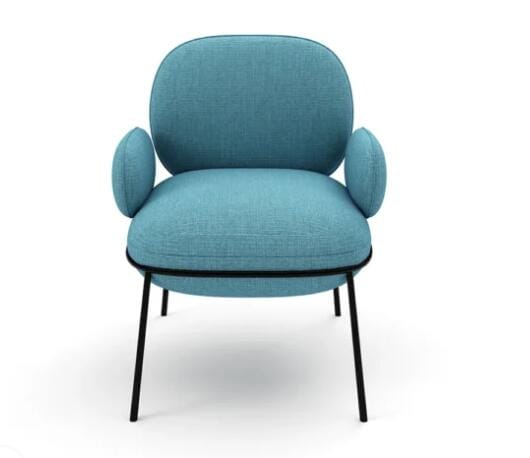
If you want your reception or lounge area to feel genuinely welcoming, this chair is worth a look. The Verta Lounge Chair blends modern design with real comfort.
The curved backrest and armrests are shaped to provide good lumbar support, cradling the body naturally. The fabric upholstery comes in several soft, vibrant colors — think calming blues, deep greens, and warm oranges — so you can match your office‘s personality. The black‑coated metal frame is sturdy but visually light, so the chair does not feel bulky in smaller spaces.
Best for: Reception areas, lounge spaces, and boutique offices where guests may wait 15–30 minutes. Also a great choice if you want your visitor seating to look and feel more like comfortable living room furniture than traditional office chairs.
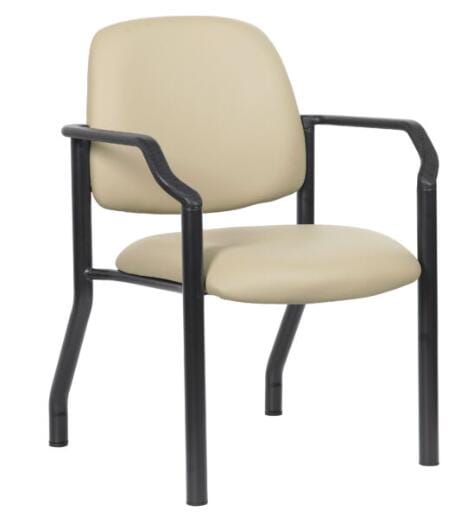
2. Boss Office Products Heavy Duty Guest Chair — Best for Conference Rooms and High‑Traffic Spaces
http://boss-chair.com/product/boss-mid-back-guest-chair-300-lb-capacity-antimicrobial-vinyl-beige/
Boss Office Products is a well‑known name in commercial seating. This heavy‑duty guest chair is built for conference rooms, waiting areas, and any space where chairs see constant use.
The chair features a tubular steel frame that feels solid and stable. The contoured cushioned seat and back provide good support for shorter meetings — visitors will not feel like they are sitting on a board, but the chair does not swallow them up either. The upholstery is vinyl, which means it wipes clean easily and resists stains. Assembly is straightforward, and the chair comes with a solid warranty.
Best for: Conference rooms, training rooms, and medical waiting areas. Also a smart pick if you are furnishing multiple offices and need a consistent, durable option.
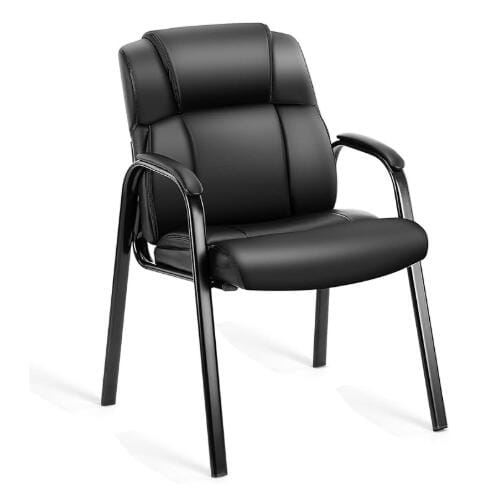
3. OLIXIS Modern Cantilever Guest Chair — Best for a Sleek, Contemporary Look
https://www.amazon.com/OLIXIS-Waiting-Reception-Stationary-Conference/dp/B0FH4LBBT5?th=1
If your office has a modern aesthetic, the OLIXIS cantilever guest chair fits right in. The sled‑base design (a continuous metal frame that curves under the seat) gives the chair a clean, floating look. It is stable, slightly springy, and surprisingly comfortable.
The seat and back are padded with high‑density foam and upholstered in easy‑clean PU leather. The chair is available in several colors, so you can coordinate with your existing decor. The armless design makes it easy to tuck under tables and saves space in tighter layouts.
Best for: Executive offices, design‑forward conference rooms, and reception areas that want a sleek, modern vibe. Also a great choice if space is limited — the armless profile fits neatly under most desks and tables.
Visitor Chair Quick Comparison
| Chair | Best For | Key Feature | Upholstery | Armrests | Weight Capacity |
|---|---|---|---|---|---|
| Meet&Co Verta Lounge Chair | Reception, lounge areas | Curved ergonomic back, vibrant colors | Fabric | Yes | Standard |
| Boss Heavy Duty Guest Chair | Conference rooms, high traffic | Tubular steel frame, easy‑clean vinyl | Vinyl | Yes | 250+ lbs |
| OLIXIS Modern Cantilever | Executive offices, modern spaces | Sleek cantilever design, armless | PU leather | None | 300 lbs |
Frequently Asked Questions (FAQ)
1. What is the best material for office visitor chairs?
It depends on where the chairs will live. For reception areas and high‑traffic spaces, vinyl or PU leather is the smart choice — it wipes clean easily and holds up to daily use. For private offices, fabric or genuine leather can work well if traffic is lighter. For conference rooms where people may eat or drink, choose something stain‑resistant.
2. How many visitor chairs do I need for my conference room?
A good rule of thumb: measure your table length and allow about 24 inches of elbow room per person. For a standard 96‑inch conference table, that is four chairs per side (eight total). Leave extra space at the ends for people to get in and out easily.
3. Should visitor chairs have armrests?
Armrests are helpful for older visitors or anyone who needs support standing up. However, armless chairs take up less space and can be easier to tuck under a desk or table. A good approach: offer a mix. In a conference room, chairs at the ends of the table can have armrests; chairs along the sides can be armless.
4. What is a typical weight capacity for visitor chairs?
Most standard visitor chairs support between 250 and 300 pounds. If your office serves a diverse range of visitors, consider including a few chairs with higher weight ratings (400–500 pounds) as part of an inclusive seating plan.
Final Thoughts
Here is the truth. Visitor chairs are not the most exciting purchase you will ever make. But they matter more than you might think.
A comfortable, sturdy, well‑chosen chair tells your visitors something about you. It says you pay attention to details. It says you care about the people who walk through your door.
So take a few extra minutes. Measure your space. Think about your traffic. Order a sample if you are buying in bulk. And when you find the right chairs — comfortable, durable, and right for your office — you will be glad you did.
Your visitors will never say a word about it. But they will notice. And that is the whole point.
Looking for more office seating? Check out our guides on office guest chairs and conference room furniture for more ideas.


_17.webp)