





 Meet&Co
The medical waiting room is the first physical touchpoint a patient has with your practice. It sets the tone for their entire experience. Long before they see a doctor, they’re sitting in your waiting room—often anxious, sometimes in pain, always observing. The chairs they sit on send a powerful message about your practice’s professionalism, attention to detail, and patient-centered philosophy.
In 2026, choosing waiting room chairs for medical offices involves more than picking a color that matches the walls. It’s about balancing infection control, durability, patient comfort, and accessibility. This guide walks you through the key decision factors and recommends three top-tier options built specifically for healthcare environments.
Why Medical Waiting Room Chairs Are Different
Unlike office waiting areas, medical offices face unique demands:
-
Infection control: Surfaces must withstand frequent disinfection without degrading.
-
Durability: Chairs endure heavy use from patients who may be unwell, anxious, or have mobility challenges.
-
Comfort: Patients may wait for extended periods, sometimes while experiencing pain or stress.
-
Accessibility: Seating must accommodate patients of all sizes and mobility levels, including bariatric individuals and wheelchair users.
-
Easy maintenance: Spills, stains, and bodily fluids are realities. Chairs must be easy to clean and sanitize.
How to Choose the Right Medical Waiting Room Chairs
| Feature | Why It Matters for Medical Offices |
|---|---|
| Bleach-cleanable upholstery | Enables proper disinfection without damaging the material |
| Seamless, non-porous surfaces | Prevents bacteria from harboring in crevices |
| High-density foam | Resists compression and sagging under heavy use |
| Reinforced frame | Withstands years of daily use; look for kiln-dried hardwood or heavy-gauge steel |
| Moisture barrier | Prevents liquids from soaking into cushioning |
| Bariatric options (500+ lbs capacity) | Accommodates diverse patient body types |
| Armrests for sit-to-stand support | Helps elderly or mobility-impaired patients rise safely |
| Replaceable components | Extends chair life; cushions, arms, and covers can be swapped rather than replacing entire chairs |
| Certifications | GREENGUARD Gold (low emissions), BIFMA (commercial durability), and ISO infection control standards |
Top 3 Medical Waiting Room Chairs for 2026
Here are three exceptional options that balance infection control, durability, and patient comfort. Each is purpose-built for healthcare environments.
| Product | Key Feature | Upholstery | Best For |
|---|---|---|---|
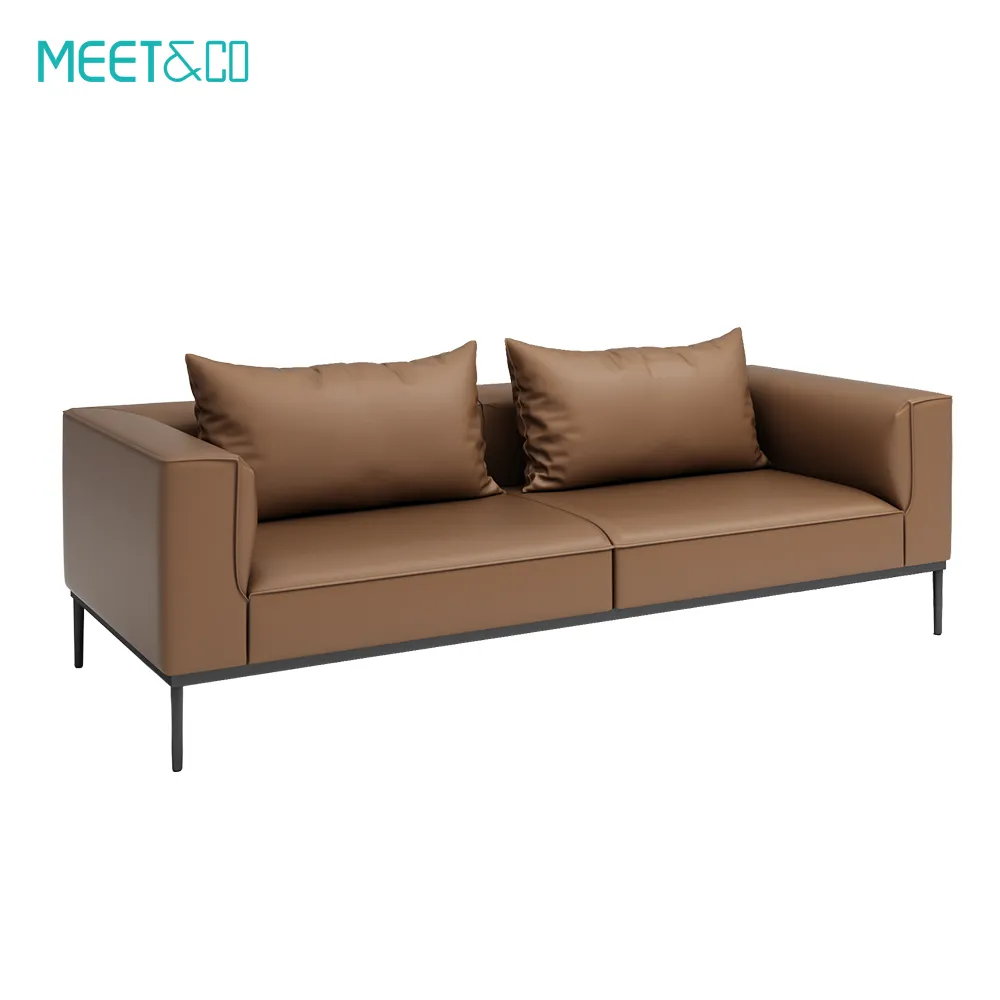
| Meet&Co Rose Casual Leather Sofa | Soft faux leather; generous padding; sleek modern design | Faux leather (wipe-clean) | Small to mid-size clinics, reception areas, boutique medical offices |
| KI Affina Healthcare Seating | Comprehensive healthcare collection; bariatric and recliner options | Antimicrobial fabric or vinyl; bleach-cleanable | Hospitals, large clinics, multi-specialty practices |
| Krug Cressida Seating System | Long-life cycle; fully replaceable components; anti-microbial wood veneer | Premium dual-density foam; optional anti-microbial fabric | High-volume clinics, public health facilities, long-term care |
1. Meet&Co Rose Casual Leather Sofa
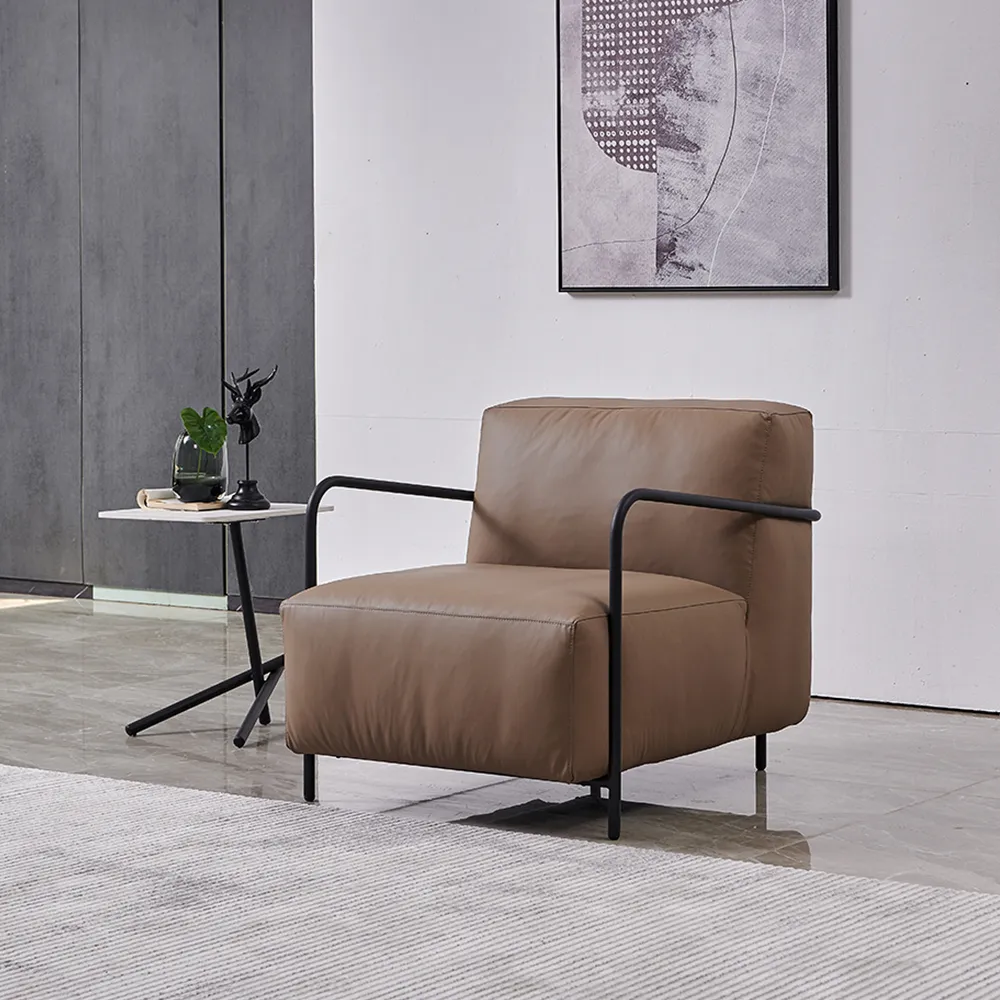
The Meet&Co Rose Casual Leather Sofa is designed for medical offices that want a residential aesthetic without compromising on cleanability. Its soft faux leather upholstery and generous padding create a welcoming, calming atmosphere—critical for reducing patient anxiety. The sleek, minimalist silhouette fits seamlessly into modern reception areas and small waiting rooms.
Key Features:
-
Faux leather upholstery: Non-porous and wipe-clean; resists stains and can be disinfected with mild solutions.
-
High-resilience foam filling: Thick foam conforms to ergonomic curves, reducing fatigue during longer waits.
-
Sturdy frame construction: Built to withstand daily commercial use.
-
Customizable options: Available in multiple colors to match your practice’s branding (factory-direct with 1–3 year warranty).
-
Modern, inviting design: Creates a cozy, residential feel that puts patients at ease.
Why it’s great for medical offices: The faux leather surface is easy to wipe down between patients, while the comfortable padding ensures even anxious visitors can relax. It’s ideal for smaller practices where aesthetics and infection control are equally important.
Best for: Dental clinics, dermatology offices, boutique medical practices, and small waiting areas.
2. KI Affina Healthcare Seating
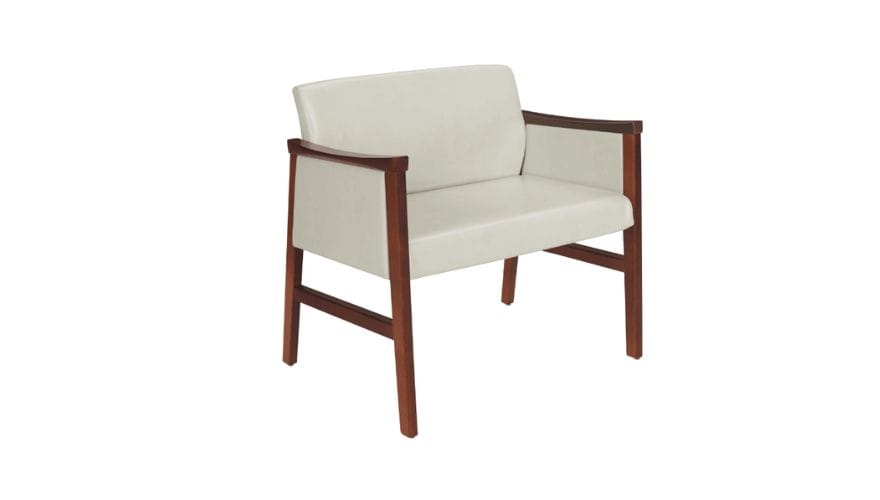
Image source: https://www.ki.com/products/by-collection/affina/
The KI Affina collection, designed by renowned designers Paul James and Dan Cramer, is a comprehensive healthcare seating system engineered for clinical environments. Affina offers visual continuity from the lobby to the patient room, creating a cohesive, calming experience throughout the facility.
Key Features:
-
Comprehensive product range: Includes guest seating, modular options, bariatric chairs, recliners, sleepover seating, and pediatric pieces.
-
Durable frame: Kiln-dried hardwood and furniture-grade plywood with mortise and tenon joinery for exceptional strength.
-
Comfort-focused cushioning: Multiple densities of polyurethane foam with Dacron fiber for a soft-yet-supportive feel.
-
Infection control ready: Available with antimicrobial fabrics and vinyls that withstand rigorous cleaning.
-
Patient-centered design: Developed with emphasis on patient, family, and caregiver comfort while maintaining visual elegance.
Why it’s great for medical offices: Affina is a complete healthcare seating ecosystem. You can outfit an entire facility—from the main lobby to exam room corridors—with a consistent design language. The bariatric and easy-access options ensure all patients are accommodated.
Best for: Hospitals, large multi-specialty clinics, outpatient surgery centers, and healthcare systems requiring consistent design across multiple locations.
3. Krug Cressida Seating System
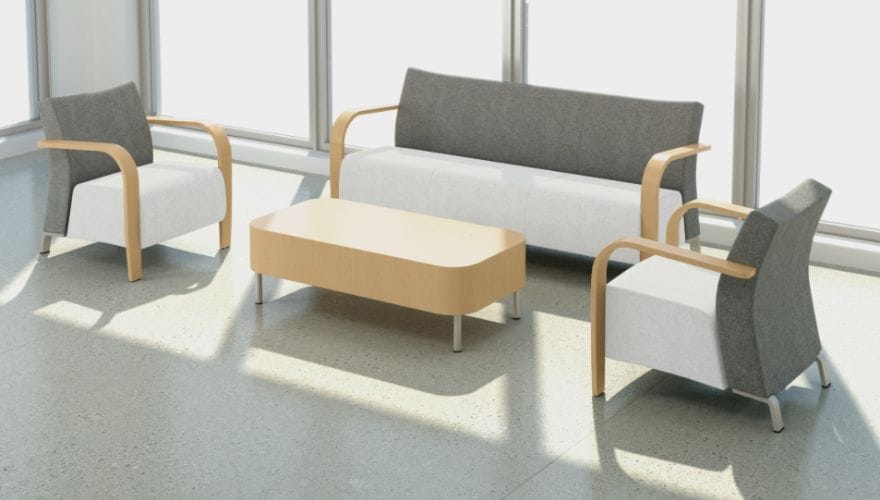
Image source: https://krug.ca/product/cressida-lounge/
The Krug Cressida system is engineered for the most demanding healthcare environments. It combines the warmth of wood with the durability and infection-control properties of metal, creating a seating solution that is both beautiful and virtually indestructible.
Key Features:
-
Infinite life cycle: All components—cushions, arms, frames—are replaceable if damaged or degraded. The system can be disassembled and reassembled for thorough cleaning and disinfection.
-
Strongest frame system: Lab-tested to be Krug’s most durable frame, designed for many years of heavy use.
-
Premium dual-density foam: Used in both seat and back for exceptional comfort and durability.
-
Anti-microbial wood veneer: Combines the warmth of natural wood with infection-control properties.
-
Slim, graceful proportions: Uplifting lightness of scale disguises exceptional strength, avoiding an institutional look.
Why it’s great for medical offices: Cressida is built for the long haul. In high-volume settings where chairs see hundreds of patients daily, the ability to replace individual components rather than entire chairs significantly reduces total cost of ownership. The full-disassembly capability also allows for deep cleaning that most other chairs cannot accommodate.
Best for: High-volume public health clinics, VA hospitals, emergency department waiting areas, and any facility where infection control and longevity are paramount.
👉Also see: How to Make a Waiting Room Feel Less Like a Waiting Room
Infection Control: The Non-Negotiable Factor
In medical settings, infection control is not optional. The upholstery and construction of your waiting room chairs directly impact your ability to maintain a hygienic environment.
Best Upholstery Options for Medical Offices
| Upholstery Type | Cleanability | Durability | Comfort | Best For |
|---|---|---|---|---|
| Vinyl | Excellent (bleach-cleanable) | High | Moderate (can be sticky in heat) | High-turnover, high-infection-risk areas |
| Faux leather (PU) | Good (wipe-clean; limited bleach tolerance) | Moderate to high | Good (softer than vinyl) | General medical offices, dental clinics |
| Crypton / Performance fabric | Good (bleach-cleanable options available) | High | Excellent (breathable) | Lower-risk settings where fabric is preferred |
| Anti-microbial coated fabric | Excellent (meets ISO 18184, 21702) | High | Good | Hospitals, public health facilities |
What to Avoid
-
Standard fabric: Absorbs spills, harbors bacteria, difficult to properly disinfect.
-
Leather: Porous; can be damaged by harsh disinfectants.
-
Wood with open grain: Absorbs moisture and bacteria; hard to sanitize.
Pro tip: Look for upholstery that meets ISO 18184 (antiviral activity on textile products) and ISO 21702 (antiviral activity on plastic and non-porous surfaces) for verified infection control.
Comfort and Accessibility Considerations
Patient comfort in a waiting room is about more than soft cushions.
1. Ergonomic Features for Medical Settings
-
Seat height (17–19 inches): Allows patients of varying heights to sit and stand comfortably.
-
Armrests: Essential for elderly or mobility-impaired patients to push up to standing.
-
Seat depth (18–22 inches): Accommodates different leg lengths; waterfall edges reduce pressure behind knees.
-
Lumbar support: Reduces fatigue during longer waits.
-
Bariatric options: Wider seats (24–32 inches) and higher weight capacities (500+ lbs).
2. Accessibility Guidelines
-
Clear floor space: Allow 30 x 48 inches adjacent to accessible seating.
-
Aisle width: Minimum 36 inches between seating rows for wheelchair passage.
-
Transfer heights: Seat height between 17–19 inches for safe transfers.
Durability and Total Cost of Ownership
Medical waiting room chairs are a long-term investment. Consider total cost of ownership, not just upfront price.
| Cost Factor | What to Look For |
|---|---|
| Frame warranty | Minimum 5 years; lifetime for premium brands |
| Upholstery warranty | 3–5 years for vinyl/faux leather; 1–3 years for fabric |
| Replaceable components | Cushions, armrests, and covers should be available as spare parts |
| Cleaning frequency | Chairs that withstand daily disinfection last longer |
Frequently Asked Questions about Waiting Room Chairs for Medical Offices
1. What is the most hygienic material for medical waiting room chairs?
Vinyl is widely considered the most hygienic because it is non-porous, impervious to bacteria, and can withstand frequent bleaching without degrading. Faux leather (PU) is a close second, offering a softer feel while remaining wipe-clean. Avoid standard fabric, which is difficult to disinfect properly.
2. How often should medical waiting room chairs be cleaned and disinfected?
In high-risk areas (emergency departments, infectious disease clinics), chairs should be disinfected after each patient encounter. In general medical offices, a schedule of multiple times daily for high-touch surfaces and daily for full-chair disinfection is recommended. Quarterly deep disinfection can significantly reduce airborne bacteria and extend furniture life.
3. Can I use residential furniture in a medical waiting room?
Not recommended. Residential furniture is not built for the heavy use, cleaning protocols, or infection control requirements of a medical setting. It will degrade quickly, cannot be properly disinfected, and may not meet accessibility or fire safety codes.
4. What is the typical weight capacity for medical waiting room chairs?
Standard chairs typically support 250–350 lbs. Bariatric options are available with capacities of 500–800 lbs and wider seat dimensions (24–32 inches). Always verify weight ratings from the manufacturer.
5. How do I choose between individual chairs and modular seating?
-
Individual chairs: Offer flexibility for reconfiguration; easier to replace damaged units. Good for smaller waiting areas.
-
Modular seating (benches, connected units): Maximizes seating density; creates a more organized, less chaotic appearance. Better for high-volume areas.
6. What certifications should I look for?
-
BIFMA: Verifies commercial-grade durability
-
GREENGUARD Gold: Ensures low chemical emissions for indoor air quality
-
ISO 18184 / 21702: Confirms antiviral and antimicrobial properties
-
CAL 117 or 133: Fire safety compliance for upholstered furniture
Conclusion
Choosing waiting room chairs for medical offices in 2026 means balancing four critical factors: infection control, durability, patient comfort, and accessibility. The right seating protects patients and staff, reduces long-term costs, and creates a calming first impression.
-
Choose Meet&Co Rose Casual Leather Sofa for smaller practices that want residential aesthetics with easy-clean faux leather.
-
Choose KI Affina for large healthcare systems needing a complete, cohesive seating solution with bariatric and recliner options.
-
Choose Krug Cressida for high-volume environments where replaceable components and full-disassembly cleaning capabilities are essential for long-term value.
Before purchasing, request upholstery swatches to test cleanability, verify weight capacities and certifications, and consider a pilot installation. Your patients will notice—and appreciate—the difference.