





 Meet&Co
Every school procurement decision involves trade-offs. When it comes to student seating, the choice between plastic chairs and wooden chairs is one of the most common—and most debated. Both materials have been used in classrooms for decades, but they serve fundamentally different needs.
The right choice depends on your budget, your maintenance capacity, your classroom pedagogy, and the specific spaces you’re furnishing. This school chair guide breaks down the comparison across the factors that matter most to school administrators, facility managers, and procurement officers: cost, durability, cleaning, comfort, and total cost of ownership.
Why Material Choice Matters for Schools
School furniture lives a hard life. It’s moved, stacked, sat on, stood on, spilled on, and occasionally thrown. The material you choose affects:
-
Safety: Splinters, sharp edges, stability
-
Health: Bacteria harboring, ease of sanitizing
-
Learning environment: Comfort for long sits, flexibility for active learning
-
Budget: Not just upfront price, but replacement and maintenance costs over time
Making the wrong choice means replacing chairs within a few years—or spending more on maintenance than the chairs originally cost.
Also see: What’s the Most Durable Material for School Furniture?
Cost Comparison: Upfront vs. Total Cost of Ownership
| Cost Factor | Plastic Chairs | Wooden Chairs |
|---|---|---|
| Typical upfront price | $15–$50 per chair | $40–$150+ per chair |
| Lifespan (average) | 10–15 years | 20+ years with maintenance |
| Annual maintenance cost | Negligible (wipe and go) | $5–$15 per chair (sanding, sealing, gluing) |
| Replacement frequency | Every 10–15 years | Every 20–30 years (with care) |
| Total cost over 20 years | $15–$50 (one purchase) | $80–$250+ (purchase + 2–4 maintenance cycles) |
Upfront winner: Plastic chairs are significantly cheaper to purchase initially. For a district buying 1,000 chairs, plastic can save $25,000–$100,000 upfront.
Long-term winner: High-quality wooden chairs can outlast plastic by a decade or more. However, this only holds true if maintenance is performed regularly. Schools without dedicated facilities staff may find that wood deteriorates faster than plastic.
Procurement tip: Factor in your maintenance capacity. If you have a full-time maintenance team, wood’s long lifespan is an advantage. If maintenance is outsourced or minimal, plastic’s “set it and forget it” nature may offer better total value.
Durability: How They Hold Up in Real Classrooms
| Durability Factor | Plastic Chairs | Wooden Chairs |
|---|---|---|
| Impact resistance | High—flexes under stress | Moderate—can crack or split on impact |
| Moisture resistance | Excellent—waterproof | Poor—swells, warps, rots with moisture |
| Scratch resistance | Moderate—scuffs visible; color-through hides minor marks | Low—scratches, dents, and gouges show easily |
| Splinter risk | None | Moderate—requires regular inspection |
| UV resistance | Varies—UV-stabilized models last outdoors | Poor—fades and dries out in sunlight |
| Stacking durability | Excellent—designed to stack; minimal wear | Limited—stackable models exist but show edge wear |
In the Classroom
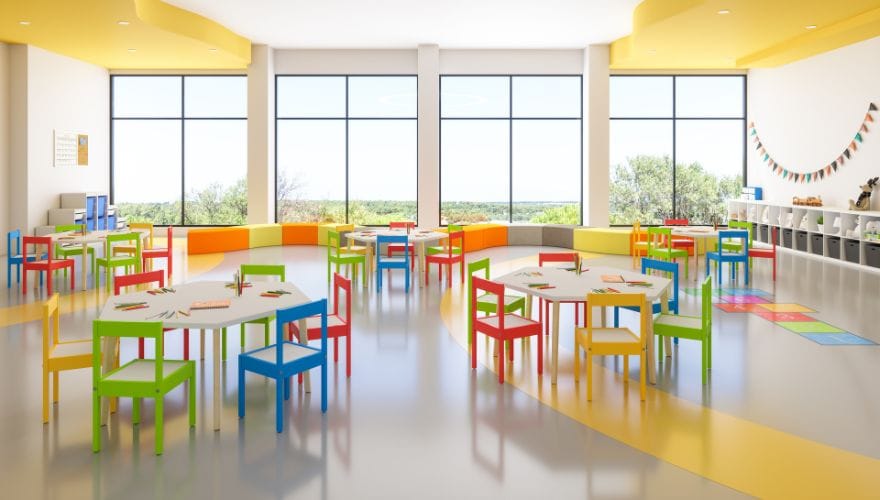
Plastic chairs excel in high-moisture areas: cafeterias, art rooms, science labs. They shrug off spills that would ruin wood. In early childhood classrooms, plastic’s lack of splinters and easy cleaning are major safety advantages.
Wooden chairs perform best in dry, climate-controlled spaces with careful use. Libraries, administrative offices, and traditional classrooms with older students (who treat furniture more carefully) are good fits.
Cleaning and Sanitizing: A Post-Pandemic Priority
| Cleaning Factor | Plastic Chairs | Wooden Chairs |
|---|---|---|
| Ease of cleaning | Wipe with disinfectant; no special care | Requires gentle cleaners; avoid soaking |
| Sanitizing | Use alcohol, bleach (diluted), quat wipes | Alcohol and bleach can damage finish |
| Bacteria harboring | Non-porous; no absorption | Porous; can absorb spills unless fully sealed |
| Drying time | Quick—wipe dry | Slow—requires air drying; moisture can seep into joints |
| Chemical resistance | High—resists most commercial cleaners | Low—harsh chemicals strip finish |
The Hygiene Bottom Line
Plastic chairs are the clear winner for environments that require frequent sanitizing. They tolerate the harsh chemicals used in schools—diluted bleach, quaternary ammonium compounds, and alcohol-based wipes—without degrading.
Wooden chairs require careful cleaning protocols. They should be wiped with a damp (not wet) cloth and mild soap, then dried immediately. Frequent heavy sanitizing will strip the finish, leading to absorption of spills and bacteria.
For schools: If your infection control plan calls for daily or after-meal sanitizing of all seating, plastic is the safer, more sustainable choice.
Also see: Where to Use Plastic Chairs: From Classrooms to Cafeterias
Comfort and Student Posture
| Comfort Factor | Plastic Chairs | Wooden Chairs |
|---|---|---|
| Ergonomic design | Can be molded into contoured shapes | Typically flat or slightly curved |
| Temperature | Can become hot or cold | Naturally temperature-neutral |
| Cushioning | Usually hard surface; some with padded seats | Hard surface; cushions optional |
| Support for long sits | Good if ergonomically designed | Moderate—flat seats lack lumbar support |
| Weight | Lightweight (3–8 lbs) | Heavier (10–20 lbs) |
1. The Ergonomics Debate
Modern plastic chairs are often designed with ergonomics in mind—contoured seats, slight lumbar curves, and waterfall front edges that reduce pressure behind the knees. High-quality polypropylene chairs from commercial school furniture manufacturers meet EN 1729 ergonomic standards.
Wooden chairs, especially traditional ones, tend to have flat seats and straight backs. While some manufacturers offer ergonomic wooden seating with curved seats and backs, they are less common and typically more expensive.
2. Student Movement and Flexibility
Lightweight plastic chairs allow students to move, shift positions, and reconfigure classrooms easily—essential for flexible learning environments. Heavier wooden chairs discourage movement, which some teachers view as a discipline advantage but which may not support active learning pedagogies.
Verdict: For active, collaborative classrooms, plastic chairs support movement and reconfiguration. For traditional lecture-style settings, wood’s stability may be preferred.
Aesthetics and School Culture
| Aesthetic Factor | Plastic Chairs | Wooden Chairs |
|---|---|---|
| Color options | Wide range; bright, primary, neutral | Limited to wood tones and painted finishes |
| Traditional appeal | Modern, utilitarian | Classic, warm, institutional |
| Branding | Custom colors available | Limited customization |
| Visual bulk | Lightweight appearance | Substantial, furniture-like |
Matching Your School’s Identity
Plastic chairs suit modern, forward-looking schools. Bright colors can energize early childhood spaces. Neutral tones (gray, black, white) work in secondary schools and universities.
Wooden chairs convey tradition, stability, and permanence. They are often preferred by private schools, historic buildings, and institutions that want a “classic” classroom aesthetic.
Procurement tip: Consider the message your furniture sends to parents, visitors, and students. A cohesive, intentional look—whether modern or traditional—reinforces your school’s brand.
Total Cost of Ownership: A Side-by-Side Calculation
Let’s model the 20-year cost for 100 chairs in a typical elementary school.
| Cost Item | Plastic Chairs | Wooden Chairs (Well-Maintained) |
|---|---|---|
| Initial purchase (100 chairs) | $3,000 ($30/chair) | $8,000 ($80/chair) |
| Annual maintenance (labor + materials) | $100 (cleaning supplies) | $1,000 (sanding, sealing, gluing) |
| Replacement over 20 years | 1 set (no replacement if not damaged) | 0 sets (if maintained) |
| Total 20-year cost | $3,000 + $2,000 = $5,000 | $8,000 + $20,000 = $28,000 |
Assumptions: Plastic chairs require no refinishing; cleaning supplies minimal. Wooden chairs require annual maintenance at 2 hours per chair per year at $50/hour labor.
Conclusion: Even though wooden chairs can last longer, the maintenance labor costs typically outweigh the upfront savings unless your school has existing staff capacity and low labor costs. For most schools, plastic chairs offer lower total cost of ownership.

Decision Matrix: Which Chair for Which Space?
| Space | Recommended Material | Rationale |
|---|---|---|
| Preschool / Kindergarten | Plastic | Safety (no splinters), easy cleaning, bright colors, lightweight for little hands |
| Elementary classrooms | Plastic | Flexible learning, spills, daily movement |
| Middle / High school classrooms | Either | Depends on pedagogy; plastic for active learning, wood for traditional |
| Cafeteria | Plastic | Frequent sanitizing, moisture, heavy use |
| Art / Science labs | Plastic | Spills, chemicals, easy cleaning |
| Library | Wood | Quieter, traditional aesthetic, lower wear |
| Administrative offices | Wood | Professional appearance, lighter use |
| Auditorium / Multi-purpose | Plastic | Stacking, lightweight, easy reconfiguration |
| Outdoor classroom | Plastic (UV-stabilized) | Weather resistance |
Frequently Asked Questions for School Procurement
1. Which is more cost-effective for a large school district?
For large districts with hundreds of classrooms, plastic chairs typically offer better cost-effectiveness due to lower upfront costs, minimal maintenance, and longer replacement cycles in high-use areas. However, if your district has a dedicated furniture maintenance shop, wood may pencil out over 20–30 years.
2. How do I clean plastic chairs to meet health department standards?
Use EPA-registered disinfectants appropriate for plastic: diluted bleach (1/3 cup per gallon of water), 70% isopropyl alcohol, or quaternary ammonium wipes. Apply, observe dwell time (usually 1–4 minutes), and allow to air dry or wipe with clean cloth. No special post-cleaning treatment is needed.
3. Can wooden chairs be sanitized effectively?
Yes, but with limitations. Use a damp cloth with mild soap, then dry immediately. For sanitizing, use a product labeled safe for sealed wood—avoid bleach and alcohol, which strip finishes. Over time, repeated sanitizing will degrade the seal, requiring more frequent refinishing.
4. Do plastic chairs meet fire safety codes?
Yes. Commercial-grade plastic chairs are manufactured with fire-retardant materials and tested to meet building codes (e.g., California Technical Bulletin 133 or 117 for upholstered components). Always verify certification with the manufacturer.
5. Which type is better for students with sensory sensitivities?
Plastic chairs offer consistent temperature and texture. Some students prefer the firm, predictable surface. Wooden chairs can feel warmer to the touch but may have grain texture variations. For students with sensory processing differences, test a sample chair before large-scale purchase.
6. How do I prevent plastic chairs from becoming brittle over time?
Choose chairs made from UV-stabilized polypropylene if they will be near windows or outdoors. Avoid storing chairs near heat sources. Rotate stacks periodically to distribute weight and prevent stress on the same chairs.
7. What should I look for in a warranty?
For plastic chairs, look for 5–10 year warranties on frame and structure. For wooden chairs, look for lifetime warranty on frame against structural failure, but understand that finish and upholstery are typically excluded.
Conclusion: Which Wins?
The answer depends on your school’s priorities.
Plastic chairs win for:
-
Schools with limited maintenance staff
-
Spaces requiring frequent sanitizing (cafeterias, labs)
-
Early childhood and elementary settings
-
Flexible, active learning environments
-
Budget-conscious procurement
-
High-moisture or outdoor areas
Wooden chairs win for:
-
Schools with dedicated maintenance capacity
-
Traditional, formal learning environments
-
Libraries and administrative spaces
-
Institutions prioritizing a classic aesthetic
-
Spaces with low-moisture exposure
-
Long-term ownership (20+ years) with planned maintenance
For most modern schools facing budget constraints, staffing limitations, and the need for flexible, easily cleaned spaces, plastic chairs are the practical winner. However, the best approach is often hybrid: plastic for high-use, high-moisture, and flexible learning areas; wood for libraries, offices, and spaces where aesthetics and tradition matter most.
Before making a decision, request samples, test them in your environment, and involve your maintenance team in the evaluation. The right choice will serve your students and staff well for years to come.
Ready to furnish your school? Browse our commercial-grade plastic and wooden seating options, all tested for durability, safety, and long-term value.