





 Meet&Co
When designing an auditorium, lecture hall, or multi-purpose venue, selecting the right seating is one of the most critical decisions you will make. The choice ultimately comes down to a fundamental trade-off: high-density seating versus audience comfort.
You need to fit as many people as possible into the space without making them feel cramped during a two-hour presentation.
To help you navigate this, we will compare the three main types of auditorium seating: Fixed (theater-style), Folding, and Stackable. We’ll also cover essential features like seat width, cup holders, and writing tablets to ensure you make the right investment.
The Three Main Types of Venue Seating
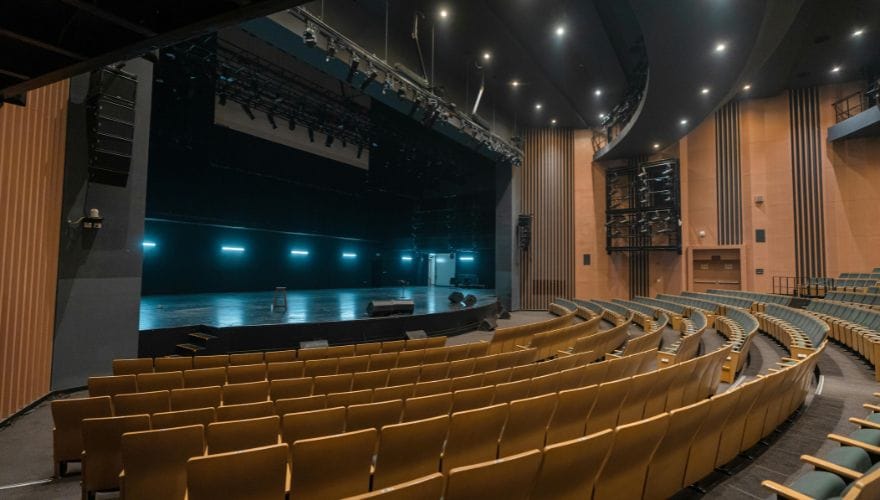
Before diving into specifics, it helps to understand the primary categories of theater chairs available on the market today.
1. Fixed Seating (Theater Style)
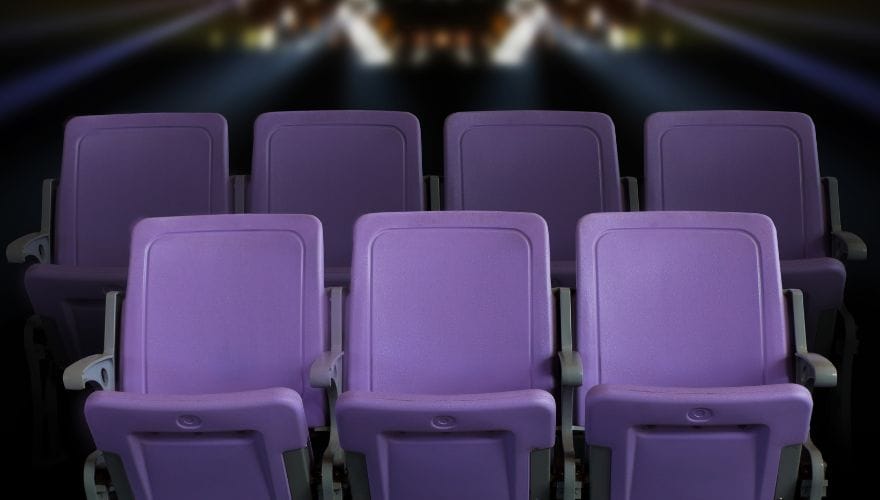
Fixed seating is permanently bolted to the floor, usually in rows. This is the classic “movie theater” setup. These chairs often feature a pivoting seat pan that folds up automatically when the occupant stands up, allowing for easy movement between rows.
2. Folding Chairs (Wall-Mounted or Ganged)
Folding auditorium chairs are typically attached to a beam or a wall. When not in use, the seat and (sometimes) the armrests fold up against the backrest or wall. This type is excellent for spaces that require a clean, open floor plan when the room is not in use for performances or lectures.
3. Stackable Chairs
Stackable chairs are entirely portable. They are not attached to the floor or to each other (though they often come with “ganging” clips to connect them in rows). When the event is over, these chairs can be stacked on a dolly and rolled into storage, transforming a theater into a banquet hall or gymnasium.
Fixed vs. Folding vs. Stackable: A Head-to-Head Comparison
To visualize the differences, here is a breakdown of how each type performs across the most important metrics.
| Feature | Fixed Seating | Folding Chairs | Stackable Chairs |
| Density | Highest. Minimal space between rows; ideal for maximizing capacity. | High. Offers better row access but requires slight clearance for the fold mechanism. | Moderate. Usually requires more space per row due to structural frames. |
| Comfort | Excellent. Ergonomic designs, high backs, plush upholstery, and superior lumbar support. | Good. Often similar padding to fixed chairs, but backrests are usually less contoured. | Variable. Ranges from plastic/metal (low comfort) to high-density foam (high comfort). |
| Flexibility | None. Permanent installation. Difficult and costly to reconfigure. | Moderate. Can be folded to clear aisles, but hardware remains installed. | Maximum. Can be removed entirely to repurpose the room. |
| Maintenance | Low. Hard to damage, but repairs require unbolting units. | Medium. Mechanisms require occasional lubrication to prevent squeaking. | Medium to High. Higher risk of scratching floors or losing ganging clips. |
| Best Use Case | Dedicated theaters, lecture halls, houses of worship. | Training rooms, small auditoriums, performing arts centers. | Multi-purpose halls, gymnasiums, event venues, banquet halls. |
Key Considerations: Width, Cup Holders, and Writing Tablets
Regardless of which frame type you choose, the “hardware” attached to the chair defines the user experience. Here is what to look for.
1. Seat Width
Seat width is the primary factor affecting comfort. In the past, 18–19 inches was standard. However, modern audiences expect more space.
- Standard (19–20 inches): Suitable for high-density configurations where maximizing seats is the priority.
- Oversized (21–22 inches): Recommended for general public venues. They accommodate a wider range of body types and provide a premium feel.
- Tip: If you choose fixed seating, you can often install “every other” armrest to save space without sacrificing comfort.
2. Cup Holders
In a modern auditorium, cup holders are no longer a luxury—they are an expectation.
- Fixed Seating: Cup holders are typically mounted to the back of the chair in front (scissor style) or to the armrest (side mount).
- Folding/Stackable: If you choose portable seating, look for fold-away cup holders that retract flush with the armrest. Fixed cup holders on stackable chairs can break easily during transport.
3. Writing Tablets
If your space will be used for education, testing, or note-taking, a writing tablet is essential.
- Paddle (Flip-up) Tablets: The most common. They swivel out from the armrest and lock into place. Ensure they are large enough to hold a laptop (minimum 10 inches deep).
- Fixed Tablets: Attached to the back of the chair or the arm. These are less common in multi-purpose spaces because they restrict movement.
- For Stackable Chairs: Ensure the writing tablet folds completely flat against the armrest. If it protrudes, you will not be able to stack the chairs efficiently.
Which One Should You Choose?
The right choice depends entirely on how you plan to use the room 80% of the time.
Choose Fixed Seating if:
- You need to seat the maximum number of people in a permanent space.
- You want the highest level of ergonomic comfort (plush cushions, high backs).
- You do not plan to reconfigure the room layout.
Choose Folding Chairs if:
- You need a hybrid solution—fixed location but occasional open floor space.
- Aisle width is a concern; folding seats create wider walking paths when not in use.
- You want a tidy, “vanishing” look when the room is empty.
Choose Stackable Chairs if:
- Your venue serves multiple functions (e.g., theater on Friday, wedding venue on Saturday).
- You have ample storage space (a cart and closet).
- Budget is a primary concern, and you need the ability to replace individual units easily.
Frequently Asked Questions (FAQ)
1. Which type of auditorium chair offers the highest density?
Fixed seating offers the highest density. Because the chairs are bolted to the floor with a consistent row spacing (typically 33 to 36 inches from back to back), you can maximize the number of seats in a given square footage. Folding and stackable chairs generally require slightly more room to allow for the mechanics of movement and storage.
2. Are folding theater chairs less comfortable than fixed ones?
Not necessarily, but there is a difference in structure. Fixed theater chairs usually have a taller backrest and a more pronounced lumbar curve because they are designed for long-term sitting. Folding chairs can be equally comfortable in the seat cushion, but the back support is often shorter. If you opt for folding chairs, look for “high-back” models to match the comfort level of fixed seating.
3. Can I add cup holders to stackable venue seating?
Yes, but you must be specific about the hardware. Standard rigid cup holders will break during stacking. If you require cup holders for stackable venue seating, you must choose chairs with fold-away cup holders integrated into the armrest. These retract to a flat profile, allowing the chairs to stack safely without damaging the cup holder mechanism.
Conclusion
Choosing between fixed, folding, and stackable auditorium seating is a balancing act. If your priority is permanence and high density, fixed seating is the gold standard. If you require flexibility without sacrificing the look of a permanent installation, folding chairs are your best bet. For maximum versatility where the room must serve multiple masters, invest in high-quality stackable chairs with the right accessories.
Before purchasing, always test the seat width and row spacing with a sample. The right chair not only maximizes your capacity but ensures that every guest leaves with a positive impression of your venue.