






 Meet&Co
Walk into any elementary classroom, and you’ll likely see a familiar sight: students perched on chairs that are clearly too big for them, feet dangling, backs straining to reach the desk. Walk into a high school, and you might see the opposite: tall students crammed into chairs designed for smaller bodies, knees pressing against the underside of desks, shoulders hunched forward.
For decades, schools have treated chairs as one-size-fits-all. But students aren’t one size. A kindergarten student and a fifth grader have vastly different proportions. A 5’2″ seventh grader and a 6’0″ freshman have different needs. When chairs don’t fit, students don’t just sit uncomfortably—they struggle to focus, develop poor posture, and may even experience long-term musculoskeletal issues.
This guide helps you choose school chairs that actually fit the students who will use them. You’ll learn how to match chair sizes to age groups, what to look for in ergonomic design, and how to create a seating environment that supports learning rather than distracting from it.
Why Proper Chair Fit Matters
The connection between chair fit and student success is stronger than most people realize. When a chair fits properly, it supports attention, comfort, and physical development. When it doesn’t, the consequences ripple through the school day.
| Impact of Poor Fit | Why It Happens |
| Fidgeting and distraction | Students shift constantly to find a comfortable position |
| Poor posture development | Incorrect chair height encourages slouching or leaning |
| Reduced blood flow | Seat edges pressing behind knees restrict circulation |
| Difficulty writing | Elbows at wrong height; shoulders strain to reach desk |
| Behavior issues | Physical discomfort leads to irritability and restlessness |
| Long-term strain | Misalignment during formative years affects spinal development |
Research suggests that properly sized furniture can improve attention and reduce off-task behavior. When students are physically comfortable, their cognitive resources are freed up for learning rather than managing discomfort.

Step 1: Understand Student Seating Zones
Students come in all sizes, but school chairs typically fall into standard height ranges. Understanding these ranges is the first step to matching chairs to students.
Standard Chair Height Ranges by Age/Grade
| Age Group | Grade Range | Typical Seat Height (floor to seat top) | Typical User Height |
| Early childhood | Pre-K–K | 8–12 inches | 3’0″–3’8″ |
| Lower elementary | 1st–3rd | 12–14 inches | 3’8″–4’4″ |
| Upper elementary | 4th–5th | 14–16 inches | 4’4″–4’10” |
| Middle school | 6th–8th | 16–18 inches | 4’10″–5’4″ |
| High school | 9th–12th | 18–20 inches | 5’4″–6’0″+ |
Note: These are guidelines, not rules. A tall third grader may need a chair from the upper elementary range; a petite high school freshman may fit better in a middle school size. The key is offering options.
Why Seat Height Is Critical
Seat height determines whether a student’s feet can rest flat on the floor. When feet dangle:
- The back of the thighs presses against the seat edge, restricting circulation
- The lower back lacks stability, encouraging slouching
- The student may swing legs, creating distraction for themselves and others
The test: When seated, a student’s feet should rest flat on the floor with knees bent at approximately 90 degrees. There should be no pressure behind the knees.
Step 2: Assess Seat Depth
Seat depth is the distance from the front edge of the seat to the backrest. When seat depth is too long, the seat edge presses into the back of the knees. When it’s too short, the thighs lack support.
| Seat Depth Issue | Consequence | Solution |
| Too deep | Pressure behind knees; restricted circulation | Choose chair with shorter depth; add lumbar support to push pelvis forward |
| Too shallow | Thighs unsupported; pelvis tilts back | Choose chair with deeper seat; ensure backrest provides proper contact |
The test: Have the student sit with back against the backrest. There should be 2–3 finger widths (about 2 inches) of space between the front edge of the seat and the back of the knees.
Step 3: Consider Backrest Support
The backrest should support the natural curve of the spine without pushing the shoulders forward or leaving the lower back unsupported.
| Feature | What to Look For | Why It Matters |
| Height | Backrest should reach mid-back (not neck) | Supports natural spinal curve without restricting movement |
| Lumbar contour | Gentle curve in lower back area | Maintains natural lumbar lordosis |
| Angle | Slight backward tilt (5–10 degrees) | Reduces pressure on spinal discs |
| Flexibility | Some give when student leans back | Allows movement without losing support |
For Younger Students
Early elementary chairs should have backrests that provide full contact with the student’s back. Avoid chairs with exaggerated lumbar curves designed for adults—young children have different spinal proportions.
For Older Students
Adolescents benefit from chairs with more pronounced lumbar support as their spines mature. However, the support should still be adjustable in height if possible, as growth rates vary.
Also see: Best School Furniture Manufacturers in 2026
Step 4: Match Chair to Desk Height
A chair that fits perfectly is useless if the desk doesn’t match. The relationship between chair seat height and desk height determines whether a student can write comfortably with proper arm and wrist position.
| Activity | Ideal Relationship |
| Writing | Elbows at 90–100 degrees; forearms parallel to desk surface |
| Typing | Wrists straight; shoulders relaxed; desk height allows elbows to clear |
| Reading | Desk surface slightly lower than elbows for comfortable book positioning |
The test: With student seated in properly sized chair, the desk surface should be approximately at elbow height. When writing, the student should not need to lift shoulders or hunch forward.

Chair Types by Grade Level
Early Childhood (Pre-K–Kindergarten)
| Feature | Why It Matters |
| Low seat height (8–12″) | Feet flat on floor |
| Rounded edges | Safety for active children |
| Lightweight | Young students can move their own chairs |
| Stackable | Easy storage for cleaning and reconfiguration |
| Bright colors | Engaging, helps with organization |
Best chair styles: One-piece molded plastic chairs with contoured seats, lightweight stackable designs.
Elementary (1st–5th Grade)
| Feature | Why It Matters |
| Multiple size options | Accommodates growth within grade level |
| Slight lumbar contour | Supports developing spine |
| Durable materials | Withstands daily use and occasional abuse |
| Non-slip feet | Safety; reduces noise during movement |
| Compatibility | Works with both traditional desks and collaborative tables |
Best chair styles: Stackable polypropylene chairs with ergonomic contours, size-graded options (12″, 14″, 16″)
Middle School (6th–8th Grade)
| Feature | Why It Matters |
| Wider size range | Accommodates wide variation in student heights |
| Adjustable options | Some chairs with height-adjustable legs |
| Durable frame | Heavier use; students are larger |
| Comfort for longer periods | Classes may be longer; ergonomics matter more |
| Aesthetic options | Students appreciate choices; can improve ownership |
Best chair styles: Stackable with ergonomic back; some with adjustable-height bases; variety of colors
High School (9th–12th Grade)
| Feature | Why It Matters |
| Full ergonomic support | Students spend long hours seated |
| Durable construction | Designed for intensive daily use |
| Adult-size dimensions | Accommodates larger bodies |
| Multiple size options | Essential for freshman to senior range |
| Flexible configurations | Works for both traditional and collaborative learning |
Best chair styles: Ergonomic task chairs with adjustable seat height; some with armrests for computer work; heavy-duty construction
Comparison: Chair Sizes by Age Group
| Age Group | Seat Height | Seat Depth | Backrest Height | Material Considerations |
| Pre-K–K | 8–12″ | 10–12″ | 8–10″ | Lightweight, rounded edges |
| 1st–3rd | 12–14″ | 12–14″ | 10–12″ | Durable, easy-clean |
| 4th–5th | 14–16″ | 14–16″ | 12–14″ | Ergonomic contours |
| 6th–8th | 16–18″ | 16–18″ | 14–16″ | Adjustable options |
| 9th–12th | 18–20″ | 18–20″ | 16–18″ | Heavy-duty, full ergonomic |
Material Considerations
| Material | Pros | Cons | Best For |
| Polypropylene (plastic) | Lightweight, easy-clean, affordable, stackable | Can feel hard; limited ergonomics | Elementary, middle school |
| Molded plastic with padding | More comfortable; durable | More expensive; harder to clean | Upper elementary, middle school |
| Wood | Classic look; durable | Heavy; can splinter; more expensive | Libraries, specialty rooms |
| Metal frame with plastic seat/back | Very durable; modern look | Heavier; can be cold | High school, heavy-use areas |
| Mesh back | Breathable; ergonomic | Less common in schools; more expensive | High school computer labs |
Safety Features to Look For
| Feature | Why It Matters |
| Rounded edges | Prevents injury from bumps and falls |
| Non-slip feet | Reduces sliding; protects floors; reduces noise |
| Stable base | Won’t tip easily when students lean back |
| No pinch points | Moving parts (adjustable chairs) should not catch fingers |
| Flame-retardant materials | Meets commercial fire codes |
| Non-toxic finishes | Ensures safe indoor air quality |
How to Assess Fit in Your School
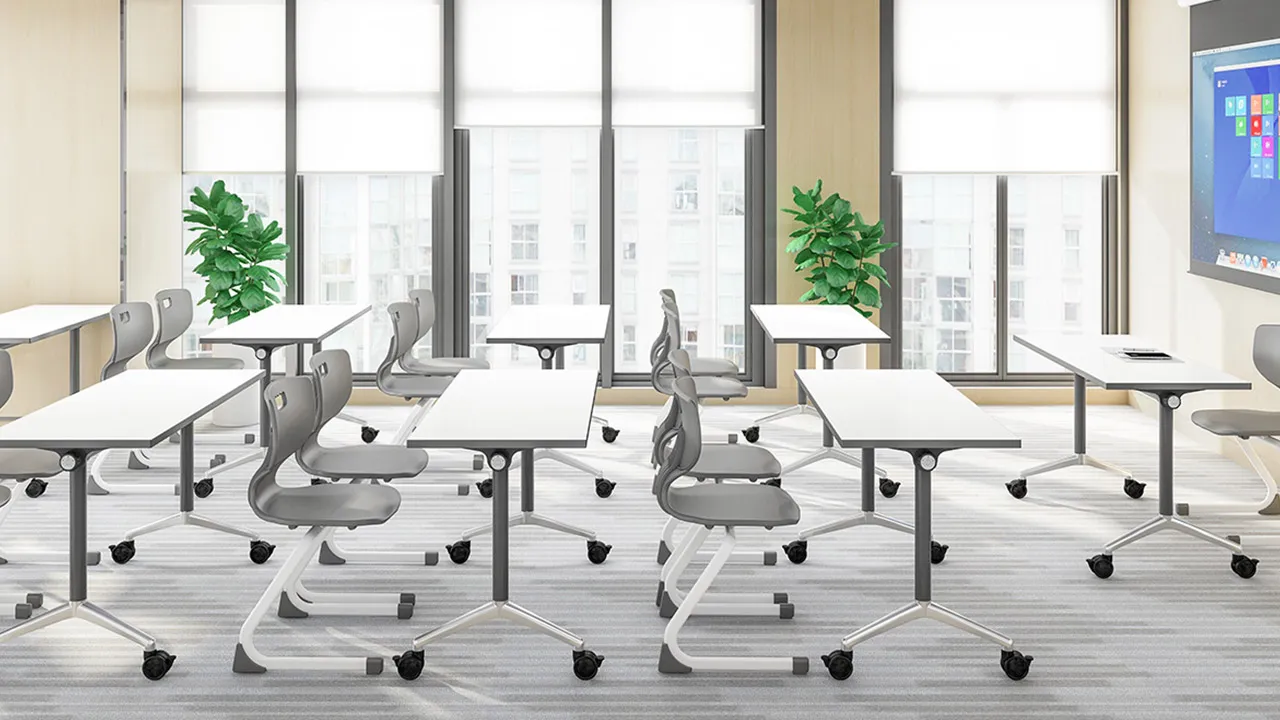
Step 1: Conduct a Seating Audit
Visit classrooms across grade levels. Observe:
- How many students have feet flat on the floor?
- How many have knees pressed against the underside of desks?
- How many shift constantly or appear uncomfortable?
Step 2: Measure a Sample
Select a representative sample of students in each grade. Measure:
- Popliteal height (floor to back of knee)
- Buttock-popliteal length (seat depth needed)
- Sitting shoulder height
Compare to your current chair dimensions.
Step 3: Gather Student Feedback
Ask students about their chairs. Are they comfortable? Do they feel they can focus? Students often provide honest, useful feedback about what works and what doesn’t.
Step 4: Test New Options
If you’re considering new chairs, bring in samples. Have students of different sizes test them. Watch for:
- Ease of adjustment (if adjustable)
- Stability
- Comfort over time
Common Mistakes to Avoid
| Mistake | Why It’s Problematic | Better Approach |
| Buying all chairs the same size | Only fits average students; excludes many | Purchase multiple sizes per classroom |
| Choosing based on price alone | Cheap chairs may not fit well or last | Balance cost with fit and durability |
| Ignoring desk compatibility | Chair that fits but desk that doesn’t creates problems | Match chair and desk heights together |
| Forgetting about growth | Students grow quickly; chairs that don’t accommodate will be outgrown | Consider adjustable-height options for upper grades |
| Overlooking special needs | Some students require different seating | Include options like wobble stools, seat cushions |
Budget-Friendly Strategies
| Strategy | How to Implement |
| Phase in multiple sizes | Start with one classroom per grade to test; expand based on results |
| Purchase adjustable chairs for some grades | Invest in adjustable-height chairs for upper elementary and middle school where growth rates vary most |
| Use color coding | Assign different colors to different sizes; easier for teachers to distribute |
| Partner with other schools | Share findings and potentially bulk purchase |
| Consider refurbished | Quality used chairs from reputable brands can fit budgets |
FAQ about School Chairs
1. What size chair does a 5-year-old need?
A 5-year-old (typically kindergarten) needs a chair with seat height of 10–12 inches. Feet should rest flat on the floor. The seat depth should allow 2–3 fingers of space behind the knees.
2. Should school chairs have armrests?
Generally no. Armrests restrict movement and make it harder for students to slide in and out. They also take up space and can be a distraction. For computer labs or high school settings, some chairs with armrests may be appropriate.
3. How often should school chairs be replaced?
Quality school chairs last 10–15 years with proper care. However, fit should be reassessed as student populations change. If chairs no longer fit the students using them, replacement may be needed even if the chairs are structurally sound.
4. Can one chair size work for a whole grade?
Rarely. Within any grade, there is significant variation in student heights. A 4th grade class may have students ranging from 4’2″ to 5’0″. Offering at least two chair sizes per classroom is ideal.
5. Are adjustable-height chairs worth the extra cost?
For upper elementary and middle school, yes. These are years of rapid growth, and adjustable chairs can accommodate students across multiple grade levels. For early elementary, fixed-height chairs with multiple size options may be more cost-effective.
6. What about students with special seating needs?
Some students require alternative seating for sensory, physical, or attention reasons. Schools should have a process for providing wobble stools, seat cushions, or specialized chairs as needed, often through special education or 504 plan accommodations.
7. How do I clean school chairs?
Most school chairs are designed for easy cleaning. Wipe with mild soap and water or standard school-grade disinfectant. Avoid harsh chemicals that may degrade plastic. For fabric chairs, check manufacturer cleaning guidelines.
Conclusion
Choosing school chairs that actually fit students isn’t complicated—but it does require intention. The principles are simple:
- Match seat height to student height: Feet flat, knees at 90 degrees
- Ensure proper seat depth: 2–3 fingers of space behind knees
- Provide size options: Multiple chair sizes per classroom
- Consider growth: Adjustable chairs for grades with rapid growth
- Test with real students: Gather feedback before committing to large purchases
When chairs fit, students sit more comfortably, focus more easily, and develop better posture habits that serve them beyond the classroom. It’s one of the simplest investments a school can make in student success.

_1.webp)