





 Meet&Co
Open-plan offices promised collaboration and connection, but they often delivered noise and distraction. The solution seems obvious: add office partitions. But when you start placing screens and dividers, something unexpected happens—the space gets darker. Natural light that once flowed freely now gets blocked, turning a bright, airy office into a maze of shadows.
This is the open-plan office paradox: you need privacy to focus, but you also need light to feel energized and productive. Choose the wrong partitions, and you solve one problem while creating another. Choose thoughtfully, and you can have both.
Our guide explores how to select partitions that provide the privacy your team needs while preserving—and sometimes even enhancing—the natural light that makes your office feel alive.
Why Light Matters in the Workplace
Before diving into partition types, let’s understand why light preservation isn’t just an aesthetic preference—it’s a productivity and well-being imperative.
| Benefit of Natural Light | Impact |
| Improved focus | Studies show workers in daylit offices perform 10–25% better on cognitive tests |
| Better sleep | Exposure to natural light during the day regulates circadian rhythms |
| Reduced eye strain | Balanced natural light reduces glare and fatigue |
| Enhanced mood | Sunlight triggers serotonin release, lowering stress |
| Perceived spaciousness | Light-filled spaces feel larger and less confining |
When partitions block light, they don’t just darken the space—they diminish these benefits. The goal, then, is to create privacy without creating shadows.
Partition Types That Preserve Light
Not all partitions are created equal when it comes to light transmission. Here are the options that balance privacy with brightness.
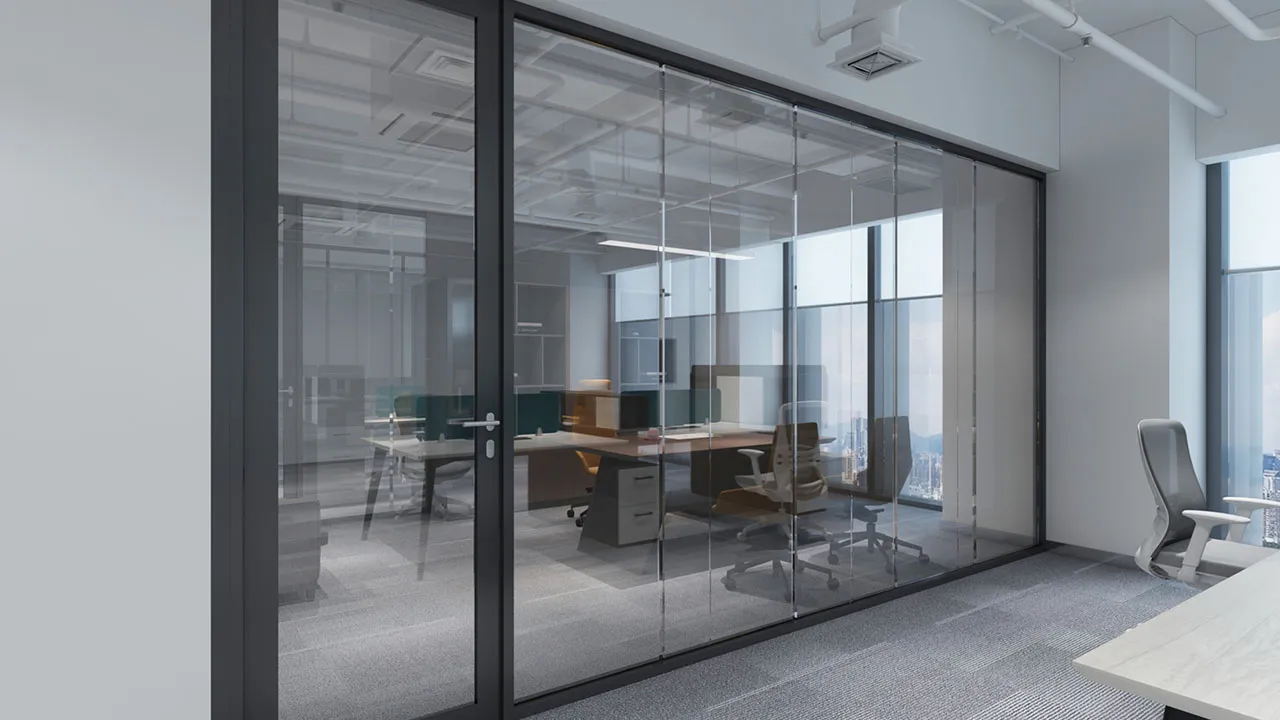
1. Glass Partitions
Glass is the ultimate light-preserving partition. It creates physical separation while allowing light to flow freely.
| Glass Type | Light Transmission | Privacy Level | Best Use |
| Clear glass | 85–90% | Low (visual transparency) | Where visibility is desired (e.g., executive offices, team rooms) |
| Frosted glass | 70–80% | Medium (blurred shapes) | Meeting rooms, focus areas needing partial privacy |
| Switchable privacy glass | 80% when clear, 10–20% when frosted | Adjustable | Multipurpose spaces needing on-demand privacy |
| Tinted glass | 30–60% | Medium | Reducing glare while maintaining light |
What to look for:
- Tempered or laminated glass for safety
- Acoustic seals for sound reduction
- Frameless designs for maximum light flow
- Frosted patterns that provide privacy without darkening
Pros: Excellent light transmission, modern aesthetic, durable
Cons: Higher cost, professional installation required, limited sound isolation without acoustic glass
2. Low-Height Screens
Full-height screens block both sightlines and light. Low screens (48 inches or less) preserve overhead light while providing seated privacy.
| Height | Light Impact | Privacy Provided |
| 30–36 inches | Minimal | Desk-level visual separation |
| 42–48 inches | Low | Seated privacy; standing views remain |
| 60–72 inches | Moderate | Blocks most views; reduces light distribution |
What to look for:
- Fabric or felt finishes that absorb sound
- Curved or angled tops that soften the visual barrier
- Mounting options (clamp-on, freestanding) for flexibility
Pros: Affordable, easy to install, maintain open feel
Cons: Limited standing privacy, minimal sound blocking
3. Perforated and Patterned Panels
Solid panels block light; perforated or laser-cut panels let light through while creating visual interest.
| Material | Light Transmission | Privacy | Aesthetic |
| Perforated metal | 30–60% | Medium | Industrial, modern |
| Laser-cut wood | 20–50% | Medium | Warm, organic |
| Patterned acrylic | 40–80% | Low–medium | Colorful, lightweight |
What to look for:
- Pattern density that balances privacy and light
- Smooth edges and durable finishes
- Compatibility with freestanding or mounted frames
Pros: Decorative, partial privacy, allows light diffusion
Cons: Less light than glass, may collect dust in perforations
4. Plant Dividers and Green Walls
Biophilic design uses plants to create natural barriers that filter light beautifully.
| Type | Light Impact | Privacy | Maintenance |
| Tall planters | Minimal (plants filter, not block) | Low–medium | Moderate (watering, pruning) |
| Living walls | Minimal | Medium | High (irrigation, professional care) |
| Faux greenery | Minimal | Low–medium | None |
What to look for:
- Plants with dense foliage (bamboo, fiddle leaf fig, areca palm)
- Self-watering planters for easier maintenance
- Modular systems for living walls
Pros: Biophilic benefits, softens space, improves air quality
Cons: Requires maintenance, slower to establish, can be expensive
5. Open Shelving and Bookshelves
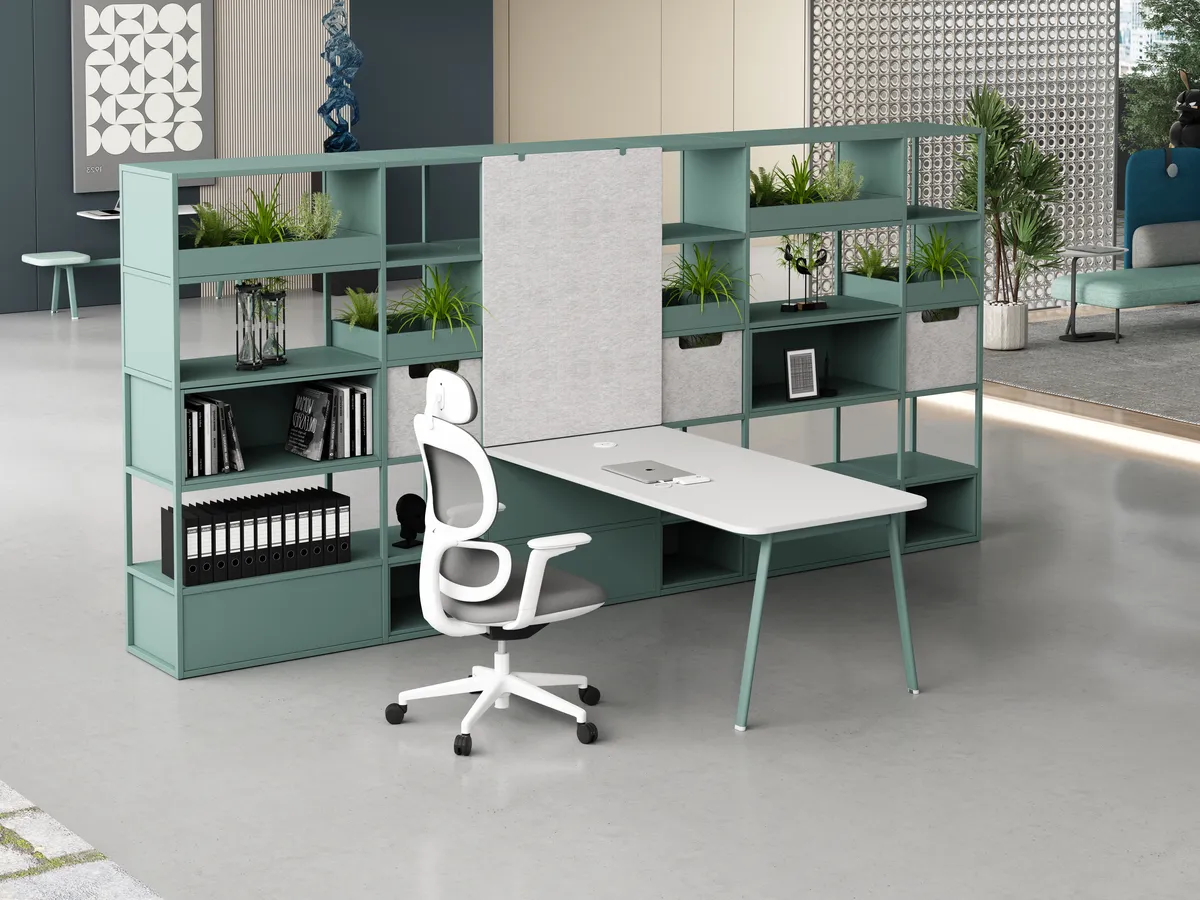
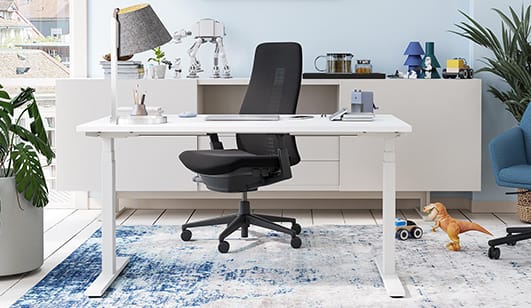
Linora A Executive Desk With Side Cabinet Image
Shelving units create visual separation while allowing light to pass through open backs.
| Shelf Design | Light Transmission | Privacy | Storage |
| Open-back shelves | High | Low | Yes |
| Semi-open shelves | Medium | Medium | Yes |
| Solid-back shelves | None | High | Yes |
What to look for:
- Adjustable shelves for flexible storage
- Depth that balances stability with light flow
- Materials that complement office design
Pros: Dual function (privacy + storage), customizable, often more affordable than glass
Cons: Can look cluttered if overfilled, limited acoustic benefit
Comparison Table: Light-Preserving Partitions at a Glance
| Partition Type | Light Transmission | Visual Privacy | Acoustic Benefit | Installation | Cost |
| Clear glass | High (85–90%) | Low | Low–medium | Professional | $$$ |
| Frosted glass | Medium-high (70–80%) | Medium | Medium | Professional | $$$ |
| Low screens (≤48″) | High | Low–medium | Low | DIY/Professional | $–$$ |
| Perforated panels | Medium (30–60%) | Medium | Low | Professional | $$–$$$ |
| Plant dividers | High | Low–medium | Low | DIY | $–$$$ |
| Open shelving | High | Low–medium | Low | DIY/Professional | $–$$ |
Placement Strategies to Maximize Light
Even the most light-friendly partition can create shadows if placed poorly. Use these strategies to preserve brightness.
1. Align with Light Sources
Position partitions parallel to windows, not perpendicular. When screens run the same direction as incoming light, they cast minimal shadows. Perpendicular placements create bands of shade.
2. Use Partial Height Near Windows
Place low screens (under 48 inches) near window walls. This preserves the view and allows light to spread across the room while providing seated privacy.
3. Create Light Paths
Leave intentional gaps between partitions and walls or between individual screens. These “light paths” allow illumination to travel deeper into the floor plate.
4. Consider Ceiling Height
In spaces with high ceilings, ceiling-hung acoustic baffles or pendant screens can provide privacy without blocking horizontal light at eye level.
5. Use Reflective Surfaces
Incorporate mirrors, glossy finishes, or light-colored materials that bounce light deeper into the space. A glass partition with a polished metal frame reflects rather than absorbs light.
Acoustic Considerations for Light-Preserving Partitions
The trade-off for preserving light is often reduced sound absorption. Here’s how to maintain acoustic comfort without sacrificing brightness.
| Challenge | Solution |
| Glass reflects sound | Use acoustic glass (laminated with sound-dampening interlayer) or combine with acoustic ceiling panels |
| Open shelving doesn’t block sound | Place acoustic felt backing on shelves or add soft materials to shelves (books, fabric bins) |
| Low screens allow sound to travel over | Combine with ceiling baffles or acoustic panels at key reflection points |
| Plants don’t absorb much sound | Use plants for visual privacy and layer with acoustic panels elsewhere |
The most effective approach is a layered acoustic strategy: treat the ceiling and walls for absorption, and use light-preserving partitions for visual privacy. This way, you don’t ask any single element to do everything.
Real-World Example: A Balanced Open Office
A tech startup with floor-to-ceiling windows faced a challenge: their open plan was too noisy, but they didn’t want to darken the space. Their solution:
- Perimeter: Clear glass walls for private offices along the window wall—preserved the view and light for the whole floor
- Workstations: 42-inch fabric screens between desks—blocked seated views without blocking overhead light
- Collaboration zones: Low (36-inch) felt screens with open shelving above—defined spaces while allowing light to flow
- Acoustic treatment: Ceiling-mounted baffles in darker felt—absorbed sound without affecting light
The result: a space that felt open and bright while providing the privacy teams needed to focus.
5 Common Mistakes to Avoid
| Mistake | Why It’s Problematic | Better Approach |
| Using solid panels near windows | Creates dark pockets in an otherwise bright space | Use glass or low screens near window walls |
| Placing partitions perpendicular to windows | Casts long shadows across the room | Align parallel to light source |
| Choosing style over light transmission | Decorative screens may block more light than intended | Check light transmission specs before buying |
| Forgetting about reflection | Dark materials absorb light; light colors and glossy surfaces reflect | Choose light finishes for partitions |
| Over-partitioning | Too many barriers create a cluttered, dark feel | Use fewer, taller partitions strategically; rely on zoning instead of full division |
FAQ
1. Can glass partitions provide sound privacy?
Yes, but only if they’re properly sealed and made with acoustic glass. Single-pane clear glass offers minimal sound reduction (STC 30–35). Double-glazed or laminated acoustic glass can achieve STC 40–45, comparable to a standard wall.
2. Do low screens actually help with privacy?
For seated work, yes. A 42–48 inch screen blocks the view of a coworker sitting across from you. For standing or walking views, low screens don’t help—you’ll need taller partitions for that.
3. How do I balance light and privacy in a conference room?
Use frosted glass walls with clear glass doors, or install switchable privacy glass. This allows the room to feel open when empty and private when occupied, all while maintaining light flow.
4. Are there partitions that both absorb sound and transmit light?
Yes. Perforated metal or wood panels backed with acoustic felt absorb sound while allowing light through the perforations. Fabric-wrapped acoustic panels can be printed with patterns that create a semi-transparent effect.
5. What’s the most cost-effective way to add privacy without blocking light?
Low-height fabric screens or desk-mounted privacy panels. They’re affordable, easy to install, and preserve overhead light while blocking seated sightlines.
6. Can I use plants as partitions?
Yes. Tall plants in planters (like bamboo, fiddle leaf figs, or areca palms) create natural barriers that filter light beautifully. For larger spaces, living walls or modular green screens offer more coverage.
7. How do I know if my partitions are blocking too much light?
Walk your space at different times of day. If you notice dark zones that weren’t there before, or if interior areas feel dim despite windows, your partitions are likely the cause. Re-evaluate placement or switch to more transparent materials.
Conclusion
Choosing partitions for an open-plan office doesn’t have to mean choosing between privacy and light. The key is selecting materials and placements that work with your space, not against it.
| Priority | Recommended Partition Type |
| Maximum light + visual privacy | Frosted or switchable glass |
| Seated privacy + open feel | Low screens (42–48 inches) |
| Natural, soft barriers | Plant dividers, open shelving |
| Decorative privacy + some light | Perforated panels, laser-cut wood |
| Sound + light balance | Glass with acoustic treatment + ceiling baffles |
Remember the core principles:
- Align partitions parallel to windows to minimize shadows
- Use low screens near daylight sources to preserve light distribution
- Layer acoustic treatment so partitions can focus on visual privacy
- Choose materials that reflect rather than absorb light—glass, light-colored finishes, and open weaves
With thoughtful selection, your partitions can create the focus your team needs without dimming the energy that natural light brings. A bright, private open-plan office isn’t a compromise—it’s a design challenge with elegant solutions.