





 Meet&Co
You need more meeting space. Your office is bursting at the seams, and every time a team needs a private conversation, they end up in the hallway. The natural instinct is to look at floor plans and start planning a traditional meeting room build-out. But in 2026, there’s another option that’s changing the math: office pods.
These freestanding, self-contained units promise private space without construction dust, permits, or permanent changes to your floor plan. They can be installed in days, not weeks, and moved when your needs change. But are they actually cheaper than building traditional meeting rooms? And what do you lose—or gain—by choosing pods over permanent walls?
Our guide breaks down the real costs and benefits of both options, helping you decide which investment makes sense for your workplace.
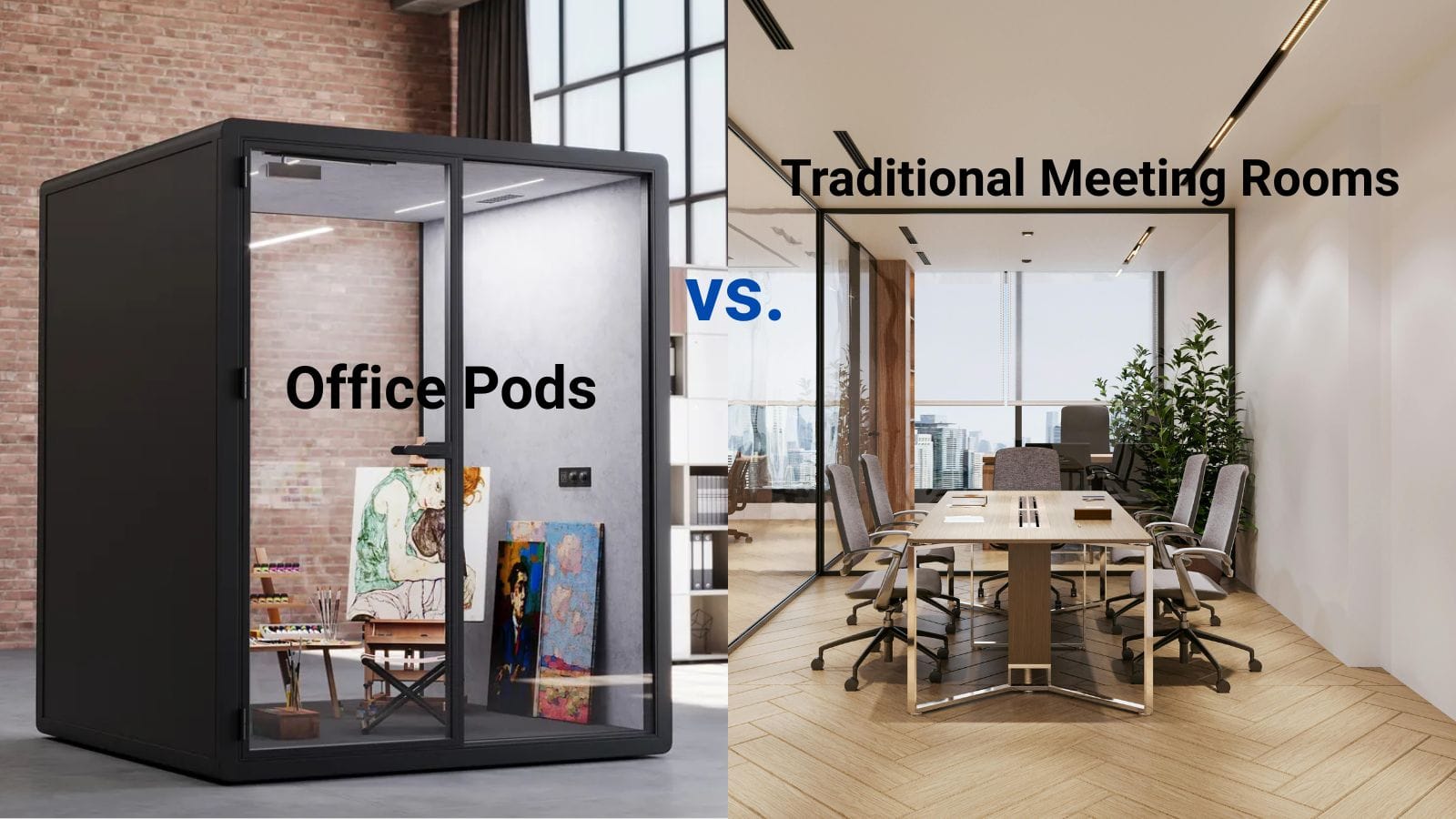
Quick Comparison: Pods vs. Traditional Meeting Rooms
| Factor | Office Pod | Traditional Meeting Room |
| Installation time | Hours to days | Weeks to months |
| Construction disruption | Minimal | Significant (dust, noise, permits) |
| Initial cost per space | $7,000–25,000 | $15,000–50,000+ |
| Flexibility | High (can relocate) | Low (permanent) |
| Building permits | Typically not required | Usually required |
| HVAC integration | Self-contained or tie-in | Must integrate with building systems |
| Acoustic performance | Variable (DS,A 25–35 typical) | Excellent with proper construction |
| Resale value | High (can relocate or sell) | None (built-in) |
| Lifespan | 7–15 years | 20+ years with maintenance |
Cost Breakdown: Office Pods
1. Upfront Costs
Office pods range widely in price based on size, features, and acoustic performance. Here’s what 2026 pricing typically looks like:
| Pod Type | Price Range | Typical Use | Features |
| Single-person phone booth | $7,000–12,000 | Private calls, focused work | 4’x4′ footprint, ventilation, power |
| 2–4 person meeting pod | $12,000–18,000 | Small team meetings, interviews | 6’x6′ to 8’x8′, table, whiteboard |
| 4–6 person collaboration pod | $18,000–25,000 | Project teams, client meetings | Larger footprint, enhanced ventilation, AV integration |
| Premium architectural pod | $25,000–40,000 | Executive spaces, branding | Custom finishes, integrated AV, premium acoustics |
2. Installation Costs
One of the biggest advantages of pods is minimal installation expense. Most pods:
- Ship fully assembled or in modular panels
- Install in 2–8 hours
- Require no construction permits
- Need only a standard power outlet (15–20 amp circuit)
Hidden costs to consider :
- Electrical: If multiple pods cluster, you may need additional circuits ($500–2,000)
- Delivery: Heavy pods may require freight shipping ($300–1,000)
- Floor protection: Casters may mark certain flooring ($100–300)
3. Total First-Year Cost (Single Pod)
$8,000–$27,000, depending on pod choice and site conditions
Cost Breakdown: Traditional Meeting Room
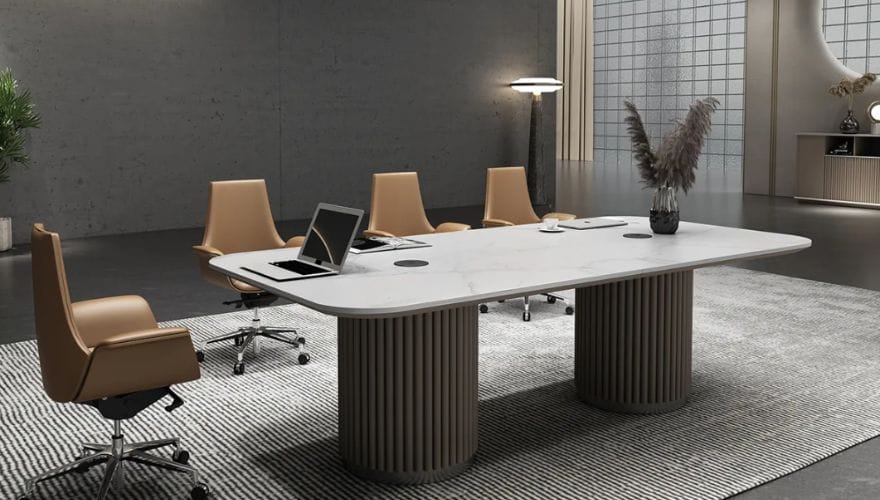
1. Construction Costs
Building a permanent meeting room involves multiple line items that add up quickly:
| Cost Category | Typical Range | Notes |
| Demolition | $1,000–3,000 | Removing existing partitions, ceilings |
| Framing and drywall | $3,000–8,000 | New walls, door installation |
| Electrical | $2,000–5,000 | Lighting, outlets, data, permits |
| HVAC integration | $3,000–8,000 | Tying into building system, permits |
| Flooring | $1,000–3,000 | Matching existing, transitions |
| Paint and finishes | $1,000–3,000 | Paint, trim, door hardware |
| Furniture | $2,000–6,000 | Table, chairs, AV cart |
| AV equipment | $2,000–10,000 | Display, speakers, camera, microphone |
| Permits and fees | $500–2,000 | Building permits, plan review |
2. Installation Time and Disruption
Unlike pods, traditional meeting rooms require:
- Weeks of construction (typically 4–8 weeks)
- Multiple trades (framers, electricians, HVAC, painters)
- Noise, dust, and disruption to surrounding areas
- Potential for change orders and delays
3. Total First-Year Cost (150 sq ft Meeting Room)
$15,000–$50,000+, depending on finishes, AV complexity, and site conditions
Also see: Conference Room Setup: How to Design a Productive Meeting Space in 2026
Beyond Price: What Else Matters?
1. Flexibility and Adaptability
Office pods: If your team grows, shrinks, or reconfigures, pods can be relocated within hours. Some models feature wheels for easy repositioning. When your needs change, pods can be sold or moved to another location—preserving their value.
Traditional meeting rooms: Once built, a meeting room is permanent. Reconfiguring it requires another round of construction costs. If you outgrow the space, you can’t take it with you.
Winner: Pods
2. Space Efficiency
Office pods: Pods use existing floor space without requiring circulation allowances for walls. A 4’x4′ phone booth occupies 16 square feet. A traditional 8’x10′ meeting room needs 80 square feet plus circulation space around it.
Traditional meeting rooms: Walls consume floor area that can’t be used for anything else. The thicker the wall, the more space lost. For offices where square footage is at a premium, this matters.
Winner: Pods (more efficient use of existing space)
3. Acoustic Performance
Office pods: Acoustic performance varies significantly by brand and construction. High-quality pods achieve DS,A 30–35 (good speech privacy), while budget options may only reduce sound by 20 dB (conversations are still intelligible). Always look for ISO 23351-1 test data.
Traditional meeting rooms: When properly constructed with acoustic insulation, double drywall, and sealed doors, permanent rooms achieve excellent sound isolation (STC 40–50). They outperform all but the most expensive pods.
Winner: Traditional meeting rooms (superior isolation when built correctly)
4. Aesthetics and Branding
Office pods: Available in a range of finishes—from minimalist white to wood veneer to custom colors. Some manufacturers offer full custom branding. However, pods are distinct objects within the space; they don’t blend seamlessly.
Traditional meeting rooms: Can be fully integrated into office aesthetics, matching wall colors, trim, and architectural details. They feel like part of the building, not an addition.
Winner: Traditional meeting rooms (seamless integration)
5. Maintenance and Longevity
Office pods: Require regular maintenance: filter cleaning, door seal checks, fan inspection. Well-maintained pods last 7–15 years. If a pod becomes outdated, it can be replaced without impacting the building.
Traditional meeting rooms: With proper construction, permanent rooms last 20+ years. However, technology (AV equipment, cabling) typically needs upgrades every 5–7 years. Outdated finishes or layouts require renovation.
Winner: Tie (different considerations)
Decision Framework: Which Is Right for Your Office?
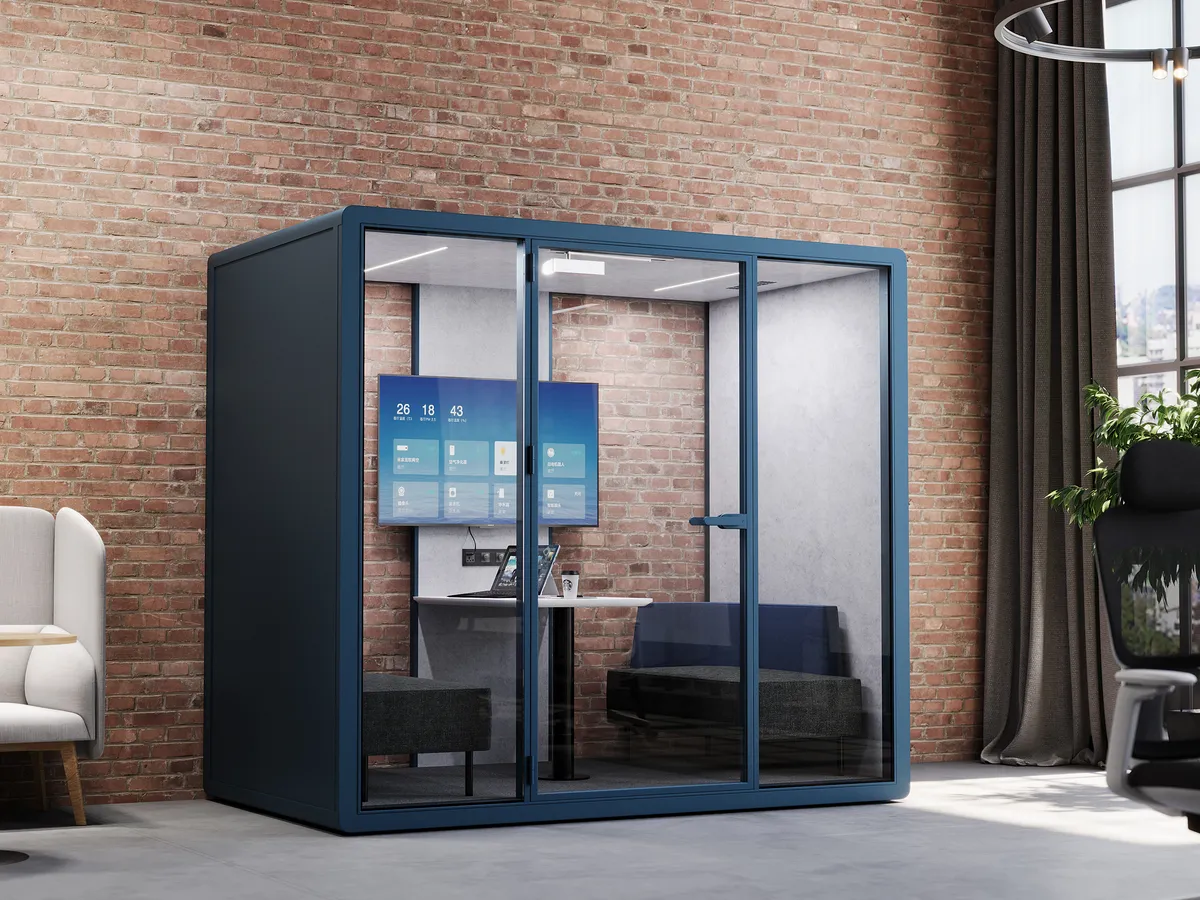
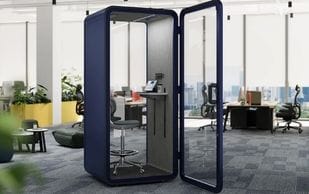
Meet&Co Office Pod Series A
Choose Office Pods If:
- Speed matters: You need private space in days or weeks, not months
- Flexibility is critical: Your layout changes frequently, or you’re in a leased space
- Budget is limited upfront: Pods require less capital outlay than construction
- You want to preserve options: Pods can be relocated, resold, or expanded
- Construction disruption is unacceptable: Your team can’t work through demo dust and noise
Choose Traditional Meeting Rooms If:
- You need superior acoustics: Confidential discussions require maximum privacy
- You’re renovating anyway: Part of a larger construction project
- You want seamless integration: The room should feel like part of the architecture
- You have long-term certainty: You own the space and know your needs won’t shift
- Multiple pods would clutter: You need a larger space that pods can’t efficiently provide
The Hybrid Approach
Many offices in 2026 are choosing both: permanent meeting rooms for large gatherings and confidential discussions, plus a fleet of pods for quick calls, focused work, and overflow space. This approach balances investment with flexibility.
Case Study: A 2026 Hybrid Solution
A mid-sized tech company with 200 employees faced a challenge: their open-plan office had no private spaces, and employees were taking calls in hallways and stairwells. They evaluated both options:
Option A: Build two permanent 6-person meeting rooms ($45,000 total)
Option B: Purchase five single-person phone booths ($50,000 total)
They chose Option B for several reasons:
- Installation in 3 days vs. 8 weeks
- No disruption to work during installation
- Pods could be placed in underutilized corners, preserving prime floor space
- As the company grew, pods could be relocated
Six months later, they added two more pods to meet demand—something impossible with permanent rooms. The total investment was slightly higher than building, but flexibility and speed made it the right choice.
Quick Comparison: When to Choose Which
| Decision Factor | Choose Pods | Choose Traditional Rooms |
| Timeline | Need space in <2 weeks | Can wait 4–8 weeks |
| Budget | $8,000–25,000 per space | $15,000–50,000+ per room |
| Acoustic needs | Good speech privacy (DS,A 25–30) | Superior isolation (STC 40+) |
| Space ownership | Renting, or expect changes | Own building, stable needs |
| Aesthetics | Modern, distinct objects | Seamless integration |
| Size needed | 1–4 people | 6+ people |
FAQ
1. Do office pods require building permits?
Generally no. Because pods are freestanding furniture, not permanent construction, most jurisdictions do not require permits. However, electrical work to support multiple pods may require permits.
2. How long do office pods last?
Quality pods from reputable manufacturers last 7–15 years with proper maintenance. Key components (fans, seals, electronics) may need replacement sooner.
3. Can pods be moved after installation?
Yes—most pods are designed to be relocated. Some feature wheels for easy repositioning; others require disassembly and reassembly. Check specifications before buying if mobility matters.
4. Are pods soundproof?
No—but that’s not the goal. Quality pods provide speech privacy, meaning conversations inside are not intelligible outside. True soundproofing (blocking all sound) is rare and requires far more construction.
5. How many pods can I put in an open office?
Space planning depends on floor plate layout, circulation paths, and fire safety codes. A general rule: maintain at least 36 inches of circulation around pods and ensure they don’t block emergency exits.
6. What maintenance do pods need?
Monthly: clean exterior surfaces and check door seals. Quarterly: clean or replace ventilation filters. Annually: professional service to check fans, seals, and electrical components.
7. Can I get a pod with integrated AV?
Yes—many manufacturers offer AV-ready pods with pre-installed displays, camera mounts, and cable management. Some offer all-in-one AV systems for video conferencing.
Conclusion
The choice between office pods and traditional meeting rooms isn’t about which is universally better—it’s about which fits your specific needs.
Pods excel when speed, flexibility, and minimal disruption matter. They’re ideal for leased spaces, growing teams, and offices that need to adapt quickly. With installation in days and the ability to relocate, pods preserve options that permanent construction removes.
Traditional meeting rooms win when superior acoustics, seamless integration, and long-term certainty are priorities. If you own your space, need absolute privacy for sensitive discussions, and want a room that feels like part of the building, permanent construction delivers.
In 2026, the smartest offices aren’t choosing one or the other—they’re using both strategically. Permanent rooms anchor the space for large gatherings and confidential work, while a fleet of pods provides the flexibility to scale private space up or down as needs change.
The right answer starts with understanding your timeline, budget, acoustic needs, and appetite for flexibility. From there, the choice becomes clear.
_16.webp)