





 Meet&Co
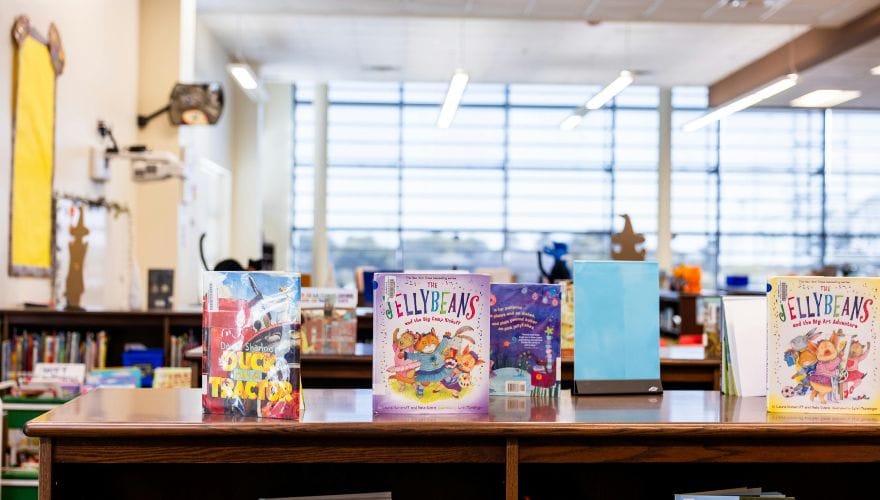
Walk into any school library today and it’s clear: these are no longer the hushed, quiet spaces many of us remember. They’re buzzing with students collaborating on projects, relaxing with friends, or exploring digital resources that extend far beyond the building.
The role of the school library is evolving fast. In 2026, school libraries are no longer quiet corners of the past—they’re living ecosystems for learning, technology, and human connection. Think of the best living rooms: comfortable, inviting, and designed for connection. That’s exactly what more school libraries are becoming.
This guide walks you through everything you need to know about designing a modern school library space in 2026—from core design principles to specific furniture types, zoning strategies, and practical implementation tips.
The Evolving Role of the School Library
Before diving into furniture and layouts, it’s essential to understand what a modern school library actually does.
From Book Repository to Learning Hub
Libraries are increasingly becoming the heart of the school. They serve multiple functions:
| Function | Description |
| Collaboration zone | Students huddle over group projects, using mobile whiteboards and flexible seating |
| Quiet retreat | Individuals find calm spaces for reading, reflection, or focused work |
| Makerspace | Robotics kits, 3D printers, and creative tools support hands-on learning |
| Digital media center | Green screens, video production gear, and recording studios enable content creation |
| Community gathering space | Clubs, esports teams, and events bring students together |
What are the Key Trends of School Libraries in 2026?
Nature-inspired design: Fresh lighting, natural materials, and open layouts intended to make libraries calm, welcoming places. Biophilic elements reduce stress and improve cognitive function.
Technology integration: From 3D printers and robotics kits to green screens and video production gear, modern libraries are stocked with cutting-edge tools. Some now feature augmented- and virtual-reality systems, holographic displays, and AI-powered design tools.
Hybrid collections: Students expect seamless access to resources—anytime, anywhere. Libraries are expanding access to eBooks, audiobuds, and online databases alongside traditional shelves.
AI literacy: Librarians now teach students to evaluate information critically—distinguishing fact from opinion and understanding how AI-generated content works.
Four Core Design Principles for Modern School Libraries
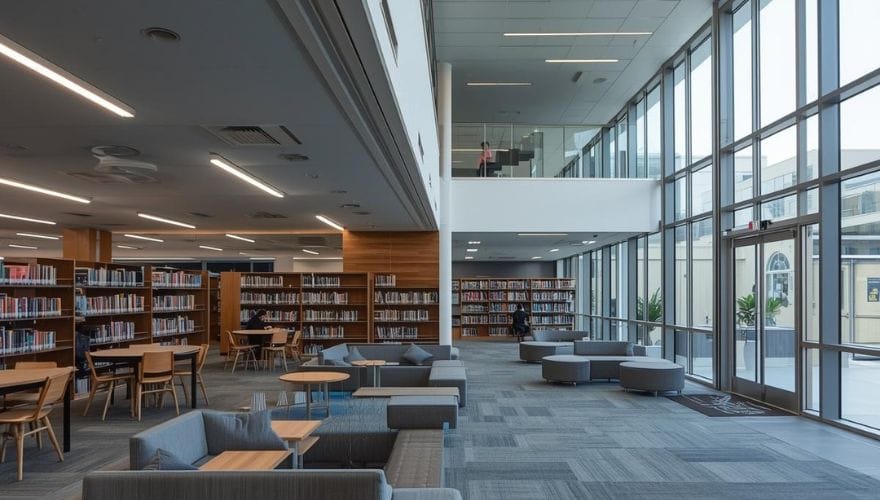
1. Flexibility and Adaptability
Single-use spaces have become impractical. The same area that hosts story time in the morning must accommodate teen programs in the afternoon and adult education in the evening.
Furniture on casters, modular shelving, and lightweight tables allow staff to adjust layouts quickly while maintaining visual coherence. This flexibility extends the useful life of furniture investments—as community and programming priorities change, furniture should adapt rather than becoming obsolete .
2. Zoning for Diverse Needs
Libraries are moving away from uniform solutions and toward dedicated zones that support specific user groups. A job seeker needs a different environment than a preschooler. Collaborative group work requires different furniture than quiet individual study.
Effective zoning includes:
- Collaborative zones: Open areas with mobile tables and whiteboards
- Quiet zones: Individual carrels, acoustic panels, reduced foot traffic
- Social zones: Soft seating, café-style tables, intentional noise
- Makerspace zones: Durable surfaces, accessible tools, storage for projects
- Digital media zones: Green screens, recording equipment, editing stations
3. Student-Centered Design
The best modern libraries reflect student voices. When designing spaces, involve students in the process—ask what they need, test configurations together, and adjust based on feedback. This involvement itself boosts engagement and ownership.
4. Calm, Welcoming Atmosphere
Fresh lighting, natural materials, and open layouts make libraries feel calm and welcoming. Neutral tones create a backdrop of tranquility that supports mental clarity, while bold accent colors energize the space and help users navigate different zones.
Modern Library Furniture Types and Ideas
Here are the essential furniture categories for a 2026 school library:
| Furniture Type | Description | Best For | Key Features |
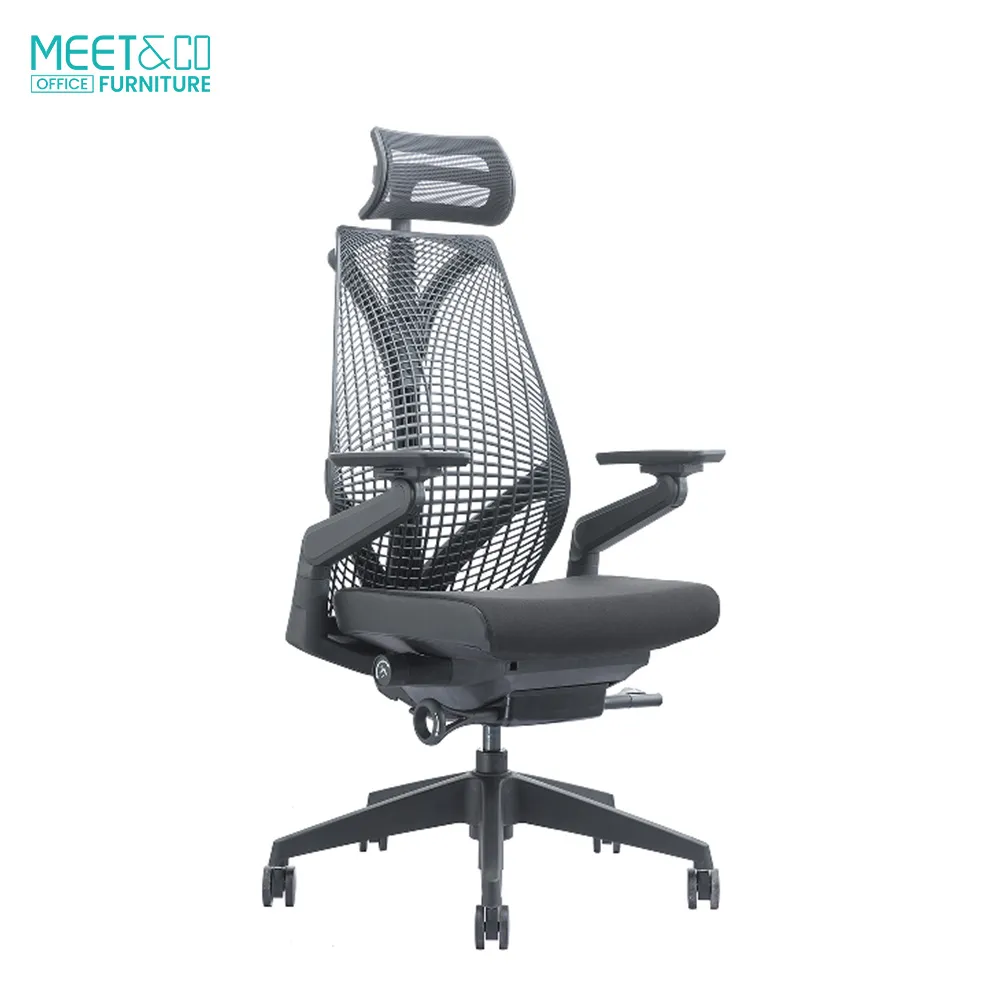
| Ergonomic Library Chairs | Comfortable seating for extended reading or study | Reading lounges, quiet zones, collaborative areas | Lumbar support, breathable fabrics, stackable options |
| Modern Study Tables | Minimalist designs with integrated power and USB ports | Group study, tech-enabled learning hubs | Cable management, tempered glass tops, sit-stand options |
| Modular Shelving Units | Adjustable systems with clean lines and open frameworks | Book storage, multimedia display, exhibition areas | Customizable layouts, sustainable materials, maximize vertical space |
| Laptop Study Tables | Surfaces designed for digital work with built-in charging | Tech-heavy environments, university libraries | USB/electrical outlets, ergonomic height, heat/scratch-resistant surfaces |
| Private Study Carrels | Individual workspaces with acoustic panels | Focused study, exam prep, research writing | Acoustic insulation, task lighting, power/USB ports, compact footprint |
| Soft Seating | Lounge chairs, cushions, modular seating pieces | Reading nooks, casual collaboration, relaxation zones | Comfortable, inviting, movable |
Specialized Furniture for Different Age Groups
Children’s spaces: Colorful, durable, age-appropriate furniture that encourages exploration and social interaction.
Teen and tween spaces: Technology access, collaborative work zones, and spaces that feel age-appropriate without being childish. These zones communicate that teens are valued in this space—resulting in increased engagement and longer visits .
Adult spaces: Quiet, focused environments for serious work—job searches, continuing education, personal projects. Cove carrels with angled surround panels provide visual softness and a sense of refuge while maintaining staff sightlines.
How to Create Creating Dedicated Zones
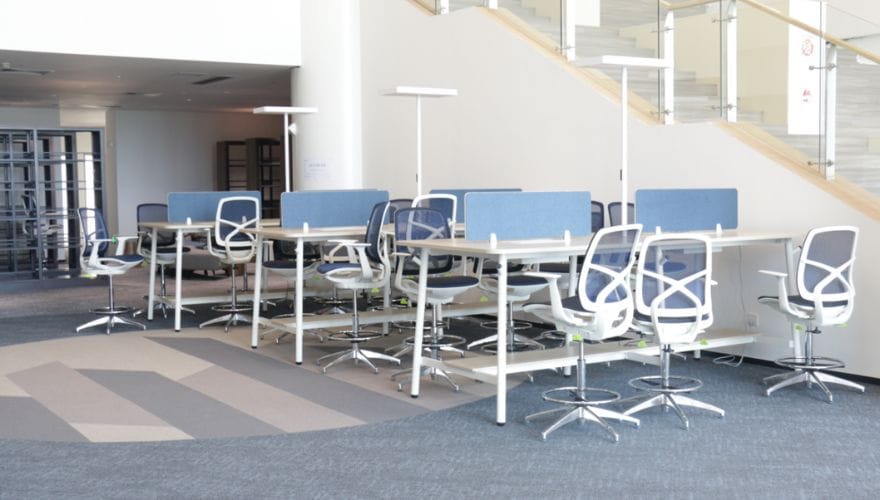
Collaborative Learning Zones
These areas support group projects, peer discussion, and active learning. Furnish with:
- Mobile tables on casters that can be reconfigured quickly
- Whiteboard surfaces for brainstorming
- High-top tables for standing collaboration
- Comfortable seating that encourages lingering
Quiet Study Zones
For focused individual work, include:
- Private study carrels with acoustic panels
- Individual desks with task lighting
- Sound-absorbing materials (rugs, curtains, acoustic panels)
- Clear sightlines for staff supervision while maintaining user privacy
Also see: What Are the Different Types of School Desks? | Classroom Desk Guide
Makerspace and STEM Areas
Hands-on learning requires durable, flexible furniture:
- Robust tables that withstand tools and materials
- Storage for robotics kits, 3D printers, and supplies
- Easy-to-clean surfaces
- Mobile workstations that can be repositioned
Digital Media Zones
With multimedia assignments growing, libraries need dedicated creation spaces:
- Green screens and studio lighting
- Video and audio production equipment
- Editing stations with powerful computers
- Acoustic treatment for clean audio recording
Reading and Relaxation Zones
Soft seating creates informal, comfortable areas:
- Lounge chairs and sofas
- Floor cushions and bean bags for younger students
- Natural light and views where possible
- Cozy corners that feel like home
Technology-Enhanced Learning Spaces
Cutting-edge classrooms within libraries:
- Augmented- and virtual-reality systems
- Holographic displays and spatial computing tools
- Flexible furnishings for various configurations
- Glass-walled rooms that showcase innovation
School Furniture Features That Matter
Built-In Technology
Modern library furniture increasingly includes integrated power outlets, USB charging ports, and wireless charging pads directly embedded into tables, carrels, and lounge seating. Cable management systems maintain visual order while keeping devices powered.
Durability and Maintenance
School furniture faces more abuse than almost any other category. Look for:
- Reinforced steel frames and scratch-resistant laminates
- Anti-vandal and stain-resistant materials
- Easy-to-clean surfaces
- Removable, washable covers for upholstered pieces
Sustainability
Eco-conscious designs utilize renewable, recycled, or responsibly sourced materials such as FSC-certified wood, bamboo, and recycled aluminum or plastic . Low-emission production processes and non-toxic finishes protect indoor air quality.
Ergonomic Support
With patrons often spending extended periods in the library, ergonomic furniture is essential. Chairs should feature lumbar support, adjustable heights, and contoured seating. Desks need appropriate height ratios and sufficient knee clearance for users of all sizes.
Acoustic Comfort
Balance sound absorption with openness:
- Books themselves absorb sound naturally
- Dense rugs and lined curtains reduce echo
- Acoustic panels disguised as fabric art
- Solid core doors with perimeter seals
- Aim for 20–30% of hard surfaces softened
School Library Furniture Implementation Guide
Step 1: Assess Your Needs
Start by understanding how your library is actually used:
- What activities happen most frequently?
- Which age groups use which areas?
- What do students and teachers say they need?
- Where are the pain points in your current layout?
Step 2: Develop a Zoning Plan
Map out distinct zones based on user needs:
- Collaborative areas near entrances
- Quiet zones away from high-traffic paths
- Clear sightlines for supervision
- Flexible boundaries that can evolve
Step 3: Choose Furniture Strategically
Select pieces that:
- Support multiple functions
- Move easily when needed
- Match your aesthetic goals
- Fit your budget (quality first—cheaper furniture costs more over time)
Step 4: Start Small, Iterate Often
You don’t need to transform everything at once. Start with a few flexible elements—some soft seating, a mobile whiteboard, a small makerspace area—and expand based on what works.
Step 5: Gather Feedback and Adjust
Watch how students use the space. Ask what works and what doesn’t. Adjust configurations based on real-world observation.
Step 6: Plan for Maintenance
Casters need cleaning. Hinges need lubrication. Fabric needs spot-cleaning. Plan for ongoing maintenance from the start.
Budget Considerations
| Item | Typical Price Range (2026) |
| Ergonomic task chairs | $200–600 each |
| Modular study tables | $400–1,000 each |
| Soft seating modules | $300–800 each |
| Private study carrels | $800–2,000 each |
| Mobile whiteboards | $200–500 each |
| Modular shelving | $500–2,000 per section |
| Full library transformation | $15,000–50,000+ depending on size |
Remember the “value-first” principle: a $500 chair that lasts 10 years costs $0.13 per school day—far less than replacing a $200 chair every 2–3 years.
Case Study: Innovative Library Spaces in Action
Meet&Co’s School Furniture Project
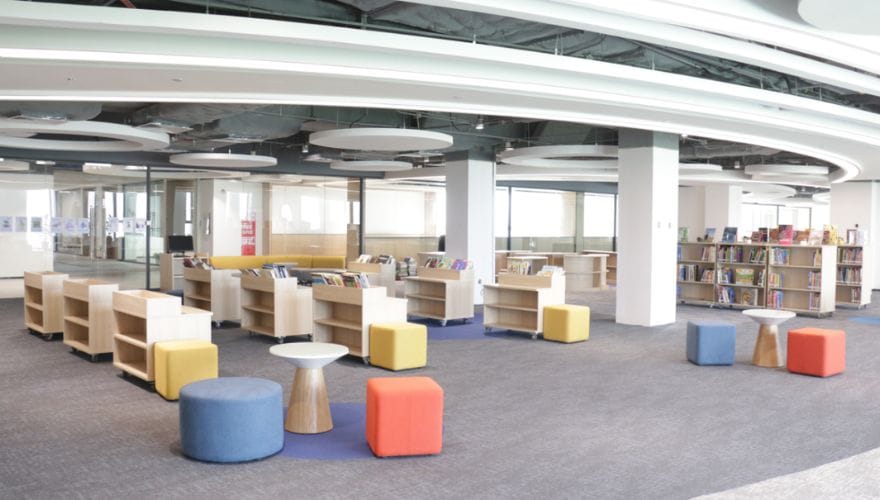
Meet&Co’s Project
The transformed library features:
- Nature-inspired design with fresh lighting and natural materials
- Open layouts creating calm, welcoming spaces
- Cutting-edge technology
- Culturally relevant book collections reflecting student diversity
Common Mistakes to Avoid
| Mistake | Why It’s Problematic | Better Approach |
| Prioritizing aesthetics over usability | Beautiful furniture fails if uncomfortable or impractical | Balance visual appeal with functionality, durability, accessibility |
| Ignoring teacher and student input | Spaces don’t meet actual needs | Involve users from the beginning |
| Forgetting about storage | Flexible furniture needs somewhere to go when not in use | Plan vertical storage, stackable options, nesting designs |
| Buying all at once | May invest heavily in solutions that don’t work | Start with a pilot area, learn, then scale |
| Underestimating maintenance needs | Furniture deteriorates quickly without care | Establish maintenance schedules from day one |
| Blocking natural light | Creates gloomy, uninviting spaces | Position furniture to maximize daylight |
FAQ
How much does a modern school library transformation cost?
Costs vary widely based on size and quality. A basic refresh might run $5,000–15,000, while comprehensive transformations can exceed $50,000. Start with priority areas and scale based on budget.
What’s the most important feature in modern library furniture?
Flexibility is paramount. Furniture on casters, modular shelving, and adaptable pieces allow libraries to evolve with changing needs.
How do I create quiet zones in an open library?
Use acoustic panels, private study carrels, soft furnishings, and strategic zoning. Position quiet areas away from high-traffic paths and use bookshelves as natural sound barriers.
Do students actually use makerspaces in libraries?
Yes—when well-designed and properly equipped. Makerspaces with robotics kits, 3D printers, and creative tools attract students for hands-on learning .
How do I plan for future technology needs?
Choose furniture with built-in power and cable management. Design flexible spaces that can accommodate new tools. The JMU Library Futures Classroom model shows how adaptable spaces support emerging technologies.
How quickly should furniture be replaced?
Quality furniture lasts 7–15 years with proper maintenance. Replace when foam collapses, surfaces are damaged beyond repair, or the space no longer meets pedagogical needs.
Conclusion
Designing a modern school library in 2026 is about creating a vibrant, adaptable space that serves as the heart of the school community. The best libraries offer variety: collaborative zones for group work, quiet areas for focused study, makerspaces for hands-on learning, and comfortable spots for reading and relaxation.
Start with your educational goals, not the furniture catalog. Involve students and teachers in the process. Test configurations before committing. And remember that quality matters—well-made furniture costs more upfront but delivers better long-term value and student outcomes.
The school library of 2026 isn’t a place where learning happens despite the furniture. It’s a place where furniture actively enables learning, collaboration, creativity, and connection. Design wisely, and your students will benefit for years to come.