






 Meet&Co
Great classrooms buzz with activity—students collaborating, teachers moving, and furniture supporting it all. The best school furniture doesn’t just survive this daily energy; it thrives, providing stable surfaces and comfortable seating year after year.
Choosing durable furniture is one of the smartest investments a school can make. It means fewer replacements and more resources directed where they matter most: education. But with options ranging from classic hardwood to modern plastics and rugged metals, how do you pick the right one? Let’s explore which materials truly stand the test of time in busy classrooms.
Is Metal the Strongest Choice for School Furniture?
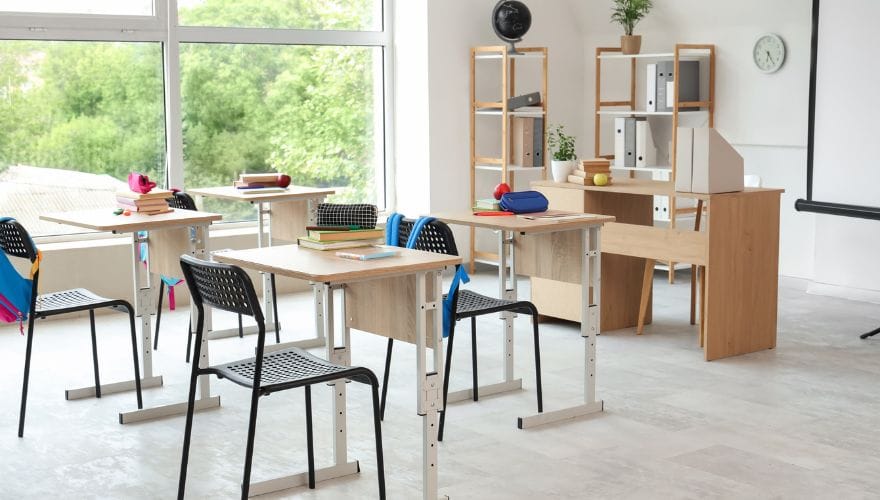
When most people think “durable,” metal often comes to mind first—and for good reason. Metal desks and chair frames have been classroom staples for generations.
Cold-rolled steel is the gold standard for metal school furniture. This material offers exceptional strength and resistance to deformation under stress. High-quality metal desks typically feature powder-coated finishes, which provide superior corrosion resistance compared to regular paint. This coating bonds chemically to the metal surface, reducing chipping and peeling even after years of use.
1. Advantages of Metal Furniture
- Exceptional strength: Metal frames can withstand impacts that would crack wood or plastic
- Fire resistance: Steel doesn’t burn, adding a safety element
- Longevity: Quality metal furniture can last 15-20 years or more
- Moisture resistance: Unlike wood, metal won’t warp in humid conditions
2. Drawbacks to Consider
- Weight: Metal furniture is heavier, making reconfiguration more difficult
- Temperature: Metal can feel cold in winter and may conduct heat
- Cost: High-quality metal furniture requires a larger upfront investment
Aluminum offers an interesting alternative to steel. It’s lightweight—making installation and handling easier—yet still exceptionally strong. Aluminum naturally resists corrosion and weathering, making it ideal for both indoor and outdoor use. Some aluminum products even come with anti-graffiti and scratch-resistant coatings, which is a huge advantage in maintaining clean facilities .
Best for: High-traffic areas, lecture halls, and spaces where furniture won’t need frequent moving
How Does Plastic Hold Up in Classrooms?
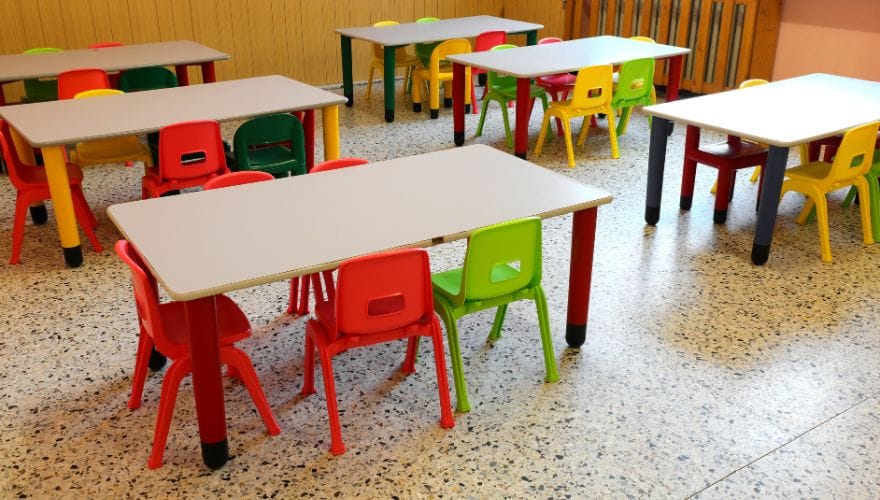
Walk into any elementary school today, and you’ll likely see lots of colorful plastic chairs. Plastic furniture, particularly made from high-density polyethylene (HDPE) or polypropylene, has become incredibly popular in modern classrooms.
These materials offer excellent resistance to wear, stains, and daily student use. One of the biggest advantages? They’re non-porous and resist stains, making them ideal for environments where spills, markers, and food are common. A simple wipe with a damp cloth is usually enough for cleaning.
1. Why Schools Choose Plastic
- Lightweight: Students and teachers can easily move chairs for different activities
- Stackable design: Most plastic chairs stack 6-10 high, freeing up floor space
- Color options: Bright colors can boost mood and help organize classrooms by group
- Cost-effective: Generally less expensive than metal or wood
- No rust or rot: Perfect for humid environments or areas near sinks
2. The Downsides
- UV sensitivity: Some plastics become brittle after years in direct sunlight
- Weight limits: May not support heavier students or adults as well
- Environmental concerns: Made from petroleum-based materials (though recycled options exist)
Modern plastic chairs feature contoured seats and backrests designed to support proper posture. This ergonomic design helps students stay comfortable and focused during long lessons. Some advanced models offer adjustable heights to accommodate different age groups.
Best for: Elementary classrooms, flexible learning spaces, and areas requiring frequent reconfiguration
Also see: What Is Flexible Seating? A Simple Guide For Better Classrooms
Is Solid Wood Still a Good Option?
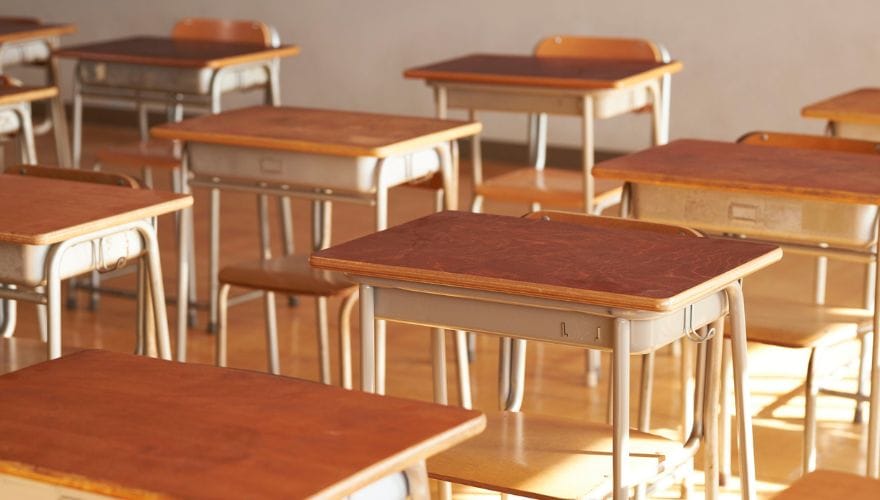
Traditional wood furniture still has a place in many schools, particularly in libraries, administrative offices, and historic buildings. But not all wood is created equal when it comes to durability.
Hardwood comes from broadleaf trees like oak, maple, and walnut. These trees grow slowly, producing dense grain structures that make the wood tough and long-lasting. Hard maple is particularly popular for school furniture because it resists dents and abrasion better than softer woods.
1. Hardwood Advantages
- Long lifespan: Quality hardwood furniture can last 25-50+ years
- Appearance: Natural wood grain creates a warm, professional look
- Repairable: Scratches and dents can often be sanded and refinished
- Sustainable: Responsibly sourced wood is renewable
2. Hardwood Challenges
- Higher cost: Hardwood is significantly more expensive than other options
- Maintenance: Requires regular care to prevent moisture damage
- Weight: Very heavy, making reconfiguration difficult
- Moisture sensitivity: Can warp or swell in humid conditions
Softwood options like pine are more affordable but dent more easily. Pine works well for painted furniture or projects where budget is the primary concern. However, for high-wear surfaces like desktops and chair seats, harder hardwoods are a better investment.
Best for: Libraries, administrative offices, and traditional classroom settings
What About Plywood and Engineered Wood?
Many schools use furniture made from plywood—and for good reason. Plywood is made by cross-laminating multiple layers of wood veneers, which gives it exceptional strength and resistance to warping.
Baltic birch plywood is a top choice among furniture manufacturers. It features fewer voids in the inner plies and a smooth surface ideal for painting or laminating. This material offers an excellent balance of durability and cost.
1. Plywood Benefits
- Dimensional stability: Resists expanding and contracting with humidity changes
- Strength: Cross-grain construction distributes stress evenly
- Screw-holding capacity: Holds fasteners more securely than particleboard or MDF
- Lighter than solid wood: Easier to move and reconfigure
2. Plywood Limitations
- Visible edges: The layered edges require banding or finishing
- Surface variability: Lower grades may have knots or voids
- Moisture sensitivity: Standard plywood isn’t waterproof (marine-grade is available)
Medium-density fiberboard (MDF) is another engineered option, but it’s less suitable for high-wear school furniture. MDF offers a smooth surface perfect for painting, but it sags under heavy loads and swells permanently when wet. For structural elements like desk frames and table bases, plywood is the better choice.
Best for: Desktops, bookshelves, cabinet carcasses, and budget-conscious projects
Also see: MDF vs. Particle Board: What’s the Difference and Which Is Right for You?
Is Laminate a Smart Choice for Desktops?
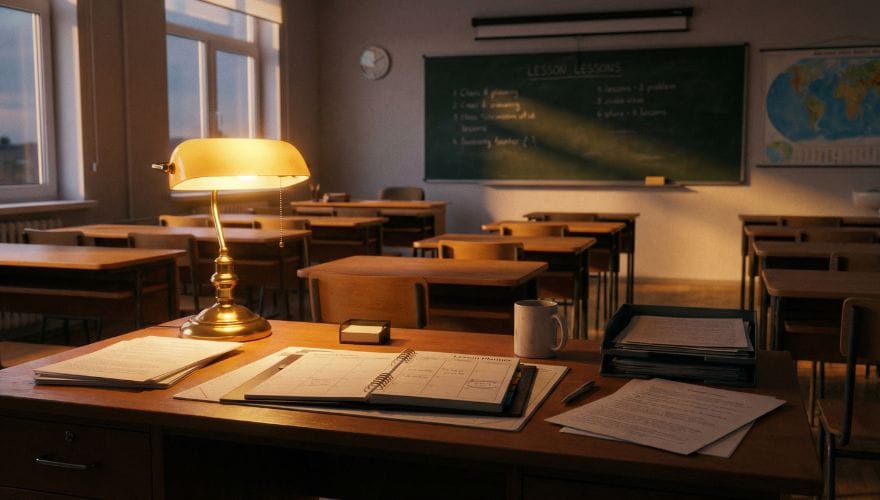
Laminate surfaces deserve special attention because they’re everywhere in schools—on desktops, countertops, and workstations. High-pressure laminate (HPL) is applied to a substrate like plywood or particleboard to create a durable work surface.
1. Laminate Pros
- Scratch resistance: Stands up well to pens, pencils, and books
- Easy maintenance: Spills wipe away easily; laminate doesn’t absorb liquids
- Design variety: Available in countless colors and patterns, including wood looks
- Affordability: More budget-friendly than solid wood surfaces
2. Laminate Cons
- Deep scratches: While resistant to light scratches, deep gouges are difficult to repair
- Heat sensitivity: Hot items can cause burns or discoloration
- Edge peeling: Poorly made edges can separate over time
- Limited lifespan: May need replacement sooner than solid surfaces
Quality matters tremendously with laminate. Better-grade laminates bonded to high-quality substrates will outlast budget options by years. Look for desks with impact-resistant edges and moisture-sealed substrates for the best longevity.
Best for: Desktops, computer tables, and any surface needing frequent cleaning
Comparison Table: School Furniture Materials at a Glance
| Material | Durability | Maintenance | Cost | Best Applications |
| Steel | Excellent | Low | $$-$$$ | Desk/chair frames, storage, high-traffic areas |
| Aluminum | Excellent | Very low | $$$ | Outdoor furniture, lightweight frames |
| HDPE Plastic | Good-Very Good | Very low | $ | Chairs, early childhood furniture, flexible spaces |
| Hardwood | Excellent | Moderate | $$$ | Libraries, offices, traditional classrooms |
| Plywood | Very Good | Low-Moderate | $$ | Desktops, shelving, cabinet construction |
| Laminate | Good | Very low | $ | Desktop surfaces, workstations |
What Other Factors Affect Furniture Durability?
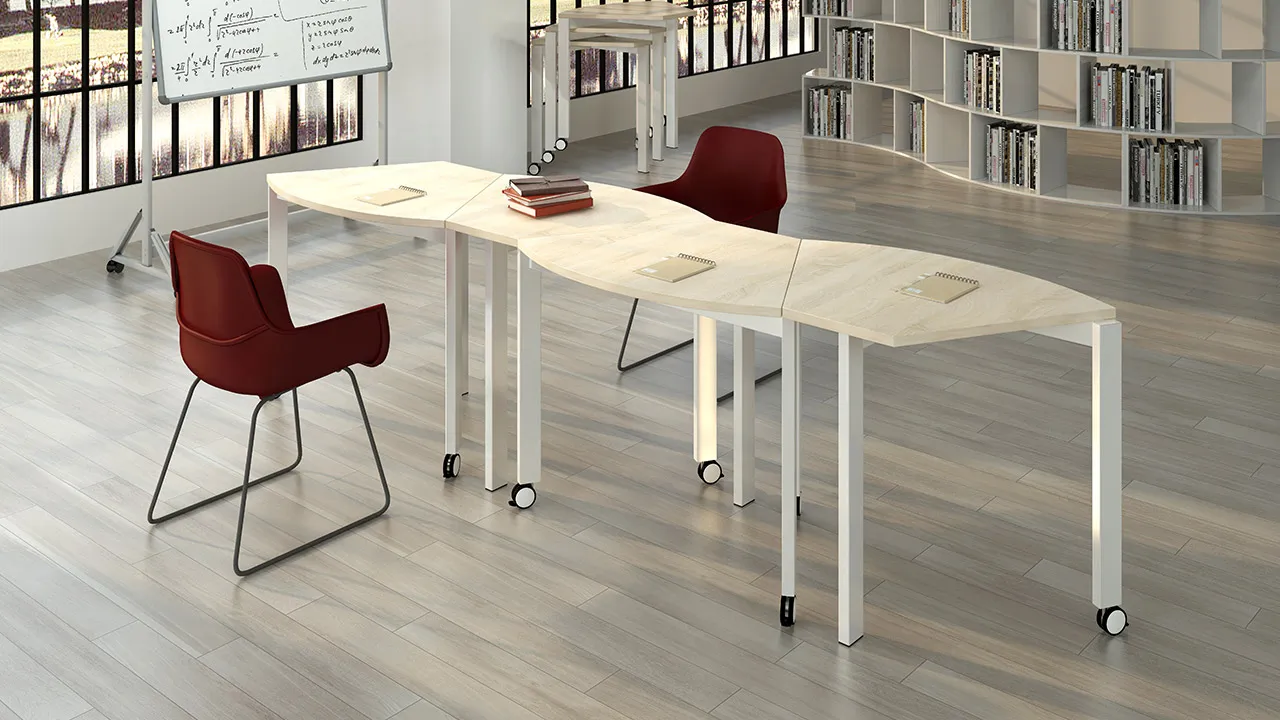
Daman Training Table with Wheels
The material itself is only part of the story. Several other factors determine how long school furniture will last:
1. Construction Quality
A well-made steel desk with reinforced joints will outlast a poorly made one, even with the same materials. Look for welded rather than bolted connections, reinforced corners, and quality hardware.
2. Finish Quality
Powder-coated finishes on metal provide superior protection against chipping and rust. On wood furniture, multiple coats of durable finish protect against moisture and stains.
3. Intended Use
Match the material to the application. A lightweight plastic chair might be perfect for a kindergarten classroom but insufficient for a high school computer lab. Similarly, an expensive hardwood desk might be overkill in an art room but perfect for a library.
4. Maintenance
Even the most durable furniture needs care. Simple routines—tightening screws, cleaning properly, addressing spills quickly—extend furniture life significantly .
What About Eco-Friendly Durable Options?
Schools increasingly seek materials that are both durable and environmentally responsible. Fortunately, these goals don’t have to conflict.
1. Bamboo
Bamboo reaches maturity in just 3-5 years, making it far more sustainable than traditional hardwoods. It offers impressive tensile strength—comparable to steel in some measures—and naturally resists moisture. Real-world testing shows bamboo maintains dimensional stability even in humid conditions .
2. Recycled Materials
Recycled steel from old machines actually holds up better than fresh metal, with testing showing it can withstand 2.3 times more weight . Recycled HDPE from milk jugs and detergent bottles achieves compressive strengths exceeding 18,000 PSI—ideal for desktop surfaces.
3. Reclaimed Wood
Furniture made from reclaimed barn wood and recycled steel reduces carbon footprint by about 40% compared to using new materials. Reclaimed oak desktops handle impacts significantly better than particleboard .
4. Certifications Matter
Look for FSC certification for wood products, ensuring forests are managed sustainably. GREENGUARD Gold certification guarantees low VOC emissions, supporting healthier indoor air quality .
Conclusion: Which Material Is Most Durable?
After comparing all the options, here’s the honest answer: there’s no single “most durable” material—it depends entirely on where and how the furniture will be used.
- For chair frames and structural supports, metal (particularly powder-coated steel) offers unmatched longevity.
- For chairs that need to move frequently, high-quality plastic provides the best balance of durability and flexibility .
- For desktops and work surfaces, laminate over quality plywood delivers excellent performance at a reasonable cost.
- For libraries and administrative spaces, hardwood creates a beautiful, long-lasting environment.
The smartest approach? Consider hybrid designs that use each material where it performs best—metal for frames, plastic for seats, and laminate for work surfaces. This combination often yields the best durability, functionality, and value.
FAQ
1. What’s more durable for chairs—plastic or metal?
For the frame, metal is more durable. For the seat and back, high-quality plastic (HDPE or polypropylene) can be extremely durable while adding comfort and design flexibility.
2. How long should school furniture last?
With proper care, quality metal furniture can last 15-20 years, hardwood furniture 25-50 years, and plastic furniture 10-15 years.
3. What’s the most eco-friendly durable material?
Bamboo offers excellent sustainability and durability. Recycled materials (steel, aluminum, HDPE) also provide strong environmental benefits.
4. Is laminate durable enough for school desks?
Yes, quality high-pressure laminate over a good substrate performs well in classrooms. It resists scratches and stains, though deep gouges and heat damage can be issues.
5. Should I avoid particleboard for school furniture?
For most school applications, yes. Plywood or solid wood holds up much better to moisture and heavy use than particleboard or standard MDF.
_5.webp)
_12.webp)
