





 Meet&Co
In today’s digital and fast-paced world, children spend more time sitting than ever before—whether at school, doing homework, or using devices at home.
Extended sitting can affect posture, focus, and overall health, even for elementary students. That’s where standing desks for elementary students come in.
Designed with ergonomics, adjustability, and safety in mind, these desks encourage movement, improve focus, and create a healthier learning environment.
In this guide, Meet&Co will explore why standing desks benefit young learners, key features to look for, our top recommended desks, and practical tips to ensure a safe and productive setup.
Why Elementary Students Benefit from Standing Desks
Standing desks are not just for adults. Research shows that incorporating standing and movement into a child’s day can have multiple benefits:
Improved Posture and Spine Health: Kids are still developing physically. Standing desks help reduce slouching and promote proper spinal alignment.
Enhanced Focus and Attention: Alternating between sitting and standing can increase energy levels and help students concentrate better during homework or virtual learning.
Reduced Sedentary Time: Encouraging movement reduces risks associated with prolonged sitting, such as fatigue and reduced circulation.
While most traditional desks keep children seated for hours, a standing desk provides flexibility and encourages active learning habits from an early age.
Key Features to Look for in a Standing Desk for Elementary Students
When choosing a sit to stand desk for elementary students, it’s important to consider features that match their size, learning style, and safety needs:
Height Adjustability: Look for desks with easy-to-use manual or electric adjustments. This ensures the desk grows with your child.
Stability and Safety: Ensure the desk has a sturdy frame and anti-tip design. Rounded edges and child-safe materials are a must.
Desk Surface and Storage: Sufficient workspace for books, devices, and stationery is key. Built-in storage or shelves help keep the area organized.
Material Quality: Non-toxic, durable materials are essential for a safe, long-lasting desk.
Compatibility: Consider pairing the desk with an adjustable chair or anti-fatigue mat to support proper posture.
By focusing on these features, you can select a desk that promotes both comfort and healthy study habits.
5 Best Standing Desks for Elementary Students
Here are some of the best options for elementary students, each offering unique features, safety, and comfort:
1. SENDI E Standing Desk with Corner Shelf
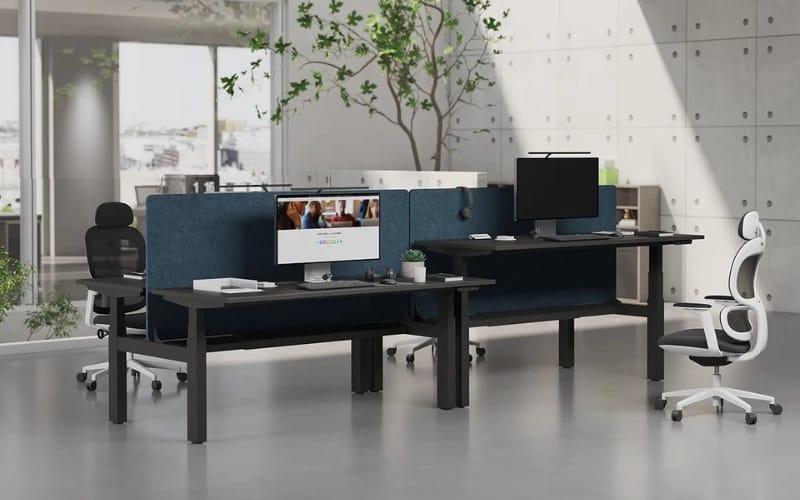
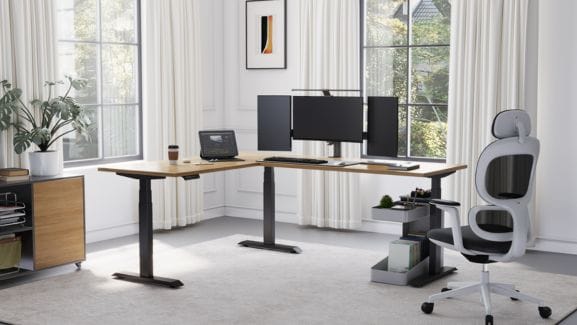
The SENDI E Standing Desk with Corner Shelf meets the growing needs of elementary school students.
It supports sitting and standing modes, and the desktop height can be flexibly adjusted to suit each child’s height, protecting their spine and eyesight, and preventing myopia and fatigue from prolonged sitting.
The corner desktop, combined with shelving, makes full use of corner space, providing ample storage for books and stationery, helping children develop tidying habits, and improving their concentration and learning efficiency.
Whether for writing, reading, or computer learning, the SENDI E provides a comfortable and efficient learning environment.
✔️ Pros
- Ergonomically designed, the table height can be adjusted to suit different heights.
- Equipped with raised shelves, it allows for better storage and categorization of school supplies.
- There are four memory preset functions.
- It is suitable for various scenarios, such as writing, reading, and computer learning.
✖️ Cons
- There are many corners and gaps in the shelves, making it easy for dust to accumulate.
2. Kore Kids Sit-Stand Mobile Desk
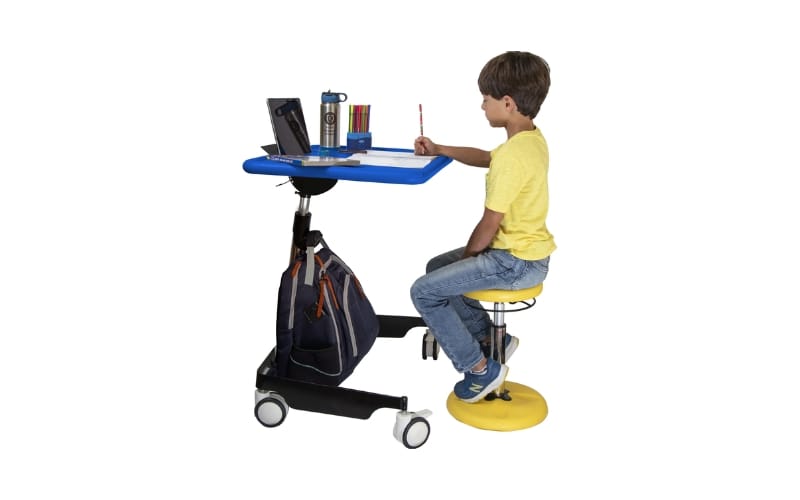
The Kore Kids Sit-Stand Mobile Desk is a portable, sit-and-stand convertible study desk designed specifically for children.
It works even better when paired with the brand’s adjustable rocking stool.
It allows for easy switching between sitting and standing study postures and features casters for flexible movement and placement, adapting to various study spaces.
This desk balances practicality with the physiological development characteristics of children, satisfying the need for order in classroom learning while providing ample space for children to move around, thus meeting the learning and developmental needs of elementary school students.
✔️ Pros
- Easy to move and can be placed anywhere.
- It can effectively improve children’s attention, focus, and classroom participation, especially for children with ADHD.
- It can meet both children’s learning needs and their exercise needs.
✖️ Cons
- Lack of storage function.
3. FlexiSpot Theodore
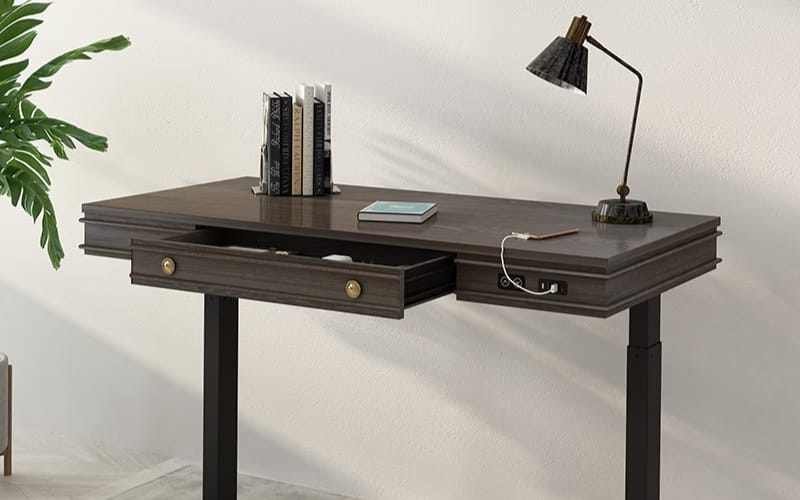
The FlexiSpot Theodore is a 48-inch height-adjustable desk that blends classic American design with cutting-edge ergonomic technology, making it a best-selling home, office, and study desk from the brand.
It supports height adjustment from 29.5″ to 49.2″ and features built-in USB ports and integrated storage drawers, balancing functionality and practicality.
The desk can be quickly assembled in just three steps, is suitable for small spaces, and boasts a sleek and aesthetically pleasing design with a sophisticated black finish. It can support up to 99 pounds.
✔️ Pros
- The height is adjustable to accommodate the different sitting and standing postures of elementary school students of varying heights.
- Built-in USB port meets the charging needs of e-learning devices.
- Three quick steps to install, no complicated tools required.
- Blending classic American style with modern design, this exquisite piece can be used as home décor.
✖️ Cons
- There are no specific protective designs for elementary school students, such as rounded corners or anti-collision features, which pose a minor safety hazard.
4. iMovR Jaxson
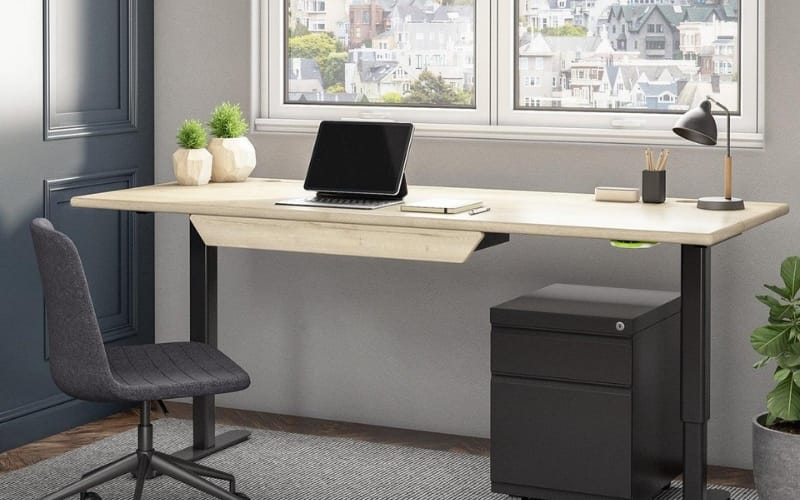
The iMovR Jaxson is a adjustable height ergonomic desk with a 3D laminated desktop, emphasizing durability and practicality.
It’s specifically designed for office and study use. The desktop is made using a professional 3D lamination process, offering excellent resistance to damage and easy cleaning.
The overall structure is stable and supports flexible height adjustment.
This desk balances durability and functionality with a streamlined design, adapting to various storage and operation needs in different scenarios, making it a high-quality height-adjustable study and office furniture option.
✔️ Pros
- Featuring the classic Lander comfort edge design, it’s suitable for all-day use and reduces pressure on the forearm.
- 3D laminate tabletop, scratch-resistant, stain-resistant, wear-resistant, and scratch-proof, suitable for the active use habits of elementary school students.
- The industry’s first product to adopt next-generation brushless motor technology.
- Assembly is simple and convenient, taking only 15 minutes.
✖️ Cons
- No moving or storage function.
5. Height Adjustable Kid's Desk for Children K-12
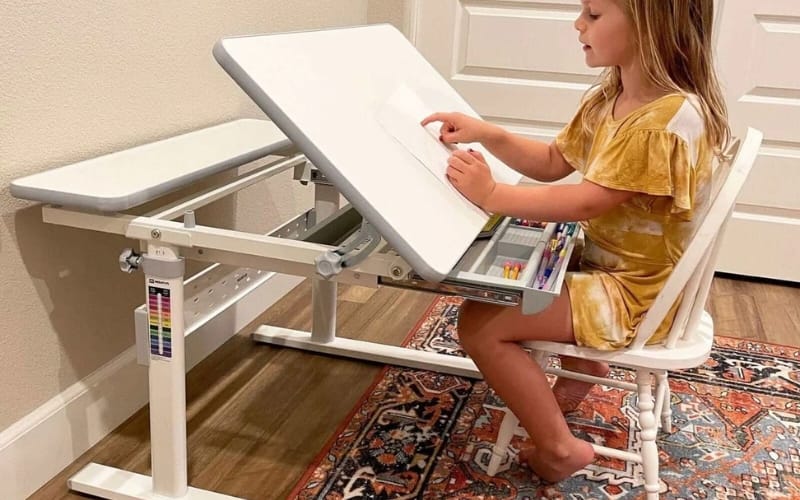
The Mount-It! MI-10204 is a height-adjustable study desk designed for K-12 children, emphasizing growth adaptation and child-friendly design, priced at $169.99.
It supports 21.3″-30″ height adjustment and a 40° desktop tilt, and features gas spring leveling feet for stability even on uneven surfaces.
It also includes dedicated storage drawers and an anti-pinch safety design.
This study desk uses a carbon steel frame and an environmentally friendly particleboard desktop, is easy to assemble, and comes with all necessary accessories.
Balancing practicality, safety, and cost-effectiveness, it’s an ideal study furniture for elementary school students.
✔️ Pros
- Height adjustment covers primary, middle, and high school levels; one table can meet the needs of many years.
- It features a child-safe design and is equipped with an anti-pinch mechanism.
- It covers a variety of learning scenarios, such as writing, reading, and drawing.
✖️ Cons
- It can only be adjusted manually, which may be difficult for young elementary school students to operate on their own.
How to Choose the Right Desk for Your Child
Choosing a standing desk involves more than price and appearance. Here are some tips:
Match Desk Height to Your Child: A desk should allow elbows to rest comfortably at a 90-degree angle while standing. Adjustable desks are ideal for growth.
Consider Learning Habits: Kids who spend more time on homework may benefit from desks with extra storage or shelves.
Room Size and Layout: Ensure the desk fits comfortably in your child’s space, leaving room for movement.
Ease of Adjustment: Especially for younger children, ensure the mechanism is simple to use and doesn’t pose a safety risk.
Accessories to Enhance the Standing Desk Experience
Adding the right accessories can make a big difference:
Ergonomic Chair or Stool: Provides support during sitting periods.
Anti-Fatigue Mat: Reduces strain while standing.
Desk Organizer: Keeps stationery and books tidy.
Screen or Tablet Stand: Ensures proper eye level to prevent neck strain.
These small additions can help maximize comfort, focus, and safety.
Safety Tips for Kids Using Standing Desks
Safety should be a top priority:
Teach proper standing posture: feet flat, knees slightly bent, and shoulders relaxed.
Avoid placing heavy items on the desk surface that could fall.
Regularly check screws and stability to prevent accidents.
Encourage alternating between sitting and standing every 30–60 minutes.
By following these guidelines, children can safely enjoy the benefits of a standing desk.
Conclusion
Choosing the best standing desk for elementary students can significantly improve posture, focus, and overall health.
By considering height adjustability, stability, materials, and accessories, you can create a comfortable and safe learning environment.
Pair the desk with ergonomic seating and encourage movement throughout the day for optimal results.
Investing in a high-quality desk today helps children develop healthy habits and a productive study routine that will benefit them for years to come.
Frequently Asked Questions (FAQ)
Yes, as long as the desk height is adjustable and matches your child’s size.
Start with short periods (15–20 minutes) and gradually increase. Alternate with sitting to avoid fatigue.
Studies suggest that alternating between sitting and standing can boost energy and attention in children.
Desk height should allow elbows to bend at 90 degrees when typing or writing. Adjustable desks ensure a proper fit as your child grows.